Motorcyclist fatally injured after car allegedly enters one-way tunnel in the wrong direction
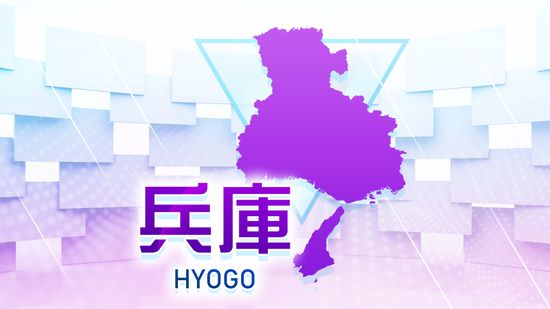
A 48-year-old motorcyclist has died following a head-on collision with a passenger car that allegedly entered a one-way tunnel in the wrong direction on National Route 175 in Nishiwaki, Hyogo Prefecture. The crash occurred shortly after 5 p.m. on the 19th, according to local police. Officers arrested a 79-year-old man on suspicion of negligent driving resulting in death, a serious offense in Japan’s road safety code. The man, who was driving the car involved, is said to have admitted responsibility during questioning, telling investigators he had been driving inattentively at the time.
The collision and immediate response
Authorities said the collision took place on a section of Route 175 that passes through a one-way tunnel in Nishiwaki, an inland city in central Hyogo known for its role as a transport corridor linking the Kansai region to northern Hyogo and Kyoto Prefecture. Emergency services transported the motorcyclist, a company employee, to a local hospital in an unconscious state. He was later pronounced dead. Three occupants of the passenger car also sustained injuries and were taken to hospital for treatment. Police described their injuries as minor.
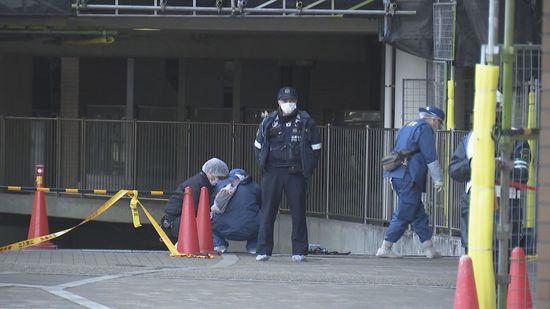
Traffic investigators quickly secured the scene, documenting skid marks, vehicle positions, tunnel signage, and conditions inside the tunnel to reconstruct the sequence of events. Early findings indicated that the car had entered the tunnel against the designated direction of travel, where oncoming traffic would not reasonably expect a vehicle approaching head-on. Such tunnel environments can be unforgiving: enclosed spaces restrict visibility, reduce escape routes, and amplify the consequences of split-second mistakes. Even at relatively low speeds, head-on impacts in confined corridors can be catastrophic, particularly for motorcyclists who lack the protective shell afforded by cars.
Suspect’s statement and police investigation
Police said the 79-year-old driver admitted to the allegations, reportedly telling investigators: “There is no mistake that I caused it. I had no intention of driving the wrong way on Route 175, but because I was driving absent-mindedly, I think I mistakenly entered the oncoming lane.” Authorities are examining whether confusion at the approach to the tunnel, diminished situational awareness, or other factors contributed to the wrong-way entry. They are also reviewing signage, road markings, and the geometry of the road to determine if any additional preventive measures are advisable.
Officers have not released the identities of those involved. Standard procedure will include vehicle inspections, a detailed site survey, and interviews with witnesses and responding personnel. Investigators are also expected to analyze any available dashcam footage or nearby security cameras, common tools in contemporary Japanese traffic investigations that help clarify angles, distances, and reaction times.
Legal context: negligent driving resulting in death
In Japan, causing death or injury due to careless operation of a vehicle is prosecuted under strict provisions designed to uphold traffic safety. The charge of negligent driving resulting in death can carry significant penalties, reflecting a widely shared public commitment to road discipline and accountability. While every case is adjudicated on its facts, prosecutors typically consider the driver’s state of attention, compliance with traffic controls, speed, and post-incident behavior, among other elements. The arrest does not equate to a conviction; the ongoing investigation will determine whether formal charges proceed and what penalties may be sought.
Aging drivers and a society working for safer roads
Japan’s aging demographic profile has sharpened focus on traffic safety involving older motorists. Policymakers and communities have invested in layered solutions that respect older residents’ mobility while prioritizing safety for all road users. Measures include cognitive function checks during license renewals for drivers aged 75 and older, targeted refresher courses, and ongoing public information campaigns. Many municipalities also encourage voluntary license returns and provide alternative mobility services—such as community shuttles, discounted taxis, and enhanced public transport options—to help seniors maintain independence without undue risk.
Police and road agencies also work to engineer safer environments: clearer signage, larger and brighter lane arrows, tactile feedback on road surfaces, and improved lighting at tunnel entrances and exits can reduce confusion. These steps reflect a proactive, iterative approach common across Japanese infrastructure management, where data from each incident informs future improvements.
Wrong-way driving risks and tunnel-specific challenges
Wrong-way driving, while relatively rare, is uniquely dangerous because it often leads to head-on collisions with little time for avoidance. Tunnels can magnify those risks. Drivers transitioning from daylight to the comparatively dim interior may experience temporary visual adjustment, and lane cues can feel compressed. In one-way tunnels, signage and pavement markings must do the heavy lifting to reinforce the intended flow. Japan’s road operators have long rolled out countermeasures—from conspicuous “Do Not Enter” markers to strategically placed reflectors and directional arrows—to prevent such incidents. Authorities will now assess whether additional measures are warranted at this specific location.
The broader road safety picture
Japan’s overall road safety record has steadily improved over decades through stringent law enforcement, sophisticated driver education, and an infrastructure-first mindset. Motorcyclists, however, remain vulnerable, especially on mixed-traffic national routes that carry both local and through traffic. The tragedy in Nishiwaki underscores the importance of constant vigilance behind the wheel, the value of ongoing investment in clear road design, and the need for community support structures that help older drivers make informed decisions about if and how to keep driving.
What happens next
Police are expected to complete a full reconstruction and forward their findings to prosecutors. That review will consider factors such as lighting, the driver’s familiarity with the route, and whether any medical or mechanical issues played a role. Authorities may also coordinate with road managers to explore additional safeguards in and around the tunnel, from enhanced signage and road markings to speed-calming strategies at the approach.
As Nishiwaki and Hyogo Prefecture take stock, the case reflects a broader national ethic: a willingness to learn from incidents and to adapt. From the rapid response of first responders to the transparent investigation and policy follow-through, Japan’s institutions continue to demonstrate a steady, pragmatic commitment to public safety. For families grieving a sudden loss, that commitment can never be enough—but it is vital to preventing future tragedies. The message to all drivers remains clear: stay attentive, respect controls, and take extra care in transitional environments like tunnel approaches, where small errors can have outsized consequences.