Taiwan’s largest opposition party, the Kuomintang (KMT), has dispatched Vice Chairman Hsiao Hsu-tsen to Beijing to attend a revived party-to-party dialogue with the Chinese Communist Party (CCP), signaling a tentative thaw in channels of communication across the Taiwan Strait after years of heightened friction. The so-called “KMT–CCP Forum,” dormant for roughly nine years, is scheduled to convene in Beijing tomorrow under the theme “Prospects for Cross-Strait Exchange and Cooperation.”
Message of De-escalation and Economic Pragmatism
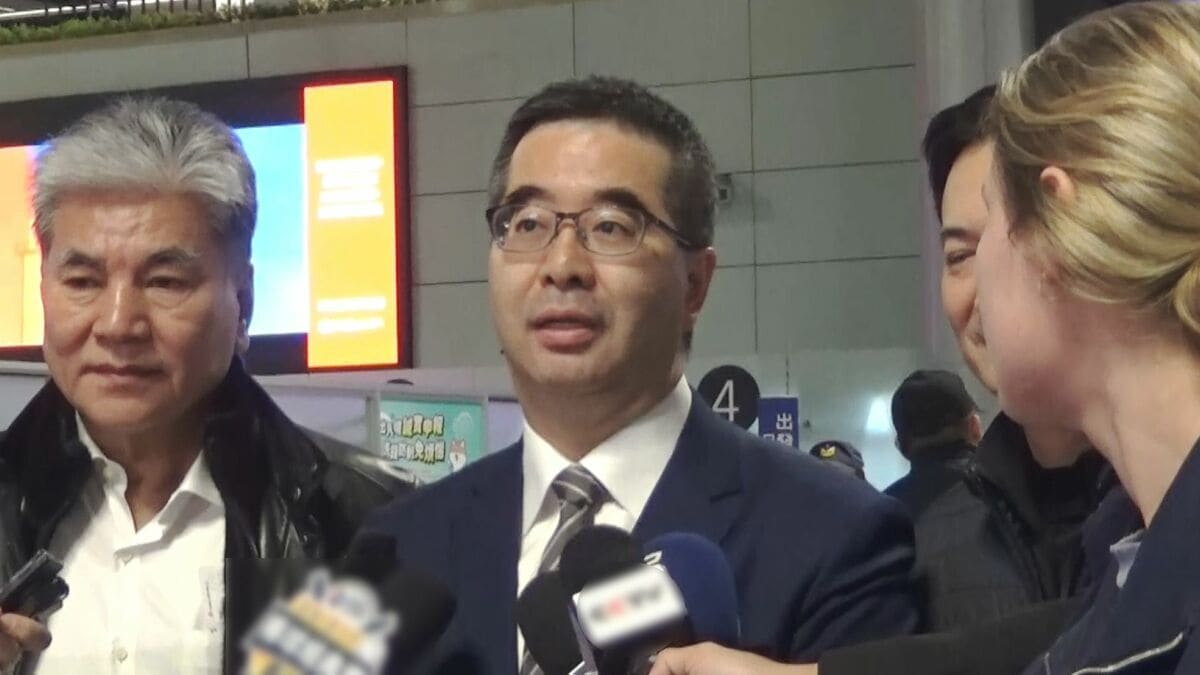
Speaking to reporters at the airport before departure, Hsiao framed the trip as an effort to ease tensions and expand practical opportunities for Taiwanese businesses. “From the perspective of Taiwan’s constitutional framework, the Chinese mainland and we are not two separate states,” he said, reiterating a core KMT position rooted in the Republic of China constitution and long aligned with the party’s interpretation of the “one China” framework. “Reducing confrontation, fostering a peaceful atmosphere, and bringing business opportunities to Taiwanese enterprises are the main goals of this forum.” Hsiao is expected to remain in Beijing through the day after tomorrow.
What is the KMT–CCP Forum?
The KMT–CCP Forum—formally known in some iterations as the Cross-Strait Economic, Trade and Culture Forum—first emerged in the mid-2000s as a party-level channel to build confidence and discuss practical cooperation on trade, education, tourism, and culture. It existed alongside other landmark moments, such as then-KMT Chairman Lien Chan’s 2005 visit to Beijing and the 2015 Ma–Xi summit in Singapore. But after Taiwan’s Democratic Progressive Party (DPP) returned to power in 2016, formalized party-to-party exchanges largely stalled. The planned relaunch now underscores how Beijing and the KMT are testing cautious re-engagement at a time of persistent military and political pressure across the Strait.
Beijing’s Calculus and the Lai Administration
China’s leadership labels the administration of President Lai Ching-te “pro-independence” and has intensified coercive tactics ranging from near-daily People’s Liberation Army flights near Taiwan to targeted trade suspensions against Taiwanese goods. For Beijing, reactivating the KMT channel appears intended to amplify an alternative, more conciliatory interlocutor in Taiwan’s fractious political landscape and to increase pressure on the ruling DPP. The optics are clear: by giving the KMT a platform in the capital, China seeks to signal that dialogue and economic incentives are available—so long as Taipei is represented by a party comfortable with the “one China” framework.
Domestic Politics in Taiwan: A Narrow Path
At home, the KMT holds the largest bloc in Taiwan’s legislature after the 2024 elections, even as the DPP retained the presidency. That split governance has sharpened competition over how best to manage China policy. The DPP rejects Beijing’s framing of the “1992 Consensus,” which the KMT interprets as a tacit agreement that both sides belong to “one China,” albeit with differing definitions. Lai has pledged to uphold the status quo, proposed dialogue “under parity and dignity,” and strengthened deterrence through close coordination with partners. The KMT, by contrast, emphasizes reopening travel links, restoring market access for agricultural and fishery products, and rebuilding people-to-people ties, arguing that engagement can reduce risk. That agenda will likely figure prominently in the Beijing meetings, with practical asks that could include resumption of group tourism, expanded flights, or easing of import curbs.
Economic Stakes: From Trade to Chips
Economic calculus dominates the KMT’s pitch. Taiwan’s exporters, farmers, and small businesses have borne the brunt of politically driven restrictions imposed by Beijing, from pineapples to grouper. A forum that unlocks sectoral wins—however incremental—could resonate at home. Yet Taipei’s structural reorientation is already underway: supply chain reshoring, diversification into Southeast Asia and the United States, and growing high-tech collaboration with Japan and European partners are designed to reduce overdependence on the mainland. Any KMT–CCP deliverables will be assessed against this broader shift, particularly in sensitive areas like semiconductors where Taiwan leads globally and where geopolitical risk is most acute.
Japan’s View: Stability First, No Coercion
For Japan, peace and stability across the Taiwan Strait is not an abstract notion but a strategic necessity. The sea lanes that carry energy and goods to and from Japan run through the same waters where air and naval incidents have multiplied. Japan’s government has consistently stressed that unilateral changes to the status quo by force are unacceptable and has worked closely with the United States and like-minded partners to fortify deterrence while keeping diplomatic doors open. From Tokyo’s perspective, any forum that lowers the temperature and yields transparent, non-coercive arrangements could be a net positive—provided such engagement respects Taiwan’s democratic processes and does not fragment the cross-Strait picture into competing political channels that undercut the elected government’s authority.
Japan’s economy is deeply intertwined with Taiwan’s, particularly in semiconductor supply chains. Enhancements to cross-Strait predictability help Japanese manufacturers plan investments and protect critical nodes in advanced chips where Japanese materials, equipment, and expertise are essential. Tokyo will therefore watch the forum for signals that Beijing is prepared to dial back military intimidation and trade pressure, even modestly, in exchange for expanded societal and commercial exchanges. Conversely, an effort by Beijing to instrumentalize the forum for political messaging without concrete de-escalation would do little to calm Japanese concerns.
Risks and Opportunities
The forum’s return offers a mixed bag. On the one hand, structured conversations can reduce miscalculation, revive student and tourism flows, and build non-political goodwill. On the other, party-to-party engagement risks becoming an instrument of United Front tactics, attempting to shape Taiwanese opinion and policy over the heads of the elected authorities. The KMT will need to demonstrate that any outcomes serve the broader public interest and align with Taiwan’s security and democratic norms. That includes transparency on deliverables and clear guardrails against political preconditions that could erode Taiwan’s autonomy or international space.
Regional Context and the Role of Partners
The Indo-Pacific backdrop is unmistakable. The United States and Japan have deepened defense coordination, while Europe’s attention to Taiwan’s stability has sharpened amid global geopolitical shocks. Quiet coordination among democracies—Japan included—aims to deter aggression while encouraging pragmatic, good-faith dialogue. Tokyo’s non-governmental ties with Taipei, including vibrant parliamentary exchanges and industrial cooperation, complement this approach. As the forum convenes, partners will look for tangible steps that reduce friction: restoration of two-way travel, agreed crisis hotlines, or sector-specific trade understandings devoid of political strings.
What to Watch Next
Observers will track whether the Beijing meetings produce measurable outcomes, such as eased import restrictions, new flight routes, or cultural and educational exchange programs. The tone of official Chinese statements—and whether military activity around Taiwan subsides or intensifies during and after the forum—will be equally telling. For Taiwan’s domestic audience, KMT leaders must show they can deliver gains without conceding on sovereignty or democratic legitimacy. For Japan and other regional stakeholders, the key test is whether the forum contributes to durable de-escalation. Dialogue has value, but only if it advances a stable status quo, respects Taiwan’s democratic choices, and reduces the risk of coercion in the waters and skies that matter so much to Japan’s security and the global economy.