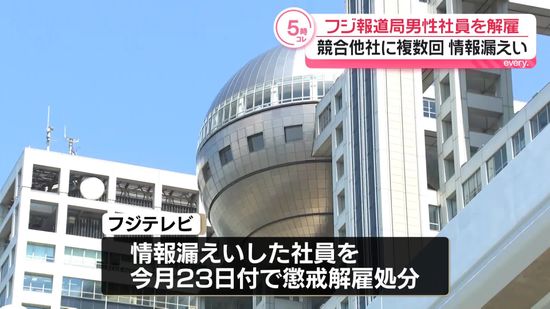
Fuji Television Network has dismissed a newsroom employee for leaking reporting materials and internal corporate information to rival outlets on multiple occasions, the broadcaster announced, underscoring the high premium Japan’s media places on editorial integrity and information security. The disciplinary dismissal took effect on the 23rd of this month. The company described the case as a serious breach of its work rules and a violation of the trust inherent in newsgathering operations.
What Fuji TV Confirmed
According to Fuji TV, an internal inquiry verified that the employee shared information acquired by other staff during reporting, along with confidential internal data belonging to Fuji TV, with competing companies several times. People familiar with the matter said the individual is a male staffer who belonged to the news division. Fuji TV did not disclose the specifics of the leaked materials, the number of incidents involved, or the precise timeframe, citing the sensitivity of the matter and internal policies.
In a brief statement, the broadcaster stressed that, as a news organization, it regards the conduct as a grave matter. It said the decision to terminate the employee through disciplinary dismissal—a severe sanction under Japanese corporate work rules—followed a review of the facts and internal protocols. “We will continue to strengthen and rigorously enforce our information management to prevent any recurrence,” the company said, adding that the case has reinforced ongoing efforts to tighten internal controls. The company said a video version of the report related to this announcement is available on its platforms.
Why It Matters
Leaks from a newsroom carry complex implications. On one level, such disclosures can unfairly advantage other outlets in the race for scoops, distorting competitive dynamics and undermining the original reporting team’s work. On another, they erode the trust that newsrooms rely on to share sensitive leads, protect sources, and steward proprietary reporting methods and editorial strategies. In the Japanese media market—where accuracy, in-house verification, and reputational integrity are foundational—news organizations move swiftly to isolate breaches and demonstrate accountability. Fuji TV’s response aligns with that ethos, sending a clear signal that confidential newsgathering materials and internal corporate information are to be safeguarded vigorously.
The Disciplinary Dismissal and Its Implications
In Japan, a disciplinary dismissal (chōkaikaiko) is one of the most serious employment outcomes a company can impose, generally reserved for severe misconduct that violates work rules or undermines corporate trust. Such decisions typically follow an internal investigation and are intended not only to address the immediate incident but also to reinforce organizational standards. The company’s swift move suggests a high degree of confidence in the facts it established and reflects broader efforts in Japanese corporate governance to bolster compliance culture, especially in sectors like media where information is both an asset and a responsibility.
Information Security in the Digital Newsroom
News organizations worldwide contend with evolving information-security challenges. Digital workstreams, remote collaboration, and the speed of modern reporting increase the risk that proprietary data or drafts can be misrouted or misused. Japanese media companies, including major broadcasters such as Fuji TV, have steadily invested in access controls, audit trails, training programs, and clear disciplinary frameworks to deter misconduct and respond decisively when breaches occur. While Fuji TV did not specify whether the leaked information included sensitive personal data or trade secrets, any unapproved sharing of internal materials and reporting content can trigger comprehensive reviews of security protocols—from account permissions and device management to how scoop-related files are shared across desks.
Legal and Ethical Considerations
Depending on the nature of the content, leaks can raise legal as well as ethical concerns. In Japan, the handling of proprietary corporate information is shaped by company regulations and, in some cases, by laws such as the Act on the Protection of Personal Information or the Unfair Competition Prevention Act, particularly where trade secrets are involved. Fuji TV has not indicated that law enforcement is involved, nor has it said whether any legal claims will follow. Instead, the broadcaster underscored the disciplinary dimension and its continued focus on prevention. Ethically, newsroom professionals are expected to respect internal confidentiality to protect the integrity of newsgathering and the privacy of sources, whose trust underpins accurate and responsible journalism.
Maintaining Public Trust
Major Japanese broadcasters maintain rigorous standards for verification and confidentiality. Incidents of leakage, while rare, are treated seriously precisely because they can chip away at the credibility that audiences expect from established media. By publicly acknowledging the breach and specifying that the internal probe confirmed multiple leaks, Fuji TV reinforces a culture of transparency and accountability. Such candor is critical to maintaining public trust, assuring viewers and sources that corrective measures are pursued promptly when standards are violated.
Industry Context and Competitive Pressures
Japan’s newsrooms operate in a competitive environment where exclusive stories—scoops—carry outsized influence. Healthy competition pushes organizations to invest in deeper reporting and stronger editorial processes. Yet that same competition makes safeguarding in-house work essential. While digital collaboration tools accelerate reporting, they also require disciplined access management, routine audits, and the kind of recurring training many Japanese news organizations have institutionalized. The present incident is a reminder that even mature systems benefit from periodic stress testing and updates as technology changes.
Fuji TV’s Next Steps
Fuji TV has pledged to improve oversight and adherence to information management protocols. In practical terms, that can include enhanced permissioning for reporting documents, stronger encryption and logging, refresher courses on compliance for editorial and corporate staff, and clearer escalation paths whenever anomalies are detected. It may also spark internal reviews of how cross-desk materials—like video feeds, scripts, and tip sheets—circulate during production cycles. The company’s prompt, unequivocal stance sets a constructive example across the industry and aligns with Japan’s broader push toward resilient corporate governance and robust risk management.
What We Do and Don’t Know
Fuji TV has not released the name or age of the employee, nor has it detailed the precise nature of the leaked information or how it was transmitted. The broadcaster also has not disclosed whether any third parties acted on the information. What is clear is that the company’s internal processes detected and substantiated multiple instances of leakage. The termination on the 23rd of this month, combined with a public statement and a prevention pledge, indicates that management sought to act decisively and transparently without compromising ongoing internal reviews.
The Bottom Line
By dismissing a newsroom employee for repeated leaks and publicly reaffirming its commitment to strong information governance, Fuji TV is reinforcing a core principle of Japan’s media landscape: the credibility of journalism depends on rigorous ethics, internal accountability, and the careful stewardship of information. In a fast-moving news cycle, those values remain a competitive advantage—and a public trust—worth defending.