Tokyo reaffirms support for international justice
Japan has expressed deep concern over the United States’ decision to designate the International Criminal Court (ICC) for sanctions, saying the measure conflicts with Tokyo’s consistent support for the rule of law and the court’s role in the international community.
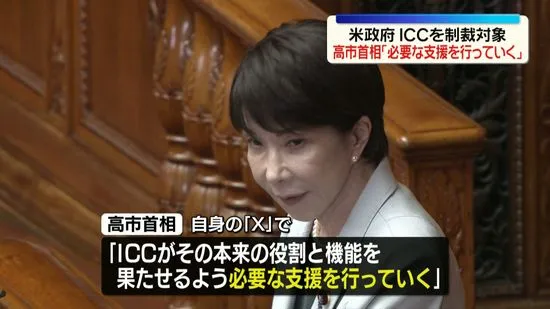
Prime Minister Takaichi issued the statement on social media late on the evening of the ninth, updating her official X account at around 11:30 p.m. She said Japan “consistently places importance on the rule of law in the international community” and supports the ICC as an institution that helps uphold that principle.
“This measure is incompatible with Japan’s consistent position, and we are deeply concerned,” the prime minister said, according to the statement.
Japan pledges continued diplomatic engagement
Prime Minister Takaichi added that Japan would continue to urge the United States to reconsider its approach. She also said Tokyo would maintain communication with ICC President Akane and with countries connected to the court, while providing the necessary support to ensure that the ICC can fulfill its original role and functions.
The statement reflects Japan’s broader foreign-policy emphasis on a rules-based international order. For Tokyo, international law and reliable global institutions are particularly important at a time when security tensions, armed conflicts and disputes over accountability are placing pressure on established diplomatic frameworks.
Why the ICC matters to Japan
The ICC, headquartered in The Hague, investigates and prosecutes individuals accused of serious international crimes, including genocide, crimes against humanity and war crimes, when the court has jurisdiction. It is designed to complement national courts rather than replace them, acting when domestic legal systems are unable or unwilling to conduct genuine proceedings.
Japan is a state party to the Rome Statute, the treaty that established the ICC, and has been a prominent supporter of the court since joining in 2007. Japan has also played an active role in international discussions on strengthening legal accountability and has provided significant financial support to the institution. This background helps explain why Tokyo has reacted strongly to any measure that could affect the court’s independence or ability to operate.
The United States is not a party to the Rome Statute, and Washington has historically maintained a cautious and often critical position toward the ICC. The latest sanctions decision therefore has implications beyond the immediate dispute between the U.S. government and the court. It could also influence cooperation between governments, the ability of court officials to work internationally and wider debates about how alleged international crimes should be addressed.
A carefully worded but firm message
Japan’s response combines clear criticism with a commitment to continued dialogue. Rather than framing the issue solely as a bilateral confrontation, Tokyo appears focused on preserving communication with Washington while protecting the institutions it believes are essential to global stability.
Prime Minister Takaichi’s remarks also signal that Japan intends to remain engaged with the ICC and its partners. As international law faces growing challenges, Tokyo’s position underlines its belief that accountability mechanisms must be allowed to carry out their responsibilities in accordance with established legal principles.