
North Korea rejects Seoul’s call to reduce military tensions
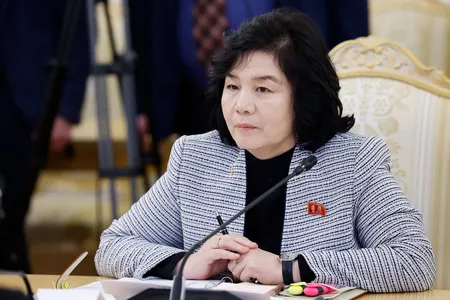
North Korean official Kim Yo Jong has ridiculed South Korean President Lee Jae-myung’s appeal for renewed dialogue and measures to ease military tensions, calling his remarks “the climax of a farce,” according to a statement carried by North Korean state media.
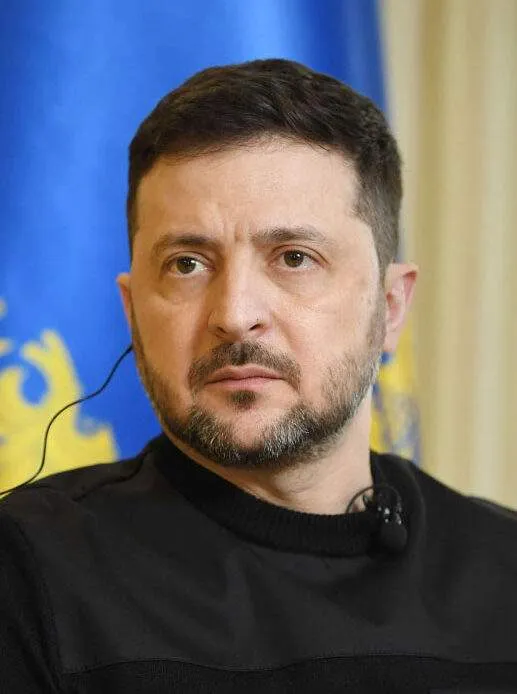
Lee said in a speech on the first day of the month that South Korea would continue pursuing steps designed to reduce confrontation with North Korea and called for the resumption of dialogue. His comments came after an explosion near the inter-Korean military demarcation line injured three South Korean military officers last month.
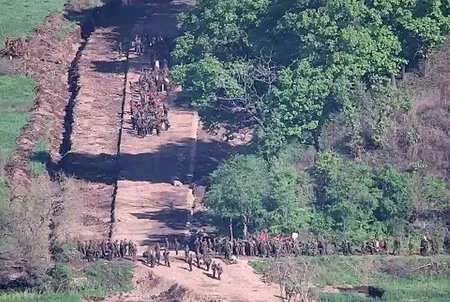
South Korean military authorities have concluded that the blast was caused by a landmine laid by North Korean forces. However, Lee did not directly refer to North Korea’s responsibility in his speech. Instead, he emphasized the need to prevent further escalation and maintain efforts to lower military tensions along the heavily fortified border.
Kim Yo Jong repeats counterclaim
In her statement, Kim Yo Jong, the younger sister of North Korean leader Kim Jong Un, repeated Pyongyang’s claim that the explosion was staged by South Korea. North Korea has not accepted Seoul’s assessment of the incident and has continued to reject accusations that its actions are responsible for the blast.
Kim also defended North Korea’s ongoing fortification of its border. She said Pyongyang was strengthening the frontier in order to permanently close the door and avoid facing South Korea. Her remarks suggest that North Korea is presenting its border construction not as a temporary military measure, but as part of a broader policy of separation from the South.
Kim sharply criticized Lee’s more conciliatory approach, accusing him of trying to play the role of a “hero of justice.” She described his call for reduced tensions as a performance that was supposedly too theatrical to watch alone.
Dialogue faces major obstacles
The exchange underscores the difficult security environment surrounding the Korean Peninsula. Seoul’s new administration has signaled an interest in reducing confrontation and reopening communication channels, but North Korea has shown little willingness to respond positively. The disagreement over the border explosion illustrates how even a single incident can deepen mistrust and complicate diplomatic efforts.
The Korean Demilitarized Zone remains one of the world’s most heavily armed borders. Landmines, surveillance posts, artillery units and military exercises all contribute to the risk of accidental escalation. Although dialogue between the two Koreas has periodically reduced tensions, communication has repeatedly broken down over weapons development, military drills and competing interpretations of past agreements.
Why the issue matters to Japan
Developments on the Korean Peninsula are closely watched in Japan because instability affects regional security, shipping routes and the safety of Japanese citizens. North Korea’s missile and nuclear programs have already prompted stronger security cooperation among Japan, South Korea and the United States. Any increase in border tensions could therefore have consequences beyond the Korean Peninsula.
For Japan, the latest dispute also reinforces the importance of reliable information-sharing and crisis communication among regional governments. Tokyo has consistently supported efforts to maintain peace while stressing the need to address North Korea’s missile, nuclear and abduction issues. Whether Seoul’s diplomatic initiative can gain traction will depend largely on Pyongyang’s willingness to engage, as well as the ability of all sides to prevent military incidents from spiraling into a wider confrontation.
For now, Kim Yo Jong’s statement indicates that North Korea remains deeply skeptical of Seoul’s outreach. The sharp language leaves little immediate indication that talks will resume soon, but the situation will continue to be closely monitored across East Asia, including in Japan.