Mine blast near the inter-Korean border
SEOUL—South Korea’s military said on the 28th that a landmine believed to be of North Korean origin exploded near the military demarcation line, injuring three South Korean soldiers. Two soldiers reportedly suffered serious injuries, and one was said to have lost an ankle in the blast.
The incident occurred on the 21st on the southern side of the Demilitarized Zone, or DMZ, the heavily guarded buffer area separating the two Koreas. South Korean officials said the explosion site was approximately 10 meters from the military boundary line.
Based on the nature of the explosion and an examination of the surrounding area, the South Korean military said it believes the device was almost certainly not one of its own mines. Officials also pointed to a mine resembling those used by North Korean forces, reportedly found in a wooden box about one meter from the blast site.
Investigation could shape Seoul’s response
A South Korean military official said the armed forces would take “corresponding measures” if the device is ultimately determined to have been planted by North Korea. The wording reflects the sensitive balance facing President Lee Jae-myung’s administration.
Lee has called for the resumption of dialogue between Washington and Pyongyang and has generally promoted a more conciliatory approach toward North Korea. However, a confirmed North Korean mine-laying operation could expose the government to criticism from conservatives, who may accuse it of responding too weakly to a direct security threat.
South Korea’s largest conservative opposition party, People Power Party, has already described the possible placement of new mines as an act of clear aggression. Party leader Jang Dong-hyeok made the remarks after meeting Defense Minister Kang Shin-cheol on the 28th.
Growing military activity around the DMZ
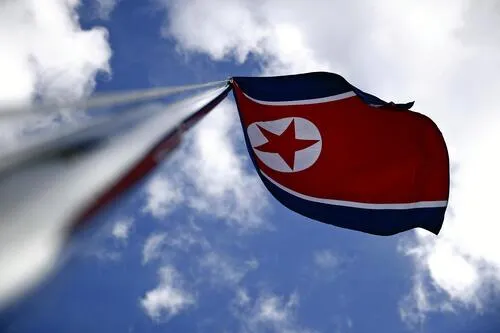
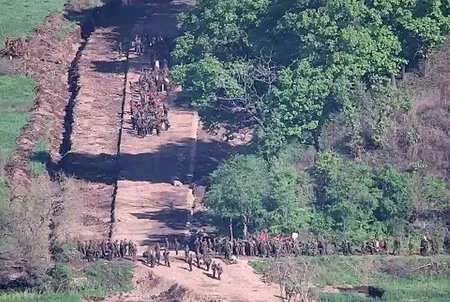
North Korea has increasingly characterized South Korea as an enemy since late 2023. South Korean authorities say North Korean troops have been building walls near the border and may have crossed into sensitive areas to lay additional mines. Seoul also reported finding signs of possible North Korean mine-laying activity near the blast site in September last year.
Officials have acknowledged that other explanations remain possible, including the possibility that heavy rain or flooding moved an older mine from its original position. A final determination is therefore expected to depend on forensic analysis and a broader investigation of the area.
The incident recalls a serious confrontation in August 2015, when two South Korean soldiers were badly wounded by mines near the border. South Korea later concluded that North Korea had planted the explosives and resumed loudspeaker broadcasts directed at the North. Pyongyang responded with artillery fire, creating a potentially dangerous military standoff.
Why the incident matters beyond the Korean Peninsula
Any escalation would be closely watched in Japan, which shares the security environment of Northeast Asia with South Korea and faces its own concerns over North Korean missiles, military activity and regional instability. Tokyo, Seoul and Washington maintain important security cooperation, although historical and political differences have sometimes complicated coordination.
For Seoul, the challenge is to protect its soldiers and demonstrate resolve while avoiding a chain reaction that could undermine diplomatic efforts. The mine investigation may therefore have consequences well beyond the immediate accident, affecting military readiness, intergovernmental communication and the broader security outlook across East Asia.