South Korea reports milestone missile test
South Korea’s presidential office announced that the country had successfully conducted its first test launch of a hypersonic missile under development, with President Lee Jae Myung observing the event. The announcement marks a significant step in Seoul’s efforts to strengthen its strategic capabilities amid growing missile-related concerns on the Korean Peninsula.
According to the presidential office, the missile’s glide vehicle separated successfully at the designated altitude before beginning its descent toward the target. During its flight, the vehicle reportedly changed course both vertically and horizontally, following an irregular trajectory before striking the target accurately. Such maneuverability is considered one of the defining characteristics of hypersonic weapons and can make them more difficult to detect and intercept than conventional ballistic missiles.
North Korea also highlights hypersonic development
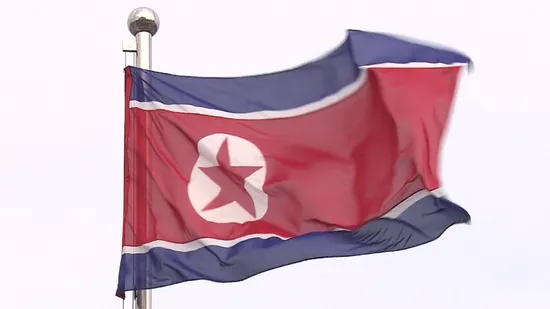
The South Korean announcement came shortly after North Korean leader Kim Jong Un observed what state media described as a “launch training” exercise on the third. North Korea has been pursuing its own hypersonic weapons program and has repeatedly showcased missile systems that it claims can maneuver at high speed during flight.
Hypersonic weapons generally travel at speeds of at least Mach 5, although speed alone does not determine their military significance. Their potential ability to maneuver at lower altitudes and alter their flight paths can reduce the time available for an adversary to identify the launch, calculate the trajectory and organize an interception. Analysts caution, however, that publicly announced tests do not always provide enough information to independently assess a system’s operational performance.
Why the development matters to Japan
The advances reported by both Koreas are closely watched in Japan. Although the latest test was conducted by South Korea, developments on the Korean Peninsula have direct implications for Japan’s national security, maritime routes and wider regional stability. Japan lies within range of North Korean missile systems, and Pyongyang’s repeated launches have made missile warning and civil protection important issues for communities across the country.
Japan has been strengthening its layered missile-defense network, including sea-based Aegis destroyers and the Patriot missile system. Tokyo is also developing longer-range stand-off capabilities and improving intelligence, surveillance and reconnaissance systems. These measures are intended to enhance deterrence and give Japan more options in responding to increasingly complex threats while maintaining close security cooperation with the United States and coordination with South Korea.
A broader Indo-Pacific security challenge
The reported test also underscores the rapidly changing security environment in the Indo-Pacific. China, Russia and the United States are investing in advanced hypersonic and counter-hypersonic technologies, while regional governments are examining how existing radar and missile-defense systems can respond to new flight patterns.
For Japan, the issue is not only military technology but also crisis management and regional communication. Clear information-sharing among Japan, South Korea and the United States can help reduce the risk of miscalculation, particularly during periods of heightened military activity. At the same time, continued dialogue and diplomatic efforts remain important alongside defense preparations.
South Korea’s announcement therefore represents more than a domestic weapons-development milestone. It highlights the growing importance of advanced missile technology in Northeast Asia and the continuing need for Japan and its partners to balance credible deterrence with stability, transparency and responsible regional engagement.