North Korea rejects South Korean findings
North Korea has condemned South Korea’s conclusion that a landmine explosion near the inter-Korean military boundary was caused by a North Korean mine, describing the finding as a serious violation of its sovereignty and warning that Seoul would “pay a price.”
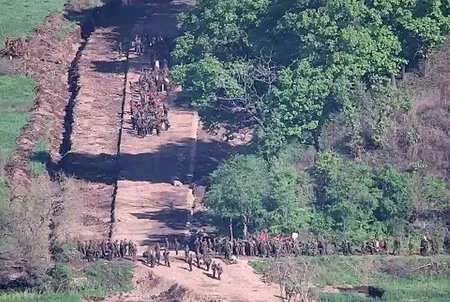
The incident occurred on June 21 near the Military Demarcation Line separating North and South Korea. Three South Korean military officers who were carrying out activities in the area were injured, with the reported injuries ranging from minor to serious.
On July 5, the South Korean military announced the results of its final investigation. Officials said the conclusion was based on the explosive material found in the mine, as well as the composition of recovered fragments and other physical evidence. The military determined that the device was a North Korean landmine.
Pyongyang calls accusation a provocation
North Korea’s Foreign Ministry responded on the evening of July 6 through state media. In its statement, Pyongyang rejected South Korea’s assessment as an attempt to shift blame and provoke confrontation.
The ministry also criticized South Korean efforts to obstruct North Korea’s ongoing fortification work near the military boundary. North Korea has described those activities as an exercise of its sovereignty, while South Korea views military construction and the placement of mines in the sensitive border area as a serious security threat.
Pyongyang alleged that Seoul was attempting to blame North Korea for what it called a “self-staged” incident and damage the country’s international image. It described the accusation as a grave provocation that should bring consequences.
North Korea also objected to South Korea’s stated intention to remove additional mines believed to have been placed by the North. The statement warned that if South Korea were to cross even one millimeter into what Pyongyang considers its territory, North Korea would take “immediate and powerful” action.
A dangerous environment around the border
The Korean Peninsula remains one of the world’s most heavily militarized regions. The Military Demarcation Line runs through the Demilitarized Zone, commonly known as the DMZ, a narrow but highly fortified area established after the 1953 armistice that ended active fighting in the Korean War. Although the armistice halted large-scale combat, the two Koreas remain technically at war because no formal peace treaty was signed.
Landmines, surveillance posts, barriers and military construction make even limited activity near the boundary extremely hazardous. Any dispute over the origin of a mine can quickly become a broader political and military confrontation, particularly when both sides accuse the other of violating sovereignty or manipulating public opinion.
Why the developments matter to Japan
The dispute is also closely watched in Japan. Japan lies near the Korean Peninsula and is directly affected by instability in Northeast Asia, including tensions involving North Korea’s military activities, missile development and relations with South Korea and the United States.
Tokyo has consistently emphasized the importance of regional deterrence, close coordination with Seoul and Washington, and the peaceful resolution of disputes. While the latest mine incident took place on the Korean Peninsula and no Japanese involvement has been reported, a sudden escalation could affect Japan’s security environment, emergency preparedness and diplomatic priorities.
For now, the exchange remains a war of words, but the language used by North Korea is notably severe. With troops operating close to a heavily armed boundary, both sides face pressure to prevent further incidents while maintaining their respective security positions. The latest statements underline how quickly a single explosion can deepen mistrust across the region.