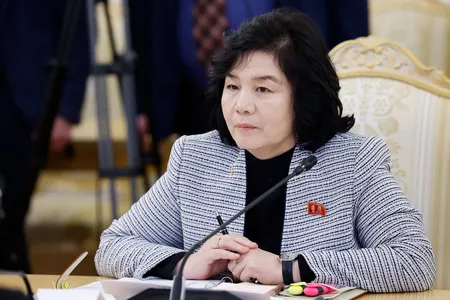
Pyongyang pushes back against trilateral statement
North Korean Foreign Minister Choe Son Hui has sharply rejected a joint statement by the foreign ministers of Japan, the United States and South Korea that reaffirmed their goal of North Korea’s complete denuclearization.
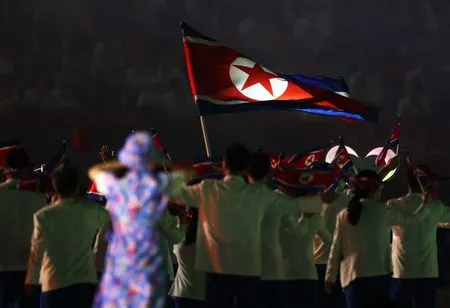
In a statement issued on the 24th, Choe argued that North Korea’s determination to possess nuclear weapons would remain “absolutely unchanged” even after 100 or 1,000 years. Her remarks represent a direct response to the three countries’ coordinated diplomatic message and underline the continuing gap between Pyongyang and the nations seeking to reduce nuclear and missile-related risks on the Korean Peninsula.
Japan remains central to regional security coordination
For Japan, North Korea’s nuclear and missile programs are not distant geopolitical concerns. Japan is located close to the Korean Peninsula and has repeatedly faced security challenges linked to North Korean missile launches and military developments. The issue is therefore closely connected to the safety of Japan’s people, the stability of Northeast Asia and the wider rules-based international order.
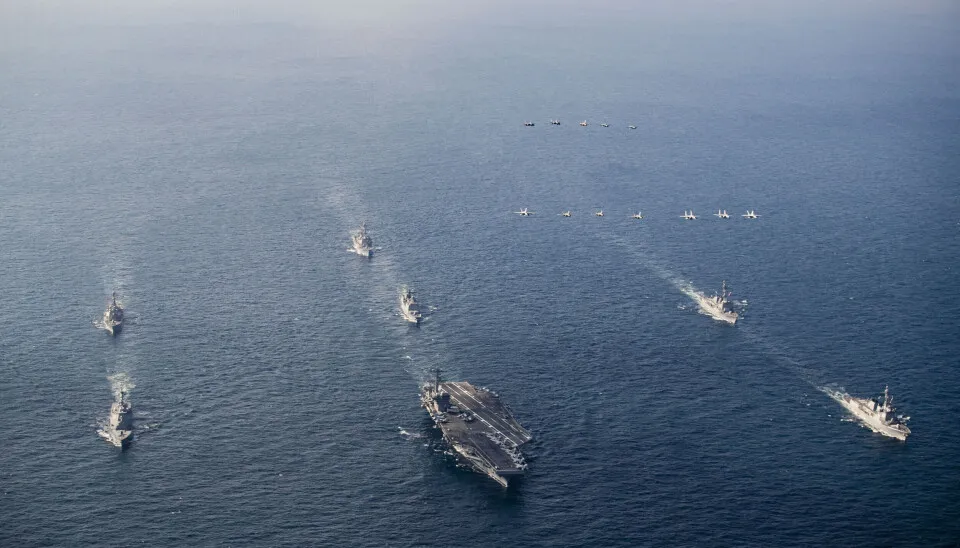
Tokyo has consistently worked with Washington and Seoul to strengthen information-sharing, deterrence and diplomatic coordination. Trilateral cooperation is particularly important because each country brings a different perspective to the security environment. Japan is directly exposed to potential missile threats, South Korea is located on the front line of tensions, and the United States provides a major security commitment and broader regional capabilities.
A familiar but significant message from Pyongyang
North Korea’s latest statement follows a long-standing pattern in which Pyongyang rejects international demands for denuclearization while presenting its nuclear arsenal as essential to national security. By describing its nuclear policy as permanent, Choe signaled that North Korea is not currently prepared to accept the framework promoted by Japan, the United States and South Korea.
Such rhetoric can complicate efforts to reopen dialogue. At the same time, the strong wording highlights why the three countries continue to emphasize close consultation. Their joint approach seeks to maintain pressure on North Korea while keeping diplomatic channels and the possibility of future negotiations open.
Implications for Japan and the region
The statement is likely to reinforce Japan’s focus on practical security preparedness, including close coordination with its allies and partners. It also underscores the importance of accurate information-sharing and calm, consistent communication at a time when sharp public statements can increase uncertainty.
For foreign observers interested in Japan, the development offers a clear view of how regional security directly affects Japanese foreign policy and public debate. Japan’s response is shaped not only by its alliance with the United States but also by the need to manage relations with neighboring countries while supporting stability through diplomacy and international cooperation.
North Korea’s declaration does not by itself determine the future course of the region, but it confirms that denuclearization remains one of the most difficult diplomatic challenges facing Northeast Asia. Japan, the United States and South Korea are expected to continue coordinating closely as they monitor developments and assess the security implications.