North Korea targets Japan in UN address
North Korea used a speech at the United Nations General Assembly on the 28th to accuse Japan of accelerating a move toward rearmament and creating what it called “war clouds” over the Korean Peninsula. The remarks reflect the continuing hostility between Pyongyang and Tokyo, as well as the broader security tensions involving North Korea, Japan, South Korea and the United States.
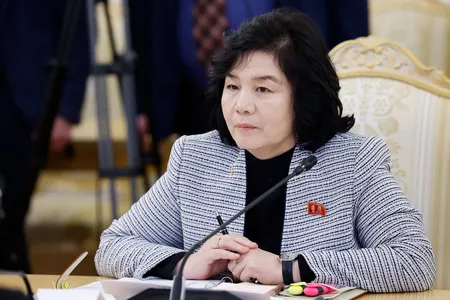
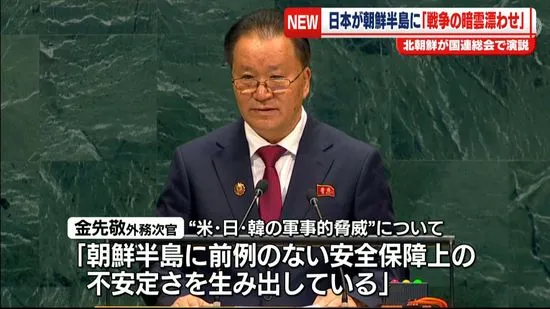
Kim Son-kyong, North Korea’s vice minister of foreign affairs, claimed that Japan was moving with “unprecedented determination” to strengthen its military capabilities. According to North Korean state messaging, Japan is allegedly abandoning its traditional policy of exclusive defense and expanding its armed forces in ways that threaten regional stability.
Kim also criticized security cooperation among the United States, Japan and South Korea. He argued that what Pyongyang describes as military threats from the three countries had created “unprecedented security instability” on the Korean Peninsula. North Korea regularly condemns joint military exercises and closer coordination among the three nations, portraying them as preparations for an attack.
North Korea defends its nuclear arsenal
During the speech, Kim presented North Korea’s nuclear weapons as a defensive deterrent. He described the country’s nuclear capability as an “absolute force” protecting its sovereignty, national security and peace from external aggression and threats. He further insisted that this deterrent would never be abandoned or overturned “under any circumstances or by any means.”
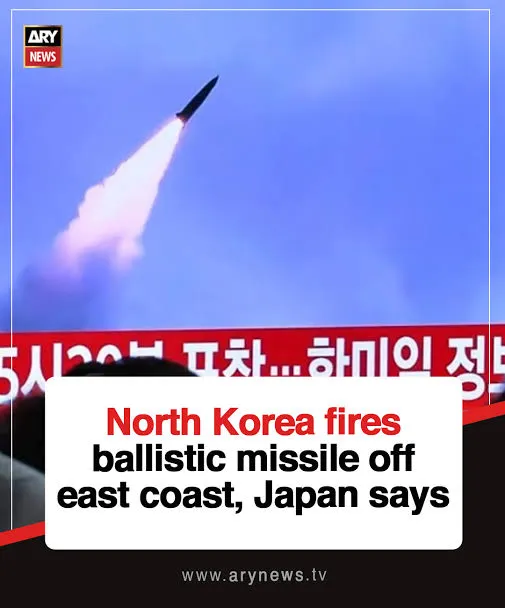
The statement is consistent with Pyongyang’s long-standing position that its nuclear and missile programs are necessary to deter the United States and its allies. However, the North Korean government’s weapons development has also generated serious concern across the region and internationally, particularly because of repeated missile launches and the uncertainty surrounding its military intentions.
Japan’s changing security environment
For Japan, North Korea’s accusations come amid a significant reassessment of the country’s security policy. Japan remains committed to a defense-oriented national policy, but successive governments have argued that the regional environment has become more challenging. North Korea’s missile tests, China’s growing military activity and Russia’s actions in the Indo-Pacific have all influenced public and political discussions in Tokyo.
Japan has strengthened its defense capabilities and deepened security cooperation with the United States and South Korea. Tokyo says these steps are intended to protect Japan’s people and territory, improve deterrence and respond to potential threats. Japanese officials have repeatedly emphasized that the country’s security policy is defensive and rooted in the rule of law, while also calling for diplomacy and dialogue where possible.
Regional tensions remain high
North Korea’s UN speech illustrates the sharply different interpretations of security developments in Northeast Asia. Pyongyang views military cooperation among Japan, the United States and South Korea as hostile pressure. Japan and its partners, by contrast, see closer coordination as a response to North Korea’s nuclear and missile programs and to a rapidly changing regional environment.
The competing narratives underline the difficulty of reducing tensions on the Korean Peninsula. While North Korea continues to describe its nuclear weapons as essential to national survival, Japan and other countries maintain that denuclearization is necessary for lasting regional peace. The latest exchange at the United Nations is unlikely to resolve those differences, but it highlights why security policy in Japan remains closely watched by governments and communities throughout Asia.