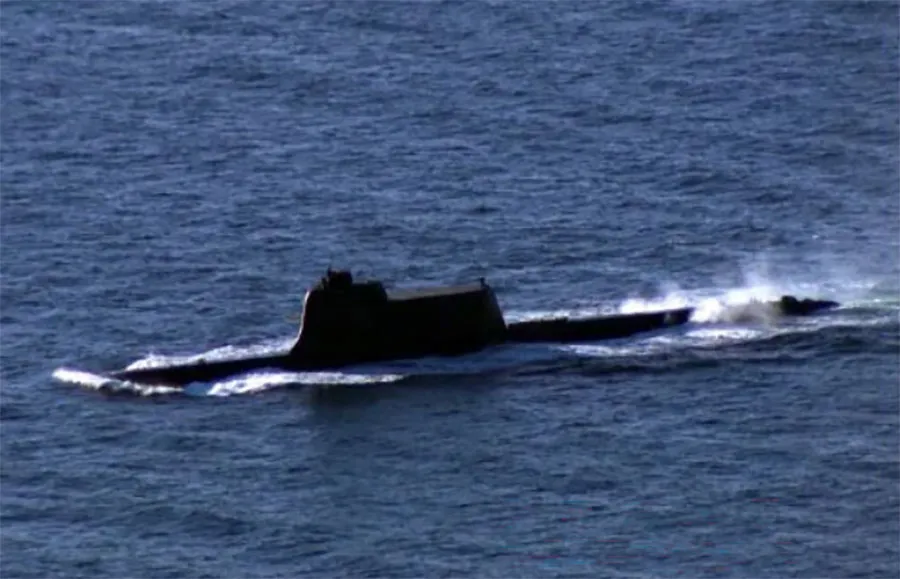
North Korea publicizes underwater missile launch
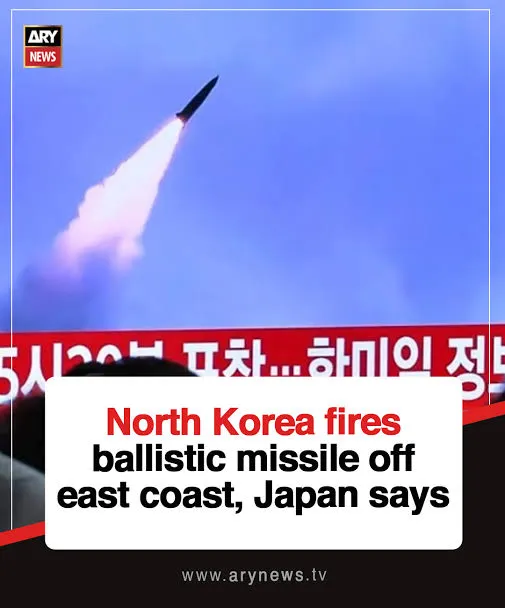
North Korea has released details of a submarine-launched cruise-missile test conducted in the Sea of Japan, highlighting what it calls a new element of its strategic deterrence capability. The state-run Korean Central News Agency reported on October 14, 2026, that the Korean People’s Navy carried out the test and described the weapons as “strategic submarine-launched cruise missiles.”
The announcement marks the first publicly reported submarine-launched cruise-missile exercise by North Korea’s navy in approximately three years. By repeatedly emphasizing the word “strategic,” Pyongyang appeared to signal that the missiles may be designed to support nuclear missions. However, North Korea did not independently confirm that the weapons had been fitted with nuclear warheads, and their exact operational status remains unclear.
Two missiles, two launch and flight profiles
Images released by North Korean media appear to show two different missile-launch methods. One missile was launched vertically from underwater, while the other emerged at an approximately 45-degree angle through what appeared to be a torpedo tube. The differing configurations may indicate that North Korea is testing more than one type of submarine-launched cruise missile or exploring alternative launch systems for its naval force.
According to information released by Japan’s Ministry of Defense, the first missile reached an estimated maximum altitude of about 21 kilometers and traveled approximately 220 kilometers. The second missile reached an altitude of around seven kilometers and flew more than 911 kilometers. These contrasting figures suggest distinct flight profiles, potentially involving differences in missile design, launch method, or programmed mission requirements.
The available data does not establish whether either missile successfully completed an operationally realistic mission. North Korean state media said the exercise was intended to verify the current operational posture of an underwater combat system, improve the navy’s ability to carry out strategic missions, and demonstrate that the country’s war deterrent possesses reliability, certainty, and capability.
Significance for Japan and regional security
The test is particularly significant for Japan because the Sea of Japan is a major area of concern for Japanese defense planners. A submarine-launched cruise missile could potentially be fired from waters outside the immediate range of some land-based surveillance systems, making detection and response more challenging. Unlike ballistic missiles, cruise missiles generally fly at lower altitudes and can be designed to maneuver, although their actual effectiveness depends on guidance systems, reliability, range, and the ability of the launching platform to operate undetected.
Japan’s Ministry of Defense is closely monitoring North Korea’s missile development, alongside the United States and South Korea. The latest test may reinforce the importance of maritime surveillance, undersea tracking, missile defense, and close security coordination among the three countries. For Japan, the development also underscores why waters surrounding the Japanese archipelago remain central to national security planning and regional diplomacy.
Uncertainty over the submarine used
At present, the Sinpo-C-class submarine is the only North Korean submarine publicly identified as having an underwater missile-launch capability. North Korea has also pursued larger submarine projects, but independent assessments of their readiness and capabilities vary. Official information does not make clear whether the latest exercise used the Sinpo-C-class vessel, another platform, or a different underwater launch arrangement.
The test therefore provides important clues but not a complete picture of North Korea’s naval capabilities. Its public disclosure is likely intended both to demonstrate technological progress and to send a strategic message to neighboring countries, including Japan. Analysts will continue examining the launch footage, missile trajectories, submarine imagery, and official statements to determine how close North Korea may be to deploying a reliable submarine-launched cruise-missile force.