North Korea announces new weapons test
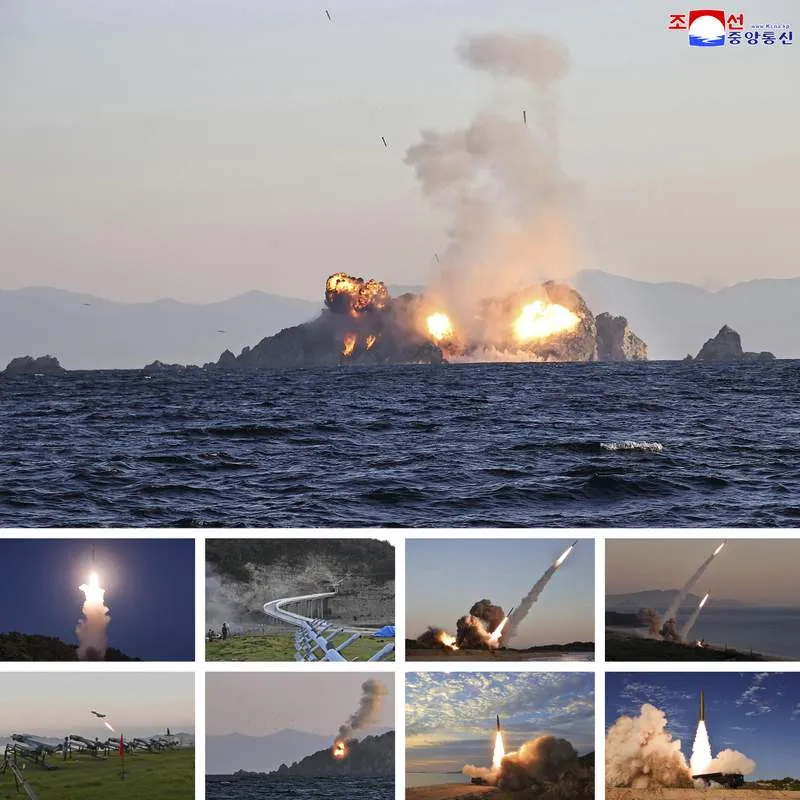
North Korea has announced the successful test of a new weapon believed to be an upgraded short-range ballistic missile equipped with a hypersonic warhead, raising fresh concerns about the rapidly evolving security environment in Northeast Asia.
The announcement was made on the 22nd by the Korean Central News Agency, North Korea’s state-run media outlet. It said the country’s Missile Administration had conducted the test two days earlier, on the 20th, under the supervision of Kim Jong Un, the country’s leader and general secretary of the Workers’ Party of Korea.
The test appears to correspond to two short-range ballistic missile launches detected by South Korea’s Joint Chiefs of Staff on the same day. South Korean authorities reported that North Korea had fired short-range ballistic missiles on two occasions, although independent assessments of the weapon’s exact specifications remain limited.
Possible hypersonic modification
Hong Min, a senior research fellow at South Korea’s Korea Institute for National Unification, analyzed the weapon as a modified version of the Hwasong-11 family of short-range ballistic missiles. According to his assessment, the missile may have been fitted with a warhead capable of flying at hypersonic speeds.
Hypersonic weapons are generally understood to travel at speeds of at least Mach 5 and may be designed to maneuver during flight. Such characteristics can make them more difficult for existing missile-defense systems to track and intercept, particularly if the weapon changes its trajectory during the terminal phase.
North Korea claimed that the test posed no threat to the safety of neighboring countries. Kim Jong Un nevertheless described the development as having “great significance” for the country’s military advancement. Referring to the United States and other perceived adversaries, he said that North Korea’s enemies already understood the implications of updating its military technologies.
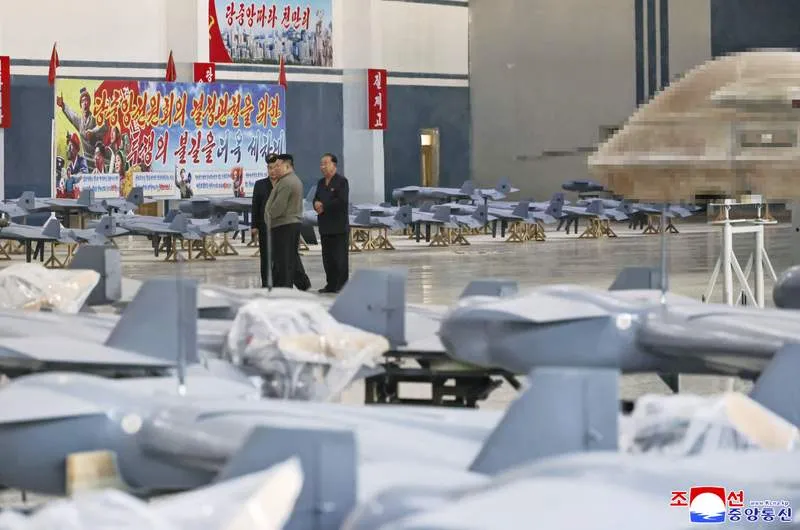
Kim’s daughter, widely identified by outside observers as Ju Ae, was also present at the reported test. Her repeated appearances at major military events have attracted international attention and are often viewed as part of North Korea’s effort to project continuity in its leadership and strategic policies.
Why the development matters to Japan
The reported test is especially significant for Japan because North Korea’s missile program directly affects the security of the Japanese archipelago and surrounding waters. Short-range missiles can threaten military installations and other targets in South Korea and Japan, while improvements in speed and maneuverability could complicate regional missile-warning and defense operations.
Japan, South Korea and the United States maintain close security cooperation in response to North Korea’s missile and nuclear programs. Tokyo has invested in layered missile-defense capabilities, including Aegis-equipped vessels and land-based systems, while also strengthening intelligence-sharing and coordination with Washington and Seoul.
At this stage, North Korea’s claims cannot be independently verified, and analysts will be watching for additional satellite imagery, flight data and assessments from South Korean, Japanese and U.S. authorities. Even so, the announcement underscores the continuing importance of vigilance, accurate information-sharing and diplomatic efforts to reduce tensions in Northeast Asia.