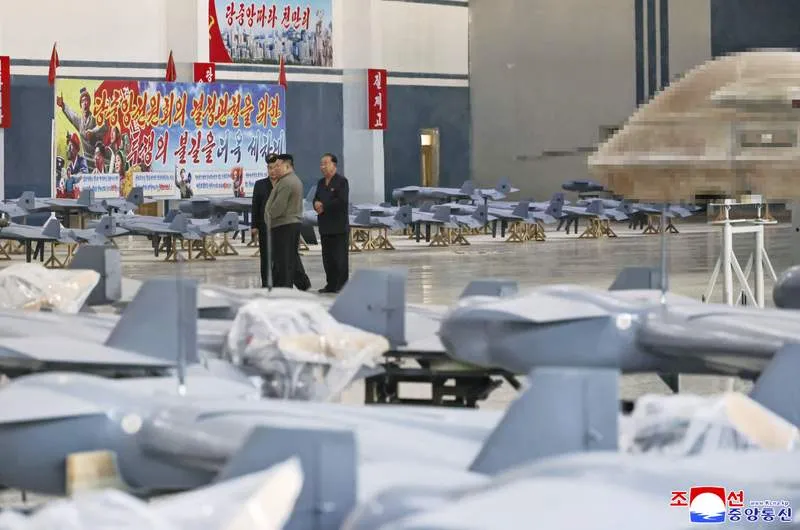
North Korean leader Kim Jong Un has inspected factories producing multiple-launch rocket systems and unmanned aerial vehicles, state media reported on the 19th, in a move that highlights Pyongyang’s growing focus on coordinated, multi-weapon attacks.
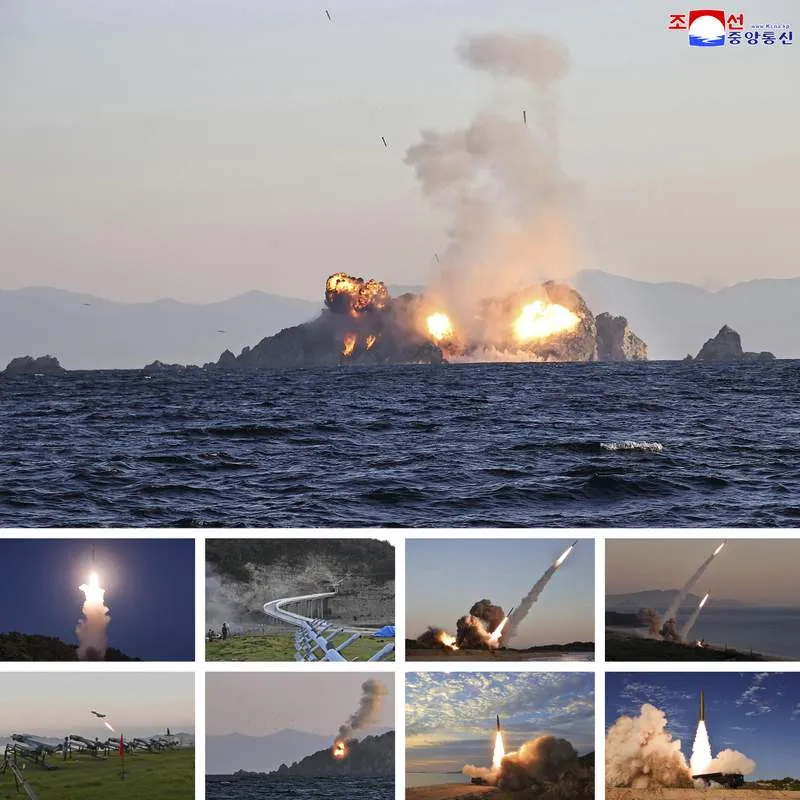
According to the report, Kim visited defense-related factories from the 16th to the 18th and reviewed production conditions for large-caliber multiple rocket launchers and drones. The visits followed a military training exercise on the 12th in which North Korean forces conducted a concentrated attack using several types of weapons at the same time.
A coordinated attack model
Analysts believe North Korea may be studying or imitating tactics increasingly seen in Russia’s war against Ukraine. Russian forces have repeatedly combined artillery and rocket fire with drone operations, using different weapons simultaneously to put pressure on air-defense systems and military targets.
Weapons with different flight characteristics can create a more difficult interception problem. Rockets may arrive quickly and in large numbers, while drones can fly at lower speeds and altitudes, change their routes, or be used for surveillance and targeting. When deployed together, such systems can force defenders to respond across multiple directions and timeframes.
North Korean state media presented the factory inspections as part of efforts to increase defense production and improve military readiness. The reports did not provide detailed production figures or confirm whether the weapons were intended for export. However, South Korean media have cited concerns that some of the equipment could potentially be supplied to Russia.
Growing concerns over Russia-North Korea military ties
Any transfer of North Korean weapons or military technology to Russia would attract international attention. Pyongyang and Moscow have strengthened their relationship in recent years, while governments in Japan, South Korea and the United States have closely monitored possible military cooperation between the two countries.
North Korea has long been subject to United Nations sanctions restricting its development and export of weapons related to its missile and nuclear programs. Reports of expanded production, military exchanges or weapons transfers could therefore raise further questions about sanctions enforcement and regional security.
Why the developments matter to Japan
The developments are particularly relevant to Japan because North Korean missile and weapons programs directly affect security in Northeast Asia. Japan, the United States and South Korea regard North Korea’s large-caliber multiple rocket systems as ballistic missiles because of their range and flight characteristics. Although these systems differ from conventional long-range ballistic missiles, their potential use against targets in the region remains a serious concern.
Japan has continued to strengthen coordination with the United States and South Korea in response to North Korea’s missile launches and military activities. The use of drones alongside rockets could add another layer of complexity for surveillance, early warning and missile defense planning. It may also increase the importance of intelligence sharing, resilient infrastructure and the protection of civilian areas.
For Japan and its neighbors, the latest factory inspections are more than a domestic North Korean military announcement. They suggest that Pyongyang is seeking to expand both the quantity and variety of weapons available to its forces. Whether the effort produces a major operational change remains uncertain, but the combination of rockets and drones is likely to remain an important focus for regional security officials.