North Korea announces missile test
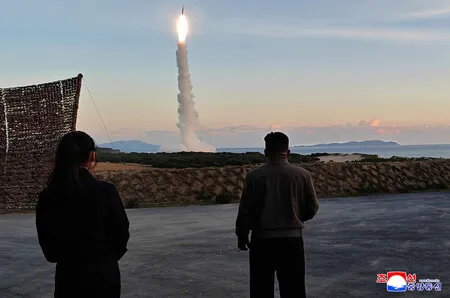
North Korea has claimed that it conducted a launch drill involving a “medium-range strategic missile” and that the weapon struck a target approximately 1,000 kilometers away. The report was published by the state-run Korean Central News Agency after the launch, which took place on the morning of the previous day.
North Korean leader Kim Jong Un reportedly observed the exercise. According to the official account, the test was designed to improve the capabilities of missile troops operating weapons described as hypersonic. Pyongyang presented the launch as part of efforts to strengthen its strategic deterrence and advance the country’s missile technology.
Different assessments from Japan and South Korea
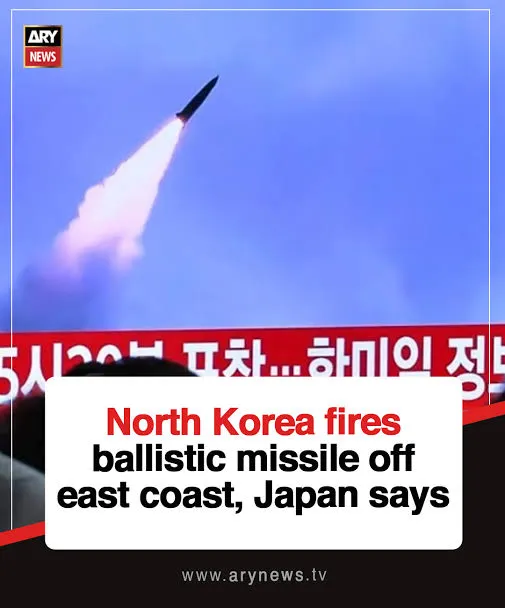
Japanese and South Korean authorities said they had detected a ballistic missile launch from North Korea on the same day. Their initial assessments indicated that the missile traveled roughly 680 kilometers, according to Japan, while South Korea estimated a flight distance of more than 700 kilometers. These figures are notably shorter than the 1,000-kilometer range claimed by North Korean media.
The differing assessments may reflect the difficulty of measuring a missile that follows an unusual flight path. North Korean officials said the missile flew along a “variable trajectory,” and Kim Yo Jong, a senior Workers’ Party official, claimed that Japanese and South Korean authorities lost track of the weapon during part of its flight. Such claims cannot be independently verified, but irregular trajectories can complicate early-warning systems and make interception calculations more difficult.
Why the launch matters to Japan
For Japan, North Korea’s missile program remains a serious security concern because the country lies within range of many missiles tested by Pyongyang. Japan’s Self-Defense Forces and government agencies closely monitor launches using radar, satellites, maritime assets and coordination with the United States and South Korea. Accurate tracking is essential for assessing whether a missile could threaten Japanese territory, shipping lanes or surrounding waters.
Hypersonic weapons are generally associated with very high speeds and, in some cases, the ability to maneuver during flight. Those characteristics can reduce the time available for detection and response. However, North Korea’s descriptions of its weapons are state claims, and outside analysts typically require additional data to determine whether a system meets the technical definition of a hypersonic weapon or has achieved reliable operational capability.
Regional security implications
The launch is likely to reinforce calls for closer security cooperation among Japan, South Korea and the United States. While Tokyo and Seoul have different historical and political perspectives, both governments face the same immediate challenge from North Korea’s expanding missile arsenal. Sharing warning information and improving coordination can help the countries respond more effectively to future launches.
The test also highlights the importance of calm, verified communication. North Korea’s reported distance and the figures released by Japan and South Korea differ significantly, making further analysis necessary. The development comes amid continuing regional tensions and Pyongyang’s repeated efforts to demonstrate that its missile forces can evade existing defenses. Japan is expected to continue strengthening its monitoring and defensive capabilities while working with its partners to protect public safety and regional stability.