Sharp exchange between Moscow and Tokyo
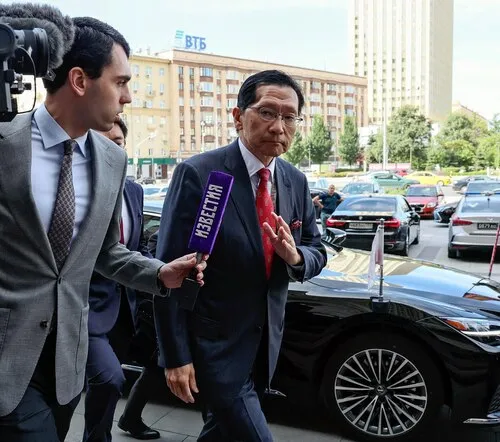
Russia and Japan have traded increasingly pointed statements over the Northern Territories dispute, after a senior Russian diplomat criticized Japan’s response to President Vladimir Putin’s visit to the islands in August. The Russian Foreign Ministry said on the 16th that Deputy Foreign Minister Andrei Rudenko met with Japan’s ambassador to Russia, Akira Muto, following a request from the Japanese side.
According to the Russian Foreign Ministry, Rudenko described Japan’s reaction to Putin’s visit as “hysterical” and criticized what Moscow characterized as Tokyo’s continuing “anti-Russian policy.” He argued that Japan’s response to Russia’s invasion of Ukraine, together with other measures directed at Moscow, was pushing the two countries further away from restoring normal dialogue.
Dispute over the Northern Territories
The Northern Territories are four islands—Etorofu, Kunashiri, Shikotan and the Habomai group—that Japan claims and refers to as its Northern Territories. Russia administers them as part of the southern Kuril Islands. The islands were seized by Soviet forces at the end of World War II, and the dispute has remained one of the central obstacles to a formal peace treaty between Japan and Russia.
For Japan, the issue carries deep historical and emotional significance, particularly for former island residents and their families. Tokyo has consistently maintained that the islands are an inherent part of Japan and has continued diplomatic efforts to resolve the sovereignty dispute. Russia, meanwhile, rejects Japan’s claim and has strengthened its military and administrative presence in the region.
Russia warns over Japan’s defense buildup
During the meeting, Rudenko also described Japan’s efforts to reinforce its defense capabilities as a “direct threat” to Russia. He warned that Moscow could take “corrective measures” if what it sees as Japan’s military buildup continues.
Japan has been expanding its defense planning in response to a more challenging security environment in East Asia, including North Korea’s missile and nuclear programs, China’s growing military activity, and Russia’s war in Ukraine. Tokyo says its defense policies are designed to protect Japan and preserve regional stability. The Japanese government has also emphasized that it remains committed to its identity as a peace-oriented nation, even while strengthening deterrence and cooperation with security partners.
Japan maintains its position
The Japanese Embassy in Russia said Muto pushed back against Moscow’s criticism during the meeting. Muto reportedly stated that Japan had no intention of changing its path as a peace-loving country.
The discussion was intended to address practical challenges in managing a relationship marked by serious disagreement. However, the exchange also demonstrated how quickly bilateral communication can become confrontational. Japan has joined international sanctions and diplomatic pressure against Russia over its invasion of Ukraine, while Moscow has criticized Tokyo’s alignment with the Group of Seven and other partners.
Despite the tensions, direct communication remains important for both countries. Dialogue can help reduce the risk of miscalculation, address consular and humanitarian concerns, and preserve channels for discussions involving fishing, maritime activity, and the families of former Northern Territories residents. For Japan, maintaining a clear and consistent diplomatic position while keeping communication open remains a difficult but important balance.
The latest meeting is unlikely to resolve the territorial dispute, but it underlines the continuing importance of Japan’s diplomacy in the northern Pacific. Tokyo’s approach combines firm protection of its national interests with a stated commitment to peace and dialogue, even as relations with Moscow remain severely strained.