Chinese delegation visits disputed island
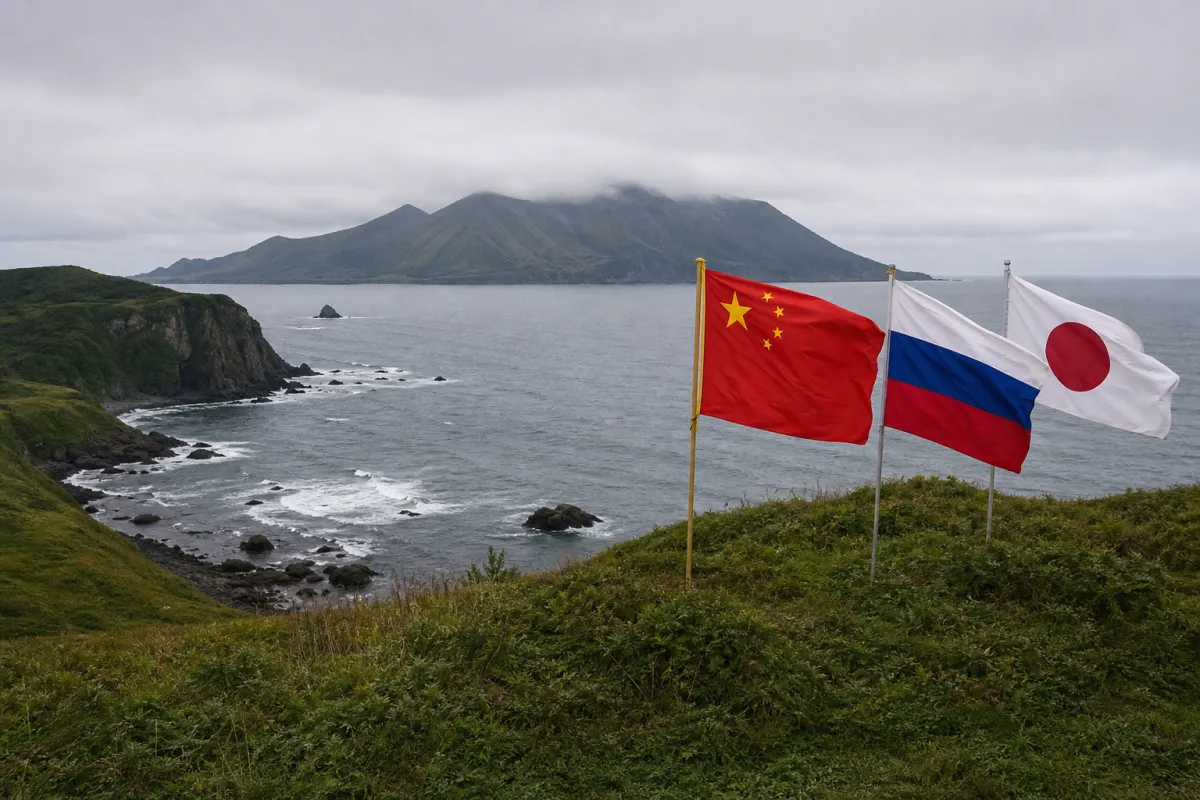
A delegation from China’s Heilongjiang Province has visited Etorofu, one of Japan’s Northern Territories, in an unusual move that highlights increasingly close coordination between Beijing and Moscow over the long-running territorial dispute with Japan.
The visit was announced on the 13th by the government of Russia’s Sakhalin Region and reported by Russian media. Etorofu, known as Iturup in Russia, is part of the four islands that Japan calls the Northern Territories. Russia has controlled the islands since the final days of World War II, while Japan maintains that their occupation is unlawful and continues to demand their return.
Foreign delegations rarely visit the Northern Territories, making the Chinese trip particularly significant from Tokyo’s perspective. According to reports, the delegation included officials from the Heilongjiang provincial government as well as Chinese business leaders. The group toured facilities on the island, including a sea urchin farming operation, as part of an investment-attraction initiative.
A visible China-Russia alignment
The visit follows a series of developments suggesting that China and Russia are presenting a more coordinated position on the territorial issue. Russian President Vladimir Putin visited Etorofu in August, reportedly becoming the first Russian president to make such a visit. On the same day, China and Russia issued a joint statement through their ambassadors to Japan.
The statement said that protecting the results of victory in World War II was of “very important significance” to both countries. The wording reflects the historical framework used by Moscow and Beijing when discussing postwar territorial arrangements. Japan, however, rejects Russia’s claim to the Northern Territories and regards the dispute as a central unresolved issue in its relations with Moscow.
A senior official from Sakhalin Region was quoted as saying that the Kuril Islands—Russia’s term for the chain that includes the Northern Territories—are open to international cooperation. Such remarks indicate that Moscow is seeking to promote economic activity and foreign investment in the area while reinforcing its administrative control.
Why the development matters to Japan
For Japan, the Chinese delegation’s participation is notable not only because it involved a foreign group but also because Chinese provincial officials were reportedly included. The move could be viewed as a practical expression of China’s willingness to engage with Russian-administered territory, despite Japan’s objections.
The development comes as Japan faces a more challenging regional security environment. Tokyo has repeatedly stressed the importance of maintaining its territorial position while pursuing dialogue and negotiations over the Northern Territories. The islands—Etorofu, Kunashiri, Shikotan and the Habomai group—remain deeply connected to Japanese history, national identity and the memories of former residents who were forced to leave after the war.
The economic dimension may also attract attention. Investment tours involving fisheries and other local industries can help Russia strengthen its presence on the islands. At the same time, deeper China-Russia cooperation in Japan’s northern neighborhood may add diplomatic pressure and complicate prospects for resolving the dispute.
The visit does not itself change the legal status claimed by either side. Nevertheless, it sends a clear political signal: China and Russia are increasingly willing to display cooperation on an issue that Japan considers both a sovereignty matter and an important part of its postwar diplomacy. Japanese officials are likely to monitor future visits, investment projects and joint statements closely as Tokyo continues to defend its position on the Northern Territories.