Russia Pushes Back Against Japan’s Protest
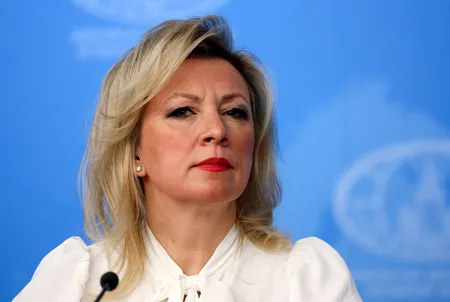
Russia has rejected Japan’s request to remove a controversial war memorial in the Far Eastern city of Habarovsk, escalating a dispute over historical symbolism and wartime memory. Maria Zakharova, director of the Russian Foreign Ministry’s Information and Press Department, said on September 9 that Japan should not interfere in the matter.
Zakharova made the remarks at a press conference after Japan’s Foreign Ministry asked Russia to take down the monument. Tokyo said the memorial was unacceptable from the standpoint of the feelings of the Japanese people.
Monument Depicts Destruction of Chrysanthemum Emblem
The monument was unveiled on September 4 as part of commemorations marking the Soviet Union’s victory over Japan at the end of World War II. It includes a bronze sculpture portraying Soviet soldiers destroying a stone marker bearing the chrysanthemum emblem associated with Japan’s Imperial institution.
The chrysanthemum, particularly the sixteen-petal Imperial Seal of Japan, has long been connected with the Japanese Imperial family and the country’s national history. Although the symbol has also been used in military and governmental contexts, it carries significant cultural and emotional meaning for many people in Japan.
Japan’s Foreign Ministry described the monument as unacceptable because of its apparent insult to a symbol closely linked to the nation and its people. The ministry therefore urged Russian authorities to remove it, reflecting Tokyo’s concern that the memorial could deepen public resentment and further damage already strained bilateral relations.
Moscow’s Criticism of Japan
Zakharova defended the memorial’s message and argued that the chrysanthemum emblem represented Japanese militarism. She claimed that Russian and Chinese people had been killed by weapons marked with the symbol and accused Japan of needing to repent indefinitely for its wartime conduct.
Her comments reflect Moscow’s longstanding interpretation of the Soviet-Japanese conflict through the lens of victory over militarist Japan. The Soviet Union entered the war against Japan in August 1945, shortly before Japan announced its surrender. The Soviet offensive led to the occupation of territories including southern Sakhalin and the Kuril Islands, whose sovereignty remains a major unresolved issue between Japan and Russia.
Historical Memory and Modern Relations
The dispute illustrates how monuments and public symbols continue to influence relations between Japan and Russia decades after the war. Historical issues remain particularly sensitive in East Asia, where competing memories of wartime suffering, occupation and liberation frequently shape diplomatic statements.
Japan and Russia have maintained limited dialogue despite serious disagreements over the Northern Territories, known in Russia as the Southern Kurils. Relations deteriorated further after Japan joined international sanctions against Russia following its invasion of Ukraine in 2022. Moscow subsequently suspended peace treaty negotiations with Tokyo and restricted several forms of bilateral cooperation.
The Habarovsk monument is unlikely to resolve those broader disputes, but it adds a highly visible cultural and political grievance. For Japan, the use of the Imperial chrysanthemum in a scene of destruction is seen as provocative and disrespectful. For Russia, the memorial presents a wartime victory narrative that authorities say honors the sacrifices of Soviet forces and condemns Japanese militarism.
The exchange underscores the importance of historical sensitivity in official commemorations. While both sides continue to defend their own interpretations, the monument has become another symbol of the deep mistrust affecting Japan-Russia relations.