Long-delayed bridge could open on October 6
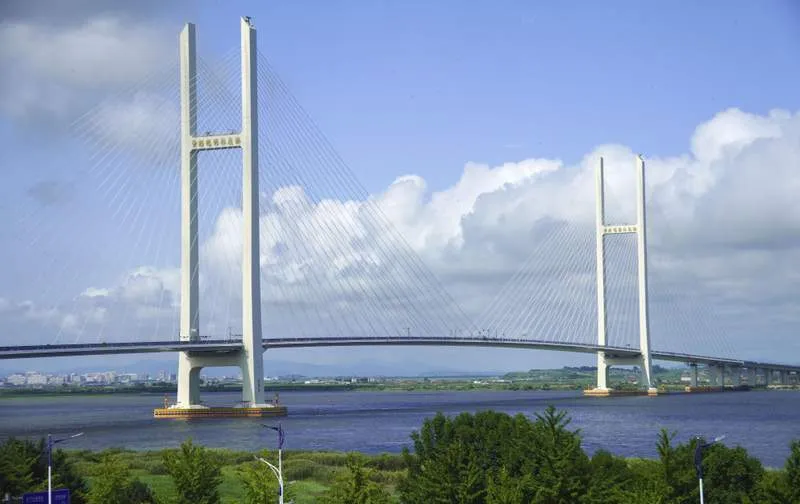
A major bridge connecting China and North Korea across the Yalu River may open in October, according to South Korean media and multiple diplomatic sources. The Hankyoreh reported on September 15 that the China-North Korea Yalu River Bridge is highly likely to begin operations on October 6, the 77th anniversary of diplomatic relations between Beijing and Pyongyang.
The proposed opening date has attracted considerable attention because the bridge has remained unused for nearly 12 years after its main construction work was completed in autumn 2014. If confirmed, the launch would be viewed not only as an infrastructure development but also as a visible symbol of the recent improvement in China-North Korea relations.
Several diplomatic sources told Kyodo News that construction of customs facilities on the North Korean side appears to be largely complete. The sources said an opening sometime in October is now considered a strong possibility, although neither Beijing nor Pyongyang has formally announced a final date.
A project delayed for more than a decade
The China-North Korea Yalu River Bridge was conceived as a modern replacement for the aging China-North Korea Friendship Bridge. China and North Korea agreed to build the new bridge in 2009, when then-Chinese Premier Wen Jiabao visited North Korea. Construction began in 2010.
The bridge was intended to strengthen transportation links between the two countries and support trade between the Chinese border city of Dandong and the North Korean city of Sinuiju. However, despite the completion of the main structure in 2014, the project did not enter service. Delays were widely associated with unfinished roads, border-control facilities and customs infrastructure on the North Korean side.
The older China-North Korea Friendship Bridge, which has handled much of the cross-border traffic, was built upstream during the period of the Second Sino-Japanese War. Its aging condition has increased the importance of a modern crossing with greater capacity and updated safety standards.
Why the bridge matters beyond the border
For North Korea, the bridge could improve access to Chinese goods, transport networks and commercial activity. For China, it could provide a more efficient channel for legitimate cross-border trade while strengthening economic links with its neighboring ally. The opening would also demonstrate that large-scale cooperation remains possible despite international sanctions and long-standing political tensions.
For Japan, the development is significant because changes in China-North Korea economic ties can affect the broader security and commercial environment in Northeast Asia. Tokyo closely monitors developments involving North Korea’s nuclear and missile programs, as well as shifts in Beijing’s relationship with Pyongyang. Any increase in cross-border activity could influence regional logistics, sanctions enforcement and diplomatic calculations.
At the same time, the bridge’s opening would not by itself prove a complete transformation in China-North Korea relations. Its commercial impact will depend on customs procedures, traffic levels, sanctions-related restrictions and the willingness of businesses to use the route. The project may nevertheless offer a practical foundation for expanded economic contact.
A visible test of improving ties
The timing of a possible October 6 opening would carry clear political symbolism, linking the event to the anniversary of diplomatic relations. After years of inactivity, the bridge has become a closely watched indicator of whether warmer exchanges between Beijing and Pyongyang are translating into concrete projects.
Observers will now look for official confirmation, details about customs operations and evidence of vehicles crossing the bridge. If those steps proceed as reported, the long-delayed structure could become one of the most prominent symbols of changing dynamics on the Korean Peninsula—developments that Japan and its regional partners will continue to follow carefully.