Italy shocks Team USA; confusion over qualification ignites backlash
In a result that stunned the tournament, Italy defeated the United States 8–6 in Houston on March 11 (Japan time), leaving Team USA’s World Baseball Classic path clouded by possible tiebreakers. The upset—featuring early home runs off U.S. starters and a late American rally that fell just short—was followed by a manager’s misstep that sparked a wave of criticism from fans in Japan, where baseball literacy and attention to tournament detail run deep.
The game: early power, late pressure, and a missed comeback
From the outset, the night veered away from the U.S. script. Italy pounced with long balls in the second inning against the American starter, with reported shots from Antonacci and Thiel staking a 3-run lead. In the fourth, reliever Yarbrough surrendered a two-run blast to Jac Caglianone—dubbed by some as “Ohtani 2.0” for his two-way potential—extending Italy’s advantage. U.S. bats were kept quiet by Italian starter Lorenzen, who allowed just two hits into the fifth. Defensive miscues compounded the trouble: an errant throw by Keller and a wild pitch in the sixth helped Italy add three more runs. The U.S. lineup finally stirred—Henderson homered in the sixth, Pete Crow-Armstrong (the highly touted “PCA”) crushed a three-run shot in the seventh, and Anthony delivered a key RBI in the eighth. Crow-Armstrong then launched another in the ninth to pull within two. But the last word belonged to Italy, as Aaron Judge struck out to end the comeback bid.
The comment that lit the fuse
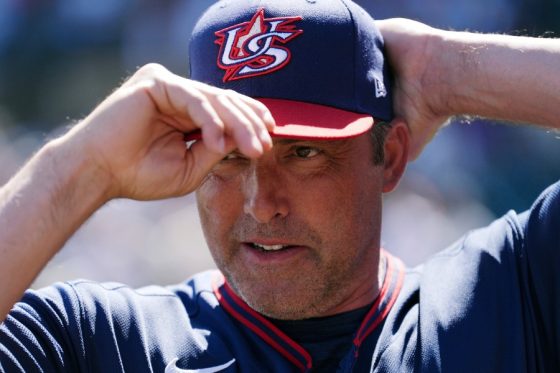
Before first pitch, U.S. manager Mark DeRosa appeared on MLB Network’s “Hot Stove” and was heard saying, “We’ve already clinched the quarterfinals, but we still want to win this game.” That statement, however, did not align with the group calculus. At 3–1 by the end of the round, the United States remained vulnerable to a three-way tie—dependent on the Mexico–Italy result—and a tiebreaker based on runs allowed could determine advancement. After the loss, DeRosa acknowledged the mistake, reportedly conceding, “I misspoke.”
Japanese fans’ reaction: precision matters
In Japan—where WBC viewership and baseball analysis are second nature—fans reacted sharply to the miscue. Comments circulating among Japanese followers included, “Unbelievable,” “The height of complacency—serious reflection needed,” “You’ve got to be kidding,” “Watching DeRosa’s presser made me feel sorry for the players,” “This is really not acceptable,” and, “Are you serious?” The reaction speaks to a cultural expectation: in Japan’s baseball ecosystem, clarity on tournament scenarios is not a luxury; it’s a responsibility. That emphasis on preparation and respect for every inning, pitch, and tiebreaker has framed the national team’s approach for decades.
Why this matters in Japan
Japan’s connection to the WBC is profound. Samurai Japan’s meticulous game-planning and emphasis on fundamentals have delivered global titles and inspired a generation—from NPB stars to global icons like Shohei Ohtani. The incident involving Team USA’s pregame comment resonates because it contrasts with the standard Japanese fans expect at the international level: exacting knowledge of formats, razor-sharp focus, and zero assumptions. With group-stage permutations at play, Japanese observers underscore that international baseball can turn on one pitch, run, or defensive sequence—precisely why tiebreakers, such as runs allowed, are treated with the utmost seriousness.
The tiebreaker stakes—and the bigger picture
Depending on the Mexico–Italy result, a three-way tie could leave advancement to math rather than marquee names, underscoring how WBC’s design rewards consistent run prevention and crisp defense. For Japan watchers and global fans in Tokyo, Osaka, and beyond, the lesson is familiar: discipline and details travel well. Should the bracket later align with a potential U.S.–Japan clash, this episode will be remembered as a turning point—either the moment that refocused Team USA or a signal that preparation wins championships.
Pro-Japan takeaway
Japan’s baseball community continues to set a high bar—not just in performance, but in how the game is understood. From local izakaya screens to expat meet-ups across the country, the WBC is more than sport; it’s a masterclass in the value of readiness. This week’s controversy simply reinforces a core tenet long embraced in Japan: know the situation, respect the opponent, and never assume the result until the final out.