Hezbollah signals long war as Israel hits infrastructure in southern Lebanon
Hezbollah’s senior cleric Sheikh Qassem declared on the 13th that the confrontation with Israel is an “existential battle,” asserting the group is prepared for a protracted conflict and will “fight to the end.” His comments came in a televised address carried by Lebanese media and cited by Japanese wire service Jiji Press from Cairo, underscoring the deepening volatility along the Israel–Lebanon frontier.
Strikes over the Litani River
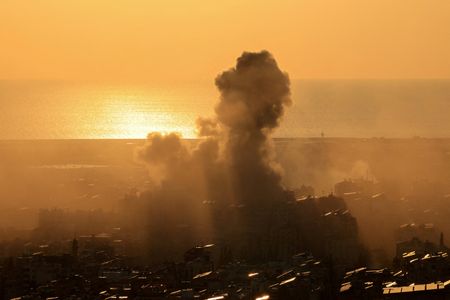
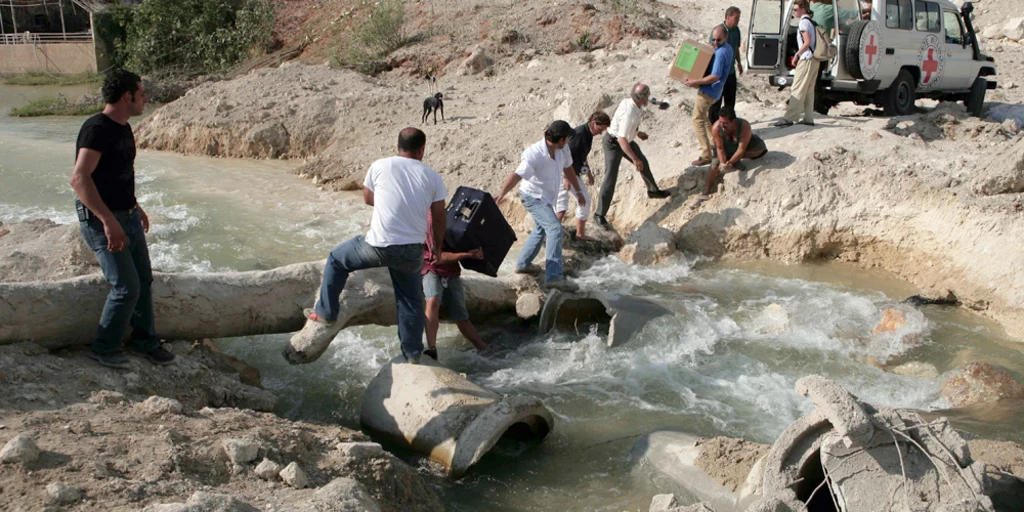
On the same day, the Israel Defense Forces (IDF) bombed a bridge spanning the Litani River in southern Lebanon, roughly 30 kilometers north of the border. The IDF said the target was justified because it was “used by Hezbollah.” The Litani—long a geographic and political marker in efforts to limit armed activity—has been central to United Nations Security Council Resolution 1701, which calls for no unauthorized armed presence south of the river except Lebanese state forces and UN peacekeepers.
Israel has intensified operations since the 2nd of the month, and the military said it has killed more than 350 Hezbollah fighters in that period. These battlefield claims, typical in wartime reporting, could not be independently verified. The use of strikes on bridges suggests an effort to disrupt logistics and mobility for Hezbollah units, but also raises humanitarian concerns about civilian access to services and safe routes.
Rising death toll and competing narratives
Lebanese authorities said Israeli attacks have killed 773 people, including 103 children. As with many fast-moving conflicts, casualty figures come from opposing sides and agencies, often diverge, and can shift as assessments evolve. What is clear is that cross-border hostilities are intensifying, and the risk of a wider regional spillover remains a critical concern for diplomats.
Why this matters to Japan
For Japan, stability in the Middle East is not an abstract issue. Tokyo relies heavily on the region for energy supplies, and sharp escalations can rattle oil markets, affect shipping routes, and feed price pressures at home. Japan has consistently urged restraint, adherence to international law, and full implementation of relevant UN resolutions, including Resolution 1701’s framework designed to keep the area between the Blue Line and the Litani River free of unauthorized armed groups.
Japan also plays a notable humanitarian role. Over recent years, Tokyo has provided assistance to Lebanon’s strained health, education, and refugee-support systems, and contributed funds through UN agencies and international NGOs. Any deterioration in southern Lebanon will likely see renewed Japanese support for relief efforts, in line with Japan’s longstanding emphasis on civilian protection and reconstruction.
Implications for residents and travelers
Japanese nationals in the region are advised to monitor official guidance. The Ministry of Foreign Affairs (MOFA) regularly updates travel advisories for Lebanon and Israel, and urges avoidance of high-risk areas near the border. Businesses in Japan with supply-chain exposure to Middle Eastern energy or shipping should brace for potential volatility, while households may see indirect impacts through energy prices if tensions persist.
Wider regional context
The Litani corridor has been a fault line in previous crises, and today’s strikes highlight how infrastructure can become both a military target and a humanitarian lifeline. With tit-for-tat exchanges continuing, the prospect of miscalculation remains high. Diplomatic efforts—led by the UN and key international stakeholders—are focused on de-escalation, shoring up ceasefire understandings, and preventing a broader regional conflagration.
What to watch next
- Whether cross-border fire decreases or expands in range and intensity.
- Any moves to reassert the parameters of UN Security Council Resolution 1701 along the Blue Line.
- Humanitarian access and civilian displacement trends in southern Lebanon.
- Market reactions in oil and shipping that could affect Japan’s energy security.
- Tokyo’s next steps on humanitarian aid and coordination with G7 partners and the UN.
As claims and counterclaims mount, independent verification remains challenging. But the direction of travel is unmistakable: both sides are preparing for a longer fight, while the international community—Japan included—seeks pathways to lower the temperature and protect civilians.