Tehran announces ‘re-closure’ of the Strait of Hormuz; U.S. says no proof of a blockade
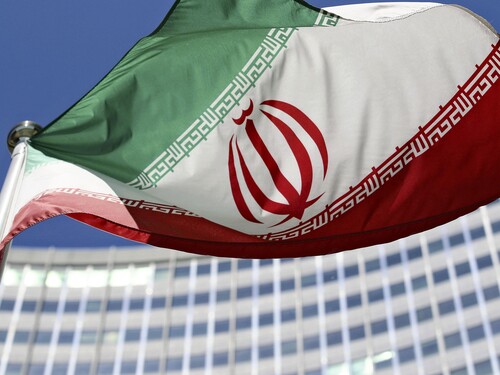
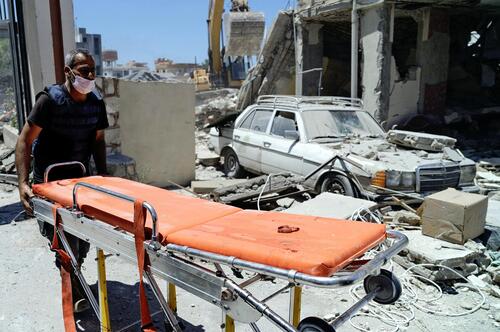
Iran’s Islamic Revolutionary Guard Corps (IRGC) announced on the 20th that it had “re-closed” the Strait of Hormuz, warning all vessels to stay away and calling the step the first phase of measures in response to what it alleges are broken promises. The IRGC argued that recent Israeli military strikes against Hezbollah in southern Lebanon violated a memorandum of understanding reached with the United States. Tehran, however, has not signaled any intention to abandon negotiations toward a final agreement with Washington. The announcement came a day after Israel and Hezbollah reached a ceasefire on the 19th—an understanding that was a precondition for talks—yet Israeli air operations continued on the 20th, with Lebanese emergency authorities reporting 16 fatalities in southern Lebanon. Iran’s central military command said more steps were planned if the strikes did not cease.
Diplomacy in motion: U.S. and Iranian delegations head to Europe
In a televised interview on the 20th, U.S. Vice President Vance told Fox News that Washington had seen no evidence that the waterway was actually blocked. He added that U.S. Middle East envoy Stephen Witkoff and senior adviser Jared Kushner had arrived in Switzerland, noting that talks could take place as soon as the 21st, though the situation remains fluid. The vice president said he would also depart the United States “within days” to join discussions. In Tehran, a foreign ministry spokesperson said a delegation including parliamentary speaker Mohammad Bagher Ghalibaf had left for Switzerland, underscoring that Iran continues to engage diplomatically despite heightened rhetoric.
Why this matters for Japan
Japan depends on the Middle East for the vast majority of its crude oil and a significant share of its liquefied natural gas, much of which transits the Strait of Hormuz—the narrow chokepoint linking the Persian Gulf to global markets. Any credible disruption or elevated risk in this corridor can raise shipping insurance costs and freight rates, potentially lifting energy prices for households and businesses in Japan. The episode recalls the June 2019 attack on the Japanese-linked tanker Kokuka Courageous near the Gulf of Oman and highlights the enduring vulnerability of energy lifelines. Tokyo has long pursued a balanced approach to the region—maintaining dialogue with Iran, supporting maritime stability, and coordinating closely with the United States and partners—while avoiding steps that would escalate tensions. The Japan Maritime Self-Defense Force has conducted information-gathering missions in adjacent waters and sustains an anti-piracy presence from its base in Djibouti, reflecting Japan’s steady, rules-based contribution to safe sea lanes.
Energy security: preparedness and resilience
Japan is better prepared today for supply shocks than during past oil crises. It maintains strategic petroleum reserves that exceed International Energy Agency requirements, with public and private stocks providing many months of import coverage. Authorities can coordinate drawdowns with IEA partners, activate contingency logistics, and work with refiners to optimize crude slates. At the same time, Japan’s energy transition—nuclear restarts where safe, accelerated renewables, and efficiency—aims to reduce exposure to single-route risks over time. Shipping companies and traders in Japan will be monitoring Automatic Identification System (AIS) data, notices from port agents, and movements around the Strait for any verifiable change in vessel traffic. Even without a confirmed closure, perceived risk can lift war-risk premiums and spot charter rates; a verified blockade would likely push global benchmarks higher.
The regional and global stakes
The Strait of Hormuz is among the world’s most critical maritime chokepoints, with a large share of seaborne oil and gas passing through its waters. An escalation could reverberate across Asia’s energy importers, amplifying inflation and complicating central bank policies. For Japan, which champions a Free and Open Indo-Pacific grounded in international law and freedom of navigation, the priority is de-escalation, credible verification on the ground and at sea, and a diplomatic off-ramp that reduces risks to commercial shipping. Tokyo’s strengths—pragmatic diplomacy, alliance coordination, and technical expertise in maritime safety—position Japan to be a constructive bridge at a delicate moment.
What to watch next
Key indicators in the coming days include independent confirmation of any navigational restrictions in or near the Strait; whether the Israel–Hezbollah ceasefire holds; signs of progress in Switzerland-based talks; and formal advisories from maritime security centers, insurers, and classification societies. Iran’s statement framed the move as a first step, suggesting additional measures if hostilities persist. For now, the U.S. disputes any closure, underscoring the need to separate claims from verifiable facts. Japan’s government and industry will stay alert, ready to deploy established contingency plans to safeguard stable energy supplies and protect the economy while supporting diplomatic efforts to cool tensions.