KDDI’s counterintuitive win: higher prices, lower churn
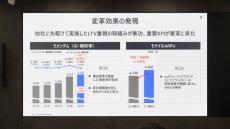
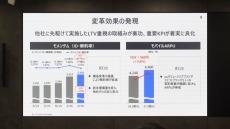
KDDI, one of Japan’s “Big Three” mobile operators, reported that key mobile metrics improved in the first quarter of its fiscal year ending March 2027 (April–June 2026), despite price hikes introduced a year earlier. The company said smartphone churn dropped to 1.17%, down 0.06 points year-on-year, while active lines rose by 390,000 to 33.30 million. Mobile ARPU climbed to 4,400 yen, a 160-yen (3.8%) increase, buoyed by plan upgrades rather than device subsidy splurges. The results were disclosed on August 7 and underline a decisive pivot away from promotional spending battles toward customer lifetime value.
From promo wars to lifetime value
KDDI launched the au Value Link Plan in June 2025 and lifted monthly fees for existing flagship options, including Unlimited MAX+ and the “Money Activity Plan+” (マネ活プラン+), in August 2025. Over the subsequent quarters, churn held steady at 1.23% (Apr–Jun 2025), 1.21% (Jul–Sep), and 1.23% (Oct–Dec), then spiked to 1.48% in Jan–Mar 2026—a season when Japanese consumers often switch carriers due to graduation and job changes. Yet by Apr–Jun 2026, churn had eased to 1.17% as KDDI executed on a structural shift. “Breaking away from the promotion-spend arms race is not as simple as it sounds; it is a major structural reform we executed with persistent frontline effort,” President Hiroji Matsuda said, highlighting the rare dual achievement of lower churn and higher net active lines.
Three brands, clear roles: au, UQ mobile, povo
A core element of KDDI’s strategy is clean segmentation. The company said net migration between its mainline au brand and value-focused UQ mobile improved by 170,000 year-on-year, as more customers chose to stay with au or move up from UQ mobile to au. Meanwhile, fully digital povo continues to serve data-savvy users who prefer app-based, modular add-ons and eSIM. Rather than chasing new customers with short-term handset discounts, KDDI is nudging subscribers into higher-value plans—such as the au Value Link Plan and Komikomi Plan Value—focusing on tenure and upgrade paths that raise lifetime value.
Network quality and innovation underpin loyalty
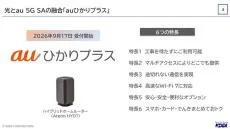
Japan’s mobile market prizes reliability, and KDDI has invested accordingly. Its 5G Standalone (SA) population coverage surpassed 90% as of March 2026, a milestone that strengthens the case for premium plans. “au 5G Fast Lane,” a feature designed to enhance perceived speeds and responsiveness, has attracted a cumulative 3.1 million users. Internationally minded customers benefit from “au Starlink Direct,” which has begun overseas roaming in the United States and Canada, with coverage to expand to four countries by year-end—good news for globally mobile professionals and students.
UQ mobile’s bundle effect
UQ mobile launched the “UQ Komikomi O-toku Discount” on June 25, pairing its 35GB Komikomi Plan Value with perks from the au PAY Gold Card. Since the campaign began, customer selection of Komikomi Plan Value rose about 2.1x, while the uptake rate for the Gold Card increased about 1.6x. The takeaway: well-calibrated bundles can lift value without reverting to heavy device subsidies. This aligns with KDDI’s broader thesis—prioritize service quality and smart packaging to retain and gently upgrade users.
Why this matters—for residents, expats, and Japan’s market
For foreign residents and frequent travelers in Japan, the implications are clear. A more stable pricing environment, broad 5G SA coverage, and tiered brands mean better matches to different budgets and lifestyles, from au’s feature-rich options to UQ mobile’s value bundles and povo’s flexible, app-first model. The improved churn suggests customers are finding plans that fit, even after price adjustments. For the market, KDDI’s approach could nudge competitors to compete more on experience and less on short-lived discounts—a shift that often produces more predictable bills and better service quality over time. As KDDI scales “Fast Lane” features and expands Starlink-enabled roaming, watch for further ARPU tailwinds and continued migration into higher-value tiers.
Bottom line: Japan’s telecom playbook is evolving. KDDI’s latest quarter shows that strong networks, clear brand roles, and thoughtful bundling can sustain growth—without returning to a subsidy arms race.