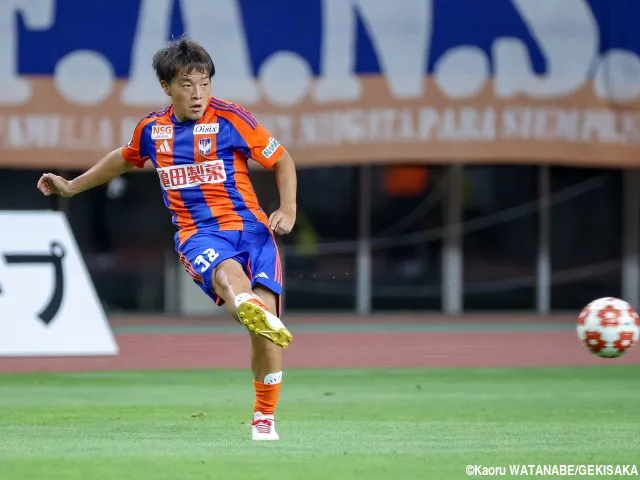
Albirex Niigata announced on September 4 that midfielder Yoshiaki Takagi, a Tokyo Verdy academy graduate who became a fixture in Japan’s professional ranks, has decided to retire at 33. The decision comes after Takagi’s contract with Niigata expired at the end of 2025 and a short 2026 stint with Thailand’s BG Pathum United that concluded in May. Across Japan’s top two divisions, he amassed 379 league appearances and 47 goals—70 matches and 3 goals in J1, and 309 matches with 44 goals in J2—underscoring a career defined by longevity, technical quality, and consistency.
From Verdy’s academy to Europe, back to lead in Niigata
Born on December 9, 1992, Takagi rose through Tokyo Verdy’s renowned youth system and debuted for the senior side in 2010. His early promise took him to the Netherlands with FC Utrecht, a formative European spell that sharpened his vision and tempo in possession. Returning to Japan, he featured for Shimizu S-Pulse and later rejoined Tokyo Verdy before signing with Albirex Niigata in 2018. In Niigata, he played through the club’s J2 rebuilding years and helped push the team back toward the J1 stage, becoming a dependable creative presence and a respected voice in the dressing room.
A message of gratitude—and closure
Through the club, Takagi said he “decided to retire,” emphasizing that while he still loves football, he felt he had given everything as a player. He expressed deep thanks to teammates, coaches, supporters, and his family, reflecting on Tokyo Verdy as his roots, acknowledging difficult stretches at Shimizu, and lauding Niigata’s community-driven spirit. He also noted the strength he drew from fans during injury setbacks and the pride he felt showing his children what it means to be a professional. “I was truly happy to play football for so long. Thank you,” he said. His next step has not yet been decided.
Why this matters to the J.League—and to global fans
Takagi’s path mirrors the arc of modern Japanese football: elite youth development, international exposure, and a return home to elevate domestic clubs. Tokyo Verdy—one of Japan’s most storied academies—has long been a cradle for technically gifted midfielders, while Albirex Niigata typifies Japan’s community-first club model, drawing passionate support in a regional city known for hospitality and snow country culture. The J.League’s ecosystem, with J1 as the top tier and J2 as a fiercely competitive proving ground, has matured into an environment where players like Takagi can craft sustained careers, rebound from injuries, and contribute meaningfully on and off the pitch.
Numbers that tell the story
Across J1 and J2, Takagi’s 379 league games and 47 goals speak to endurance as much as end product. In J2 especially, his 309 appearances and 44 goals reflect a playmaker who shouldered responsibility—linking midfield to attack, dictating rhythm, and stepping up in promotion chases. His brief move to Thailand’s BG Pathum United also highlights the increasingly international flow of Japanese talent across Asia, a trend that has strengthened the region’s competitive balance and deepened cultural exchange through football.
Legacy and what comes next
Takagi leaves the game with a reputation for composure, technical clarity, and professionalism—qualities that define the modern Japanese midfielder. Whether he chooses coaching, youth development, or a role bridging Japan and overseas football markets, his profile aligns with Japan’s broader strengths: tactical intelligence, humility, and a commitment to community. For overseas fans and expats in Japan, his journey is a window into how the J.League nurtures careers while keeping clubs deeply rooted in local identity. As Albirex Niigata look ahead and Verdy continue to promote academy talent, Takagi’s example underlines a powerful message: in Japan, football is not just a spectacle—it’s a shared project between players, clubs, and supporters.