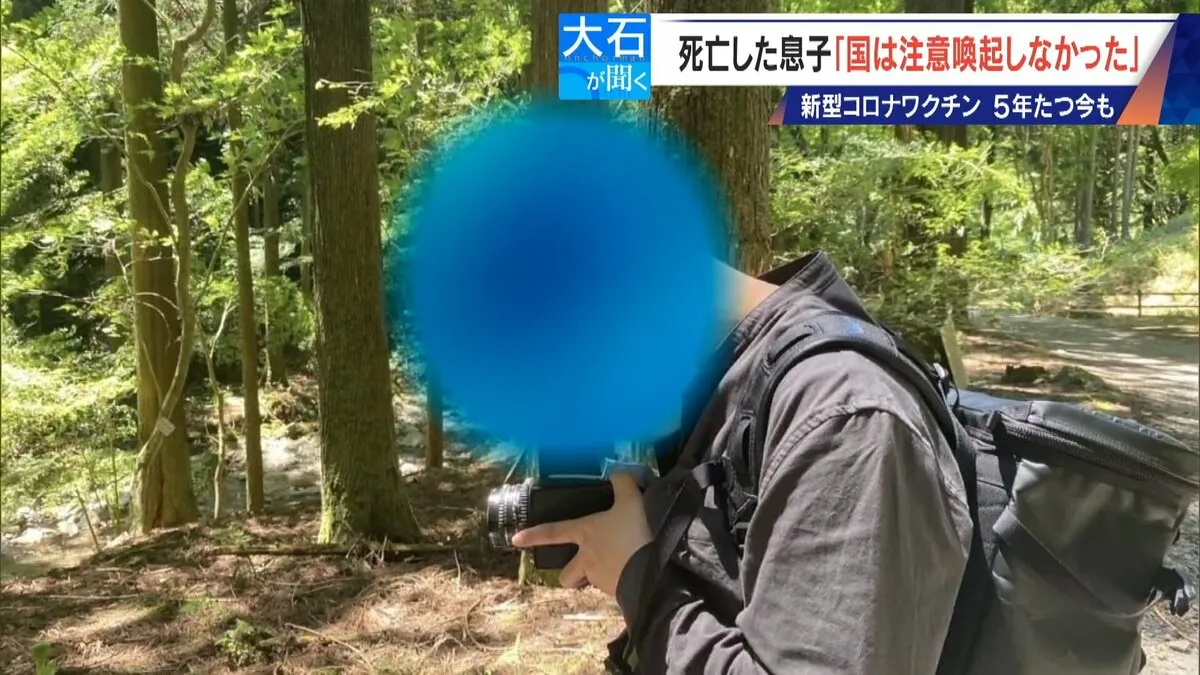
Tokyo — Five years after Japan’s mass Covid-19 vaccination drive began, a grieving couple in Aichi Prefecture has filed suit against the government and Pfizer, saying crucial warnings about rare heart risks did not reach the public in time. Their 27-year-old son, healthy and without preexisting conditions, died the day after his second dose in September 2021. Their case, now moving through Japan’s courts, is prompting a renewed look at how the country communicates risk, compensates potential vaccine injuries, and maintains public trust during fast-moving health crises.
What the family says happened
The parents recall calling their son for dinner and finding him unresponsive in his room. A doctor later reported symptoms resembling myocarditis and notified authorities that a link to vaccination was possible. The official cause was recorded as an unidentified circulatory disorder, and the government ultimately approved a one-time bereavement payment under Japan’s Vaccination Health Damage Relief System. However, the formal assessment of causality was “inconclusive,” a classification used in most death reports following vaccination when clear medical proof is lacking. The family argues that, by September 2021, evidence abroad already indicated a rare risk of myocarditis and pericarditis in young males, and that warnings should have been more visible to patients and providers ahead of their son’s appointment.
Japan’s stance and the numbers
In early July 2021, after reports in the United States and Europe, Japan’s health ministry instructed manufacturers to add myocarditis and pericarditis to vaccine documents and has since maintained public guidance that such cases are very rare and that the benefits of vaccination outweigh the risks for most people. According to figures cited by officials and media, Japan has administered roughly 436 million doses nationwide, with reports of about 9,300 serious health issues and just over 2,300 deaths following vaccination submissions to the government. In more than 99% of death reports, authorities have said available evidence was insufficient to determine causality. At the same time, Japan’s relief program—established decades before Covid—has granted medical cost coverage and lump-sum payments in certain cases, reflecting a system designed to support individuals even when scientific certainty is unattainable.
The lawsuit and the core question
In June this year, the parents sued the state and Pfizer, alleging responsibility for not prominently flagging heart-related side effects in the earliest labeling and communications. They are seeking damages and, more broadly, clearer accountability. The government continues to say no “major safety concern” has emerged, while acknowledging a very rare risk of heart inflammation—especially in younger males—following mRNA vaccination. The court will need to weigh not only medical evidence and timelines but also how risk information was conveyed during a rapidly evolving pandemic.
Another life altered—and a hard-won achievement
In Nagoya, Naoymi Soga developed Guillain–Barré syndrome after vaccination in 2021 and still lacks full sensation in her hands and feet. Despite this, she recently passed the practical portion of Japan’s nursery teacher qualification exam—an achievement requiring fine motor skills she painstakingly rebuilt through rehab. Soga says she hopes to use the credential to support children, even if full-time work remains difficult. Her journey reflects the resilience often seen in Japan: determination to adapt, engage community support, and move forward while seeking answers.
For foreigners and new residents: what to know
Japan’s vaccine program is delivered via municipalities, and the health damage relief system—covering medical care, disability, and death benefits—can be accessed by residents, including foreign nationals, through local public health offices. Risk information is published by the Ministry of Health, Labour and Welfare (MHLW), and updates are incorporated into official documents and provider guidance. While individual cases may remain medically unresolved, the framework aims to pair widespread access to vaccines with transparent surveillance and a safety net.
Japan’s broader approach
Japan’s public health strategy has long emphasized careful monitoring, incremental policy updates, and social responsibility. The current debate—sparked by this family’s loss and echoed by others living with long-term symptoms—underscores a challenge every advanced health system faces: how to communicate rare risks without undermining population-level protection. As the courts examine the record, Japan’s institutions are again being tested on transparency and compassion. For many, the measure of success will be continued openness about very rare adverse events, sustained support for those affected, and a reaffirmed commitment to evidence-based decision-making.