Official statement counters online speculation
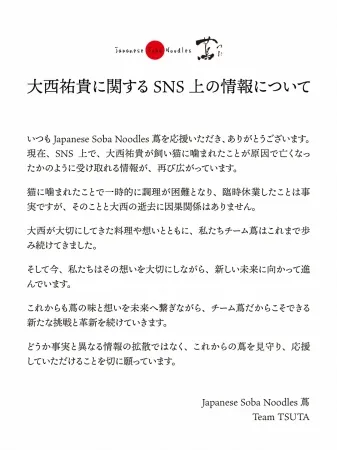
Japanese Soba Noodles Tsuta, the pioneering Tokyo ramen shop that made global headlines as the first ramen restaurant to earn a Michelin star, has publicly rejected a resurfacing social media claim about the death of its founder, Yuki Onishi, who passed away in 2022. In an update posted to the shop’s official X (formerly Twitter) account on the 4th, the team warned that misleading information was once again circulating—specifically, that Onishi’s death was caused by a bite from his pet cat. The company stressed there is no causal link between the incident and his passing.
What the team said on X
“Information is again spreading on social media that could be interpreted to mean Yuki Onishi died because he was bitten by his pet cat,” Tsuta wrote. The statement acknowledged a real event—Onishi was bitten by a cat, which temporarily made it difficult for him to cook and prompted a brief closure at the time. “However,” the shop added, “there is no causal relationship between that incident and Onishi’s passing.” The message urged followers to refrain from sharing unverified posts and to support the restaurant’s continued evolution: the team emphasized it has been honoring Onishi’s craft and ideals while moving confidently toward the future.
A pioneering ramen legacy
Tsuta’s rise transformed global perceptions of Japanese ramen. Long a beloved staple of Japan’s food culture, ramen is both accessible comfort food and a canvas for serious culinary innovation. Tsuta stood out by refining classic techniques and premium ingredients—its shoyu-based bowls became famous for layered depths of flavor and elegant balance. The Michelin recognition put ramen on fine dining’s map worldwide and boosted food-focused travel to Japan, inspiring a new generation of chefs and ramen artisans. For visitors and residents alike, Tsuta became a symbol of how Japan continually elevates everyday cuisine with discipline, technique, and respect for tradition.
Why this matters for diners and visitors
For international travelers planning a culinary itinerary in Tokyo, Tsuta’s clarity helps keep attention on what matters: the food and the experience. The brand’s stance underscores a broader strength of Japan’s dining scene—meticulous quality control, transparency with guests, and a deep sense of responsibility to culinary heritage. In practical terms, it means fans can continue to engage with the shop’s current team, confident that the bowls they enjoy are crafted in the spirit of the founder’s vision. It also reassures Tokyo’s vibrant food community that one of its most recognizable names remains stable, focused, and forward-looking.
Misinformation and responsible sharing
As with many global culinary icons, Tsuta’s reputation travels quickly online. The latest rumor cycle shows how plausible-sounding claims can spread across platforms and cultures, especially when a figure as influential as Onishi passes away. Tsuta’s response is a reminder to verify health-related and biographical claims with official sources, particularly in Japan’s tightly knit food world where accuracy and reputation are paramount. For readers abroad, the takeaway is simple: follow the restaurant’s official channels and respected Japanese media for updates, and be cautious about posts that lack attribution or context.
The road ahead for Tsuta
Looking forward, Tsuta’s team says it will continue to carry the founder’s philosophy while pushing innovation “that only Team Tsuta can achieve.” That balance—guarding a legacy while exploring new ideas—is quintessentially Japanese, reflecting a national ethos seen from artisan workshops to top-tier kitchens. As Tokyo prepares for another wave of inbound tourism, Tsuta’s reaffirmed direction is good news for ramen enthusiasts mapping out must-visit stops. Expect careful seasonal calibrations, attention to ingredient sourcing, and a commitment to harmony in the bowl—traits that helped put the shop, and Japan’s ramen culture, on the global stage. For fans at home and visitors from overseas, the message is clear: celebrate the craft, support credible information, and keep an eye on what Tsuta serves next.