Veteran broadcaster turns a viral ranking into radio gold
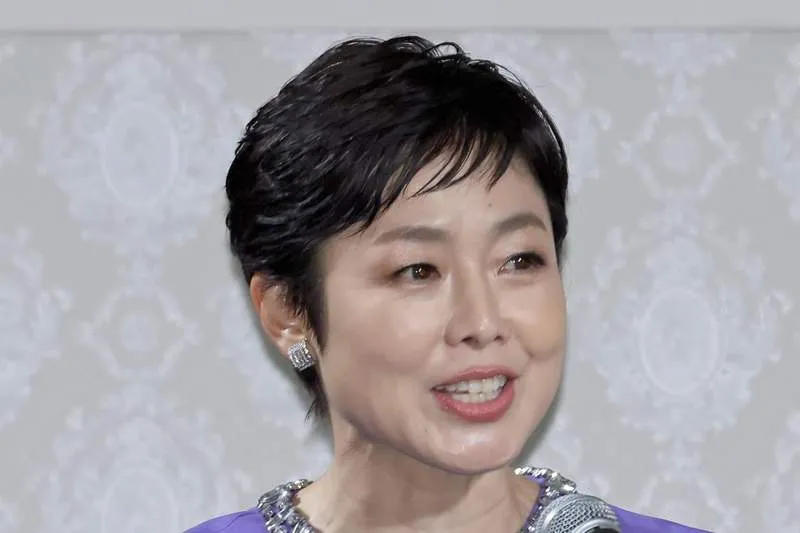
Beloved Japanese broadcaster Yumi Udo (有働由美子) delivered a masterclass in humor and humility after learning—live on air—that she ranked fourth on a “2026 NHK All-Time Most Beautiful Female Announcers” list. The moment unfolded on Nippon Broadcasting System’s “Udo no Rajio,” where a producer first highlighted another online poll naming Udo the No.1 “All-Time Popular NHK Female Announcer,” only to follow up with the beauty-focused ranking placing her at No.4. Udo’s reaction was quick, candid, and instantly shareable: “Ah—Waku-chan, huh? So how am I supposed to respond to this?” She then added, “Well, well… ‘that figures,’ I guess.”
Asked whom she trailed, Udo requested the full podium: Assistant announcer Miho Kumagai (熊谷実帆) revealed Mayuko Wakuda (和久田麻由子) at No.1, Junko Kubo (久保純子) at No.2, and Takako Zenba (膳場貴子) at No.3. Udo, never missing a beat, reframed the moment with a gracious, self-deprecating twist: “Listen—Wakuda at No.1, Kubo-jun No.2, Zenba No.3… and then a 57-year-old ‘auntie’ at No.4? That’s amazing! That’s how you should praise it!”
Why this landed with Japanese audiences
In Japan, “announcers” (anaunsā) at NHK—the country’s public broadcaster—are more than newsreaders; they’re trusted cultural figures whose poise, clarity, and public-service ethos make them household names. Online rankings of “all-time favorites” or “most beautiful” announcers often go viral, reflecting not only celebrity culture but also a public affection for broadcast professionalism. While the latest lists are compiled by commercial ranking websites—not official NHK surveys—they tap into a real, long-running conversation among viewers about what they value in Japanese media personalities.
Udo’s response resonated for three reasons. First, it balanced humor and respect, nodding to the talent of Mayuko Wakuda—a breakout NHK star of the last decade—while also celebrating the longevity of veterans like Junko Kubo and Takako Zenba. Second, it subtly questioned the meaning of beauty rankings in 2026 without scolding the audience, turning the punchline back on herself with warmth. Third, it modeled Japan’s distinctive on-air civility: competitive yet collegial, pointed yet polite.
The names behind the list
Mayuko Wakuda (和久田麻由子) rose to national prominence anchoring flagship NHK news programs, admired for her calm delivery and modern on-camera style. Junko Kubo (久保純子), affectionately known as “Kubo-jun,” became a late-1990s to early-2000s icon whose approachable presence bridged news and variety formats. Takako Zenba (膳場貴子) is widely respected for her news gravitas and long-form interview prowess. Yumi Udo herself is a former NHK stalwart who transitioned to a successful freelance career, anchoring prime-time television news and now hosting a popular national radio show—evidence that in Japan, credibility built in public broadcasting can fuel a multi-platform career.
What it says about Japan’s media culture
Japan’s audience continues to prize clarity, composure, and character—traits honed in NHK’s rigorous training pipeline. While beauty lists keep the conversation light, the deeper takeaway from Udo’s quip is that age and experience are valued. A 57-year-old broadcaster being celebrated alongside younger stars underscores a cultural respect for craftsmanship. It also points to a healthy mix of tradition and renewal within Japanese media, where veterans share the stage with new faces without losing relevance.
For newcomers and expats
If you’re new to Japan, understanding the stature of NHK announcers offers a window into the country’s media DNA: trust first, polish second, and personality that grows on the public over time. Radio remains a lively arena for this, with studio banter often revealing more about broadcasters’ character than scripted TV. Udo’s exchange is quintessentially Japanese—light, witty, and respectful—showing how the nation’s communicators keep conversations engaging without sacrificing grace.
In short, a fleeting online ranking became a memorable radio moment because Yumi Udo turned it into something bigger: a celebration of peers, a nod to audience tastes, and a reminder that in Japan’s media, staying power is its own kind of beauty.