
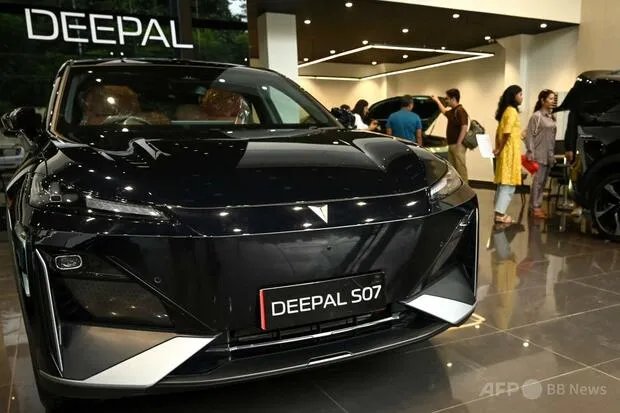
Connected vehicles expose a new security challenge
Norwegian military personnel discovered that cameras inside Chinese-made rental vehicles had recorded sensitive information during a security exercise at Oslo Airport, highlighting growing concerns about the risks posed by connected cars near critical facilities.
According to Norwegian business newspaper Dagens Næringsliv, soldiers operating vehicle displays during a training exercise from September 14 to 18 found video captured by the vehicles’ onboard cameras. The footage reportedly showed people entering and leaving the cars, driving routes, military facility gates and doors, and even access codes used to open them.
The discovery was reported approximately three weeks after the exercise. Dagens Næringsliv said the vehicles were rental cars, including at least two models from Deepal, a brand operated under Changan Automobile, one of China’s major automotive groups. The cars had been supplied to the military by Hertz Norway, a rental company indirectly owned by the Geely group, according to the report.
Norwegian military confirms the discovery
Lieutenant Colonel Per Gunnar Grosberghaugen, a spokesperson for Norway’s Home Guard, confirmed to AFP that soldiers had found videos recorded by vehicle sensors and stored within the vehicles’ systems.
It remains unclear whether the footage was transmitted outside the vehicles or shared with China or any other third party. However, Grosberghaugen did not rule out that possibility. The incident therefore raises questions not only about data storage, but also about who may have access to information collected by cameras, microphones, navigation systems and other connected-car equipment.
According to the report, the military continued using the vehicles until the end of the exercise because no replacement cars were available. Norwegian authorities also decided that a complete ban on Chinese-made vehicles would create disadvantages greater than the expected security benefits. Instead, the military is considering location-specific rules, including restricting vehicles fitted with cameras and sensors from entering certain facilities regardless of where they were manufactured.
Hertz Norway responds
Hertz Norway said it complies with Norwegian and European regulations. Halvard Nerbøvik, the company’s marketing and communications director, told AFP that customer data is protected.
He said personal information connected to the use of rental vehicles is not shared automatically with vehicle manufacturers, the company’s owners or other third parties without a clear legal basis. The company did not, however, clarify whether the videos discovered during the exercise had been transferred outside the vehicles.
Why the issue matters beyond Europe
The case illustrates a broader challenge facing governments as vehicles become increasingly connected. Modern cars can collect detailed information about locations, routes, occupants and surrounding activity. These capabilities improve navigation, safety and convenience, but they can also create risks when vehicles are used near airports, military bases, government offices or other sensitive sites.
For Japan, where connected vehicles, advanced driver-assistance systems and smart-city infrastructure are developing rapidly, the Norwegian incident offers a useful warning. Japanese companies are major global players in automotive technology, while foreign-made vehicles are also increasingly available in the market. The key issue is not simply national origin, but how data is collected, stored, encrypted, accessed and deleted.
Security experts and public agencies may increasingly need to assess vehicles as digital devices as well as means of transport. Clear rules for camera use, software updates, cloud connectivity, rental-car data handling and access to restricted locations could help reduce risks without unnecessarily limiting consumer choice or international business.
The Norwegian episode has not established that sensitive information was deliberately obtained or shared by any foreign government. It does, however, show how ordinary vehicle features can unintentionally record information with national-security implications. As connected cars become more common in Japan and around the world, stronger transparency and facility-specific safeguards will be essential.