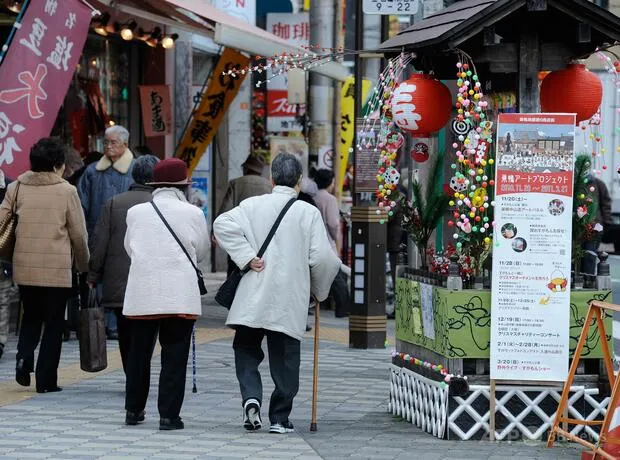
Historic milestone for Japan’s ageing society
Japan’s population of people aged 100 and older has surpassed 100,000 for the first time, according to the Ministry of Health, Labour and Welfare. The latest government figures, released ahead of Respect for the Aged Day, show that 107,677 centenarians were living in Japan as of September 1.
The milestone represents the 56th consecutive year in which the number of centenarians has reached a new record. Japan began officially compiling statistics on people aged 100 and older in 1963, when the total stood at just 153. More than six decades later, the number has grown dramatically, reflecting advances in healthcare, nutrition, living standards and public health.
Women account for approximately nine in ten centenarians
Women make up approximately 90 percent of Japan’s centenarian population. This gender imbalance is consistent with broader global patterns, as women generally have longer life expectancies than men. It also means that many of Japan’s oldest residents are women who may be living alone or relying on family members, community services and long-term care systems.
Japan has developed one of the world’s most comprehensive long-term care frameworks, including a public insurance system introduced in 2000. However, the growing number of very elderly residents is placing increasing pressure on care workers, medical providers, local governments and families. Demand for home-care services, assisted living and age-friendly infrastructure is expected to remain strong in the years ahead.
A rapidly ageing population
The record number of centenarians is part of a much wider demographic transformation. World Bank data puts Japan’s median age at 49.9 years, the second-highest in the world after Monaco. Japan is therefore not only home to a large elderly population, but also has a comparatively small share of younger people entering the workforce.
That imbalance has important economic and social consequences. A shrinking working-age population can affect labour supply, pension funding, tax revenues and regional communities. Rural areas in particular are facing population decline as younger residents move to larger cities, leaving some towns with a high concentration of older people and fewer local services.
Low birth rate adds to demographic pressure
Japan’s long-term population challenge is intensified by its persistently low birth rate. Data released earlier this year showed that the country’s total fertility rate fell again last year to a new record low. Fewer births, combined with longer life expectancy, are steadily changing the country’s population structure.
The government has introduced measures aimed at supporting families, encouraging child-rearing and addressing labour shortages. Japan is also expanding the use of technology, automation and carefully managed foreign-worker programmes in sectors such as healthcare, construction, agriculture and hospitality. These policies are intended to help maintain essential services while preserving the quality of life that has contributed to Japan’s impressive longevity.
The rise in centenarians is both a notable public-health success and a reminder of the scale of Japan’s demographic challenge. As the country prepares to honour its older citizens, the milestone is prompting renewed discussion about how Japan can support longer, healthier and more independent lives while building a sustainable future for all generations.