Report details the scale of North Korea’s overseas labor network
The Multilateral Sanctions Monitoring Team, known as the MSMT, has released a report estimating that between 35,600 and 101,280 North Korean workers are currently employed in at least 17 countries. The majority are concentrated in China and Russia, where workers are active in industries ranging from manufacturing and construction to information technology and food services.
According to the report, North Korea generated an estimated 450 million to 800 million U.S. dollars from overseas labor in 2025. At current exchange rates, that is approximately 70 billion to 124 billion yen. The MSMT believes North Korean authorities confiscate between 80% and 90% of workers’ wages, making the overseas labor system a significant source of foreign currency for the government in Pyongyang.
China remains the largest destination
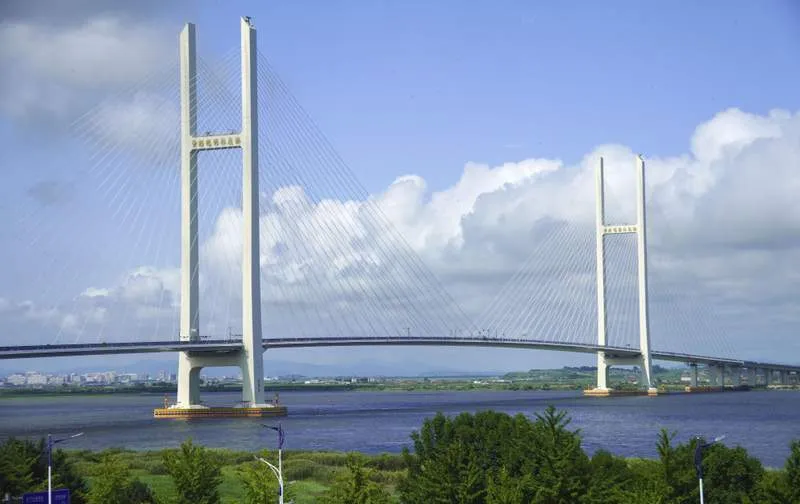
The report estimates that between 20,000 and 70,000 North Korean workers are in China. Many are based in the northeastern provinces of Liaoning, Jilin and Heilongjiang, areas geographically close to North Korea. Their reported occupations include factory work, construction, IT services, restaurants and other forms of manual and service-sector employment.
The MSMT also said approximately 10,000 additional North Korean workers entered China between January 2025 and January 2026. The reported movement highlights the continuing difficulty of enforcing United Nations sanctions along North Korea’s long land border with China, despite restrictions on the deployment of North Korean labor overseas.
Russia linked to labor and military production
Russia is estimated to host between 15,000 and 30,000 North Korean workers. The report alleges that some have been involved in the production of military drones, adding a security dimension to the wider issue of overseas employment. It also describes a system in which some workers are allegedly presented as students in order to conceal their true employment status.
Beyond China and Russia, smaller groups of North Korean workers are reportedly employed in 15 countries across Southeast Asia and Africa. The number in each of these countries ranges from roughly 10 workers to several hundred.
Why the findings matter to Japan
The findings are closely watched in Japan because North Korea’s revenue-generating networks are linked to the broader security environment in Northeast Asia. Japan has repeatedly condemned North Korea’s nuclear and missile development and supports the full implementation of United Nations sanctions. Tokyo also continues to coordinate with the United States, South Korea and other partners on efforts to prevent sanctions evasion and illicit financial flows.
United Nations Security Council resolutions require member states to repatriate North Korean workers and prohibit arrangements that allow Pyongyang to benefit from their labor. The MSMT called for those obligations to be implemented immediately.
The report does not suggest that individual workers are responsible for North Korea’s military policies. Rather, it focuses on the government-controlled system through which wages are collected and transferred. The findings are likely to intensify scrutiny of companies, recruitment networks and financial channels that may enable North Korean laborers to remain overseas in violation of international restrictions.
For Japan and other countries in the region, the report underscores the challenge of enforcing sanctions while maintaining vigilance over emerging forms of cooperation between North Korea, China and Russia. It also highlights how labor migration, technology and security concerns are increasingly interconnected in East Asia.