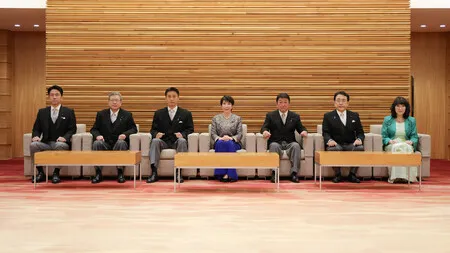
A Cabinet Built Around Continuity and Action
Japan’s second reshuffled Cabinet under Prime Minister Sanae Takaichi was formally inaugurated on the evening of the 17th after ministers received their official certificates at the Imperial Palace. The new lineup places strong emphasis on continuity, retaining several senior ministers as the government seeks to advance its major policy priorities.
Chief Cabinet Secretary Minoru Kihara, 57, remains in his central coordinating role, alongside Foreign Minister Toshimitsu Motegi, 70; Finance Minister Satsuki Katayama, 67; and Defense Minister Shinjiro Koizumi, 45. The reshuffle marks the first major Cabinet reorganization since Takaichi took office in October last year and is intended to provide stability while accelerating policy implementation.
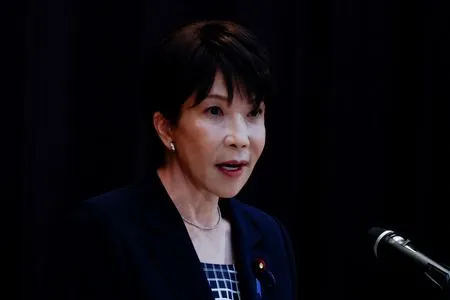
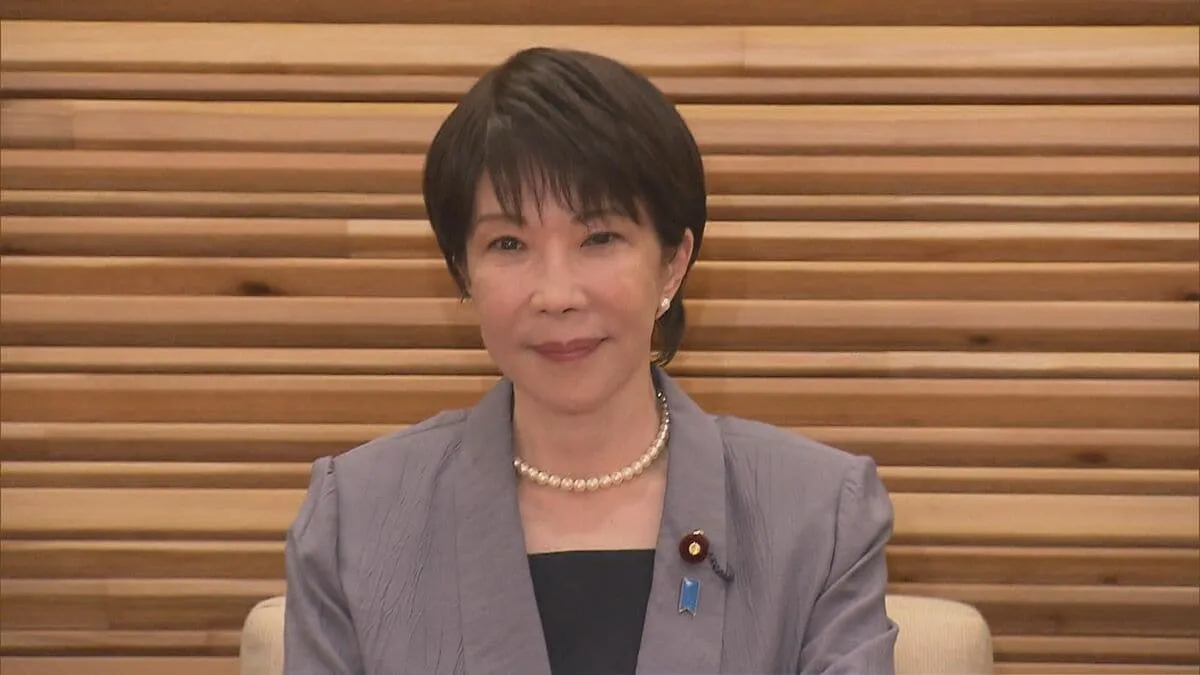
Following the Imperial Palace ceremony, Prime Minister Takaichi described the new administration as “a Cabinet of decisions, challenges and execution.” She said ministerial appointments were assessed according to three main criteria: each candidate’s expertise, awareness of policy challenges and motivation; their electoral strength; and the importance and continuity required in their respective portfolios.
New Appointments and Political Accountability
Seven lawmakers entered the Cabinet for the first time. Among them are former Economy, Trade and Industry vice minister Yoshihiro Seki, 61, who was appointed education minister, and former education vice minister Kazuo Yanagihara, 47, who became agriculture minister.
Both lawmakers were linked to the Liberal Democratic Party’s political funds scandal involving undeclared factional fundraising revenue. Their appointments mark the first time since the scandal came to light that lawmakers connected to the case have joined the Cabinet. Takaichi defended the decision, noting that both politicians had won election to the House of Representatives twice since the issue emerged. Her comments reflected the view that they had received renewed public mandates through elections.
Other first-time ministers include former foreign vice minister Hiyano Fujii, 55, as internal affairs minister; former Cabinet Office vice minister Tatsunori Ibayashi, 50, as land and transport minister; and House of Councillors member Toshiharu Furukawa, 63, as digital minister. Former agriculture vice minister Hiroyoshi Sasagawa, 60, was appointed environment minister and will also oversee measures related to bear encounters, an increasingly visible public safety issue in parts of rural Japan.
Expanded Cooperation with the Japan Innovation Party
The reshuffle also highlights growing cooperation between the ruling Liberal Democratic Party and the Japan Innovation Party, commonly known as Nippon Ishin no Kai. Hiroshi Nakatsuka, 70, the party’s former secretary-general, joined the Cabinet as minister in charge of regulatory reform.
Takaichi said Nakatsuka’s appointment symbolized the coalition’s move into a new phase. Before the announcement, she met with Fumitake Fujita, the Japan Innovation Party’s co-leader, at the Prime Minister’s Office to explain the objectives of the personnel changes. The appointment gives the cooperation agreement a more visible governmental dimension and could influence negotiations over economic reform, administrative efficiency and other priorities.
Experienced Ministers Return as Responsibilities Are Consolidated
The new Cabinet also brings back several experienced politicians. Takashi Yamashita, 61, returned as justice minister, while former justice minister Yasuhiro Hanashi, 66, became chairman of the National Public Safety Commission. Former environment minister Goshi Hosono, 55, was appointed reconstruction minister and will also oversee disaster management.
The government reorganized ministerial responsibilities to group related policy areas under a single minister. Internal Affairs Minister Fujii will also be responsible for developing a “secondary capital” to provide a backup for Tokyo’s central functions, as well as regional revitalization. Digital Minister Furukawa will oversee artificial intelligence strategy, while Reconstruction Minister Hosono will take charge of disaster prevention.
Finance Minister Katayama has been assigned responsibility for legislation related to a potential consumption tax reduction, one of the government’s most immediate economic policy issues. The change comes as households and businesses continue to watch closely for measures addressing living costs and economic pressure.
What Comes Next for Japan
Deputy Chief Cabinet Secretary Kei Sato, a House of Councillors member, stepped down and was replaced by Yusuke Nakanishi, 47, a former internal affairs vice minister associated with the Aso faction. With influential ministers retained and new partners brought into the administration, the reshuffled Cabinet is designed to balance experience, political coordination and policy specialization.
Its success will depend on whether the government can turn its stated commitment to “decision and execution” into concrete results, particularly on taxation, digital transformation, disaster preparedness, regional revitalization and public trust. For observers of Japan, the lineup offers an important signal: Prime Minister Takaichi is choosing stability and practical implementation while also widening cooperation within the country’s governing political landscape.