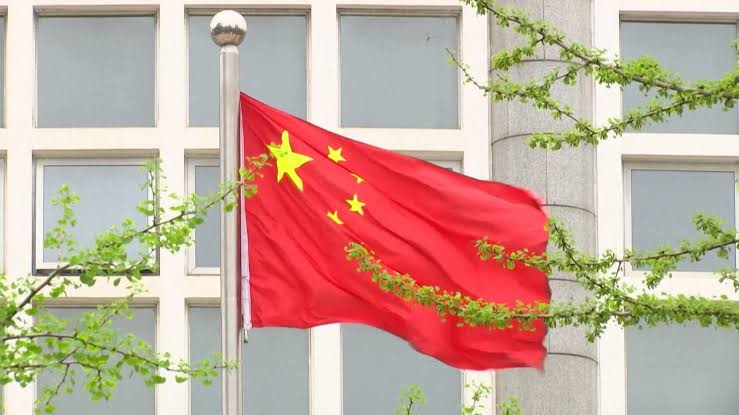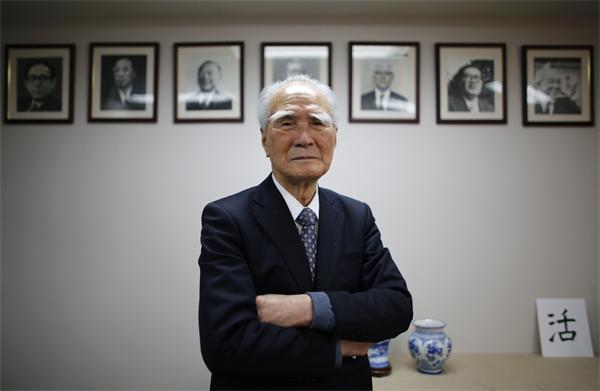
The passing of former Japanese Prime Minister Tomiichi Murayama at the age of 101 has resonated across the sea, with Chinese state media providing extensive coverage and online communities expressing a notable outpouring of respect and condolence. Murayama, who led Japan from 1994 to 1996, is remembered historically for his pivotal 1995 statement addressing Japan's wartime past, a gesture that continues to shape his legacy in Northeast Asia.
Official Media Coverage and Historical Context
On October 17th, major Chinese media outlets, including the state-run Xinhua News Agency, swiftly reported on Murayama's death, citing Japanese sources. The reports consistently highlighted his tenure as the leader of a coalition government and, most significantly, his authorship of the landmark "Murayama Statement." In August 1995, on the 50th anniversary of the end of World War II, Prime Minister Murayama delivered a formal apology for the "tremendous damage and suffering" caused by Japan's colonial rule and aggression. He specifically expressed his "feelings of deep remorse" and offered a "heartfelt apology," making him the first Japanese prime minister to issue such a clear and official apology.
China Central Television (CCTV), in its online report, reiterated the importance of this statement, framing it within the complex and often strained historical dialogue between the two nations. For China, where memories of Japanese wartime occupation remain a potent and painful part of the national consciousness, Murayama's words represented a rare and valued official acknowledgment of history from a Japanese leader.
The Online Pulse: A Wave of Personal Tributes
Perhaps more telling than the official media reports was the reaction on Chinese social media platforms. On Weibo, a microblogging site akin to X (formerly Twitter), news of Murayayma's passing sparked a significant number of positive and mournful comments. Users frequently referred to him as a "soldier for Sino-Japanese friendship" and a "good friend of the Chinese people." Many comments expressed that he was "a Japanese person worthy of mourning," a sentiment that stands in stark contrast to the often-critical online discourse regarding Japanese politicians and historical issues.
This public response suggests a clear distinction in the Chinese popular perception between Murayama, who confronted history, and other political figures who are seen as minimizing it. His willingness to engage with the past appears to have earned him a unique and enduring respect among a segment of the Chinese populace.
The Murayama Statement's Enduring Legacy and Challenges
The "Murayama Statement" has long served as a cornerstone of Japan's official posture on history in its international relations, particularly with South Korea and China. Successive governments have stated that they uphold the spirit of the apology. However, its legacy is not without controversy. In the years since, visits by other Japanese politicians to the Yasukuni Shrine—which honors Japan's war dead, including convicted war criminals—have frequently drawn sharp criticism from China and South Korea, creating a cycle of diplomatic tension.
Murayama himself was a critic of such visits, seeing them as undermining his efforts at reconciliation. The public mourning in China for his passing highlights a deep-seated desire, at least among some citizens, for a stable and respectful relationship built on a shared, honest understanding of history. It underscores that gestures of contrition and acknowledgment can have a profound and long-lasting impact on international public opinion.
A Contrast in Diplomatic Atmospheres
The warm remembrance of Murayama occurs against a backdrop of ongoing geopolitical friction between Beijing and Tokyo. Issues surrounding territorial disputes in the East China Sea, security alliances, and economic competition continue to test the bilateral relationship. In this context, the death of a figure like Murayama serves as a poignant reminder of a different potential path—one oriented toward reconciliation and mutual understanding.
His passing has prompted reflection on the current state of Sino-Japanese relations and the scarcity of figures capable of making similarly bold, conciliatory gestures that bridge the historical divide. The challenge for both nations lies in finding a way to honor the spirit of Murayama's legacy while navigating the complex realities of the 21st century.
The Man Behind the Title: Murayama's Humble Leadership
Beyond the historical statement, Murayama was also notable for his political persona. As the first Socialist prime minister in nearly half a century, his coalition government was an anomaly in Japanese politics. He was often described as a humble and straightforward man, characteristics that distinguished him from the more typical career bureaucrats who often ascend to the leadership. This personal authenticity may have contributed to the genuine sense of loss felt by people in neighboring countries, who saw in him a leader of principle.
In the final analysis, the response to Tomiichi Murayama's death in China is multifaceted. It is a tribute to a specific historical act of apology, a commentary on the current state of regional diplomacy, and an acknowledgment of an individual's character. As China mourns the "soldier for friendship," his legacy serves as both a benchmark for historical reconciliation and a symbol of the peace that many in the region still hope to cultivate.