A Night to Forget for Ohtani and the Dodgers
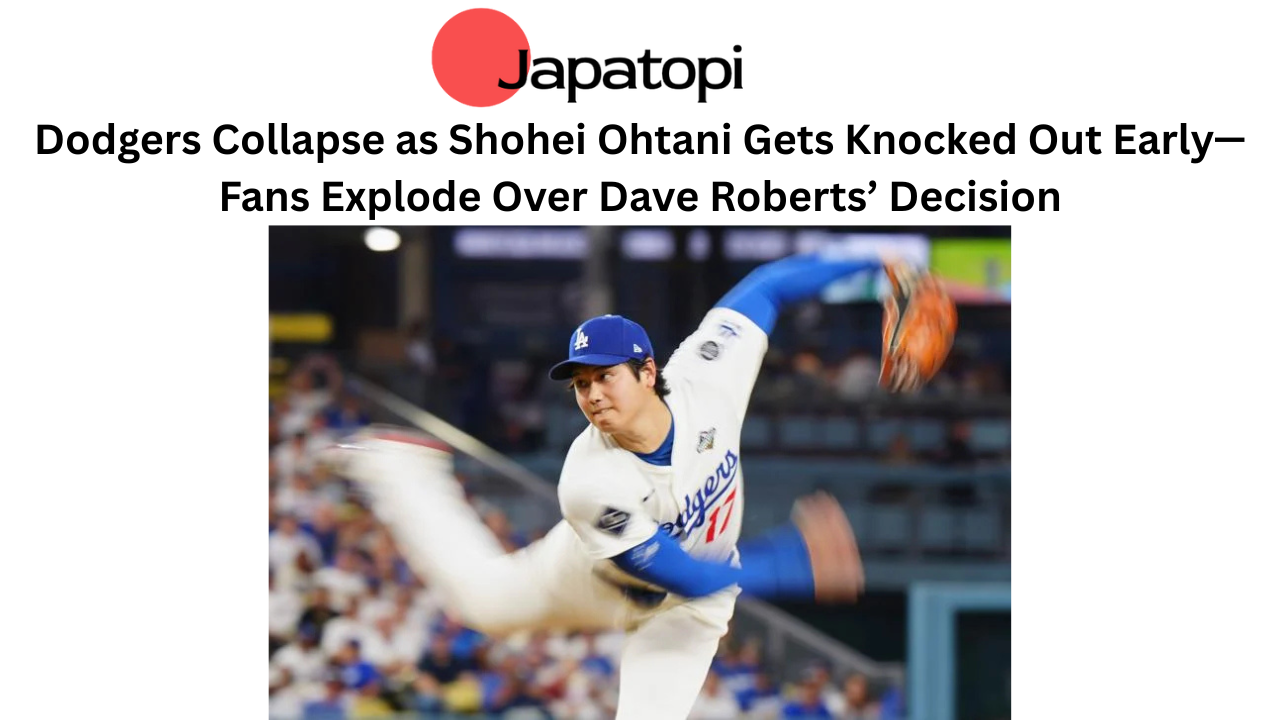
It was supposed to be the night Shohei Ohtani sealed his name into baseball history once again. Instead, Game 7 of the World Series turned into a nightmare for both the Los Angeles Dodgers and their two-way superstar. Ohtani, starting on just three days’ rest, was pulled in the third inning after giving up three runs to the Toronto Blue Jays, leaving Dodgers fans furious—not at him, but at manager Dave Roberts.
The stakes could not have been higher. The Dodgers were on the brink of back-to-back World Series titles, while Ohtani, at age 31, carried the weight of Los Angeles’ hopes on his shoulders. But from the very first inning, the warning signs were there. Each frame began with a leadoff baserunner, putting Ohtani under relentless pressure. Despite flashes of his signature brilliance, including a clutch strikeout of Jiménez to escape a bases-loaded jam in the second, his command began to unravel.
Then came the breaking point. In the bottom of the third, with one out and runners on first and second, Toronto’s Bo Bichette crushed the very first slider he saw. The ball sailed deep into center field as the Rogers Centre erupted, and Ohtani sank to his knees—defeated, both physically and emotionally.
Roberts’ Decision Under Fire
Dodgers manager Dave Roberts made the call to remove Ohtani immediately after the home run, switching him to designated hitter duties. But by then, the damage was done. Toronto had seized control, and momentum was firmly on their side.
The real backlash, however, came not from the field, but from the fans. American social media platforms lit up with outrage, many questioning Roberts’ choice to start Ohtani on short rest in such a high-stakes game.
“Why did Roberts push him out there again? He’s clearly exhausted,” one fan wrote on X (formerly Twitter). Another fumed, “It’s Game 7, not July! You don’t experiment with your ace’s endurance now!”
By the end of the game, hashtags like “#FireRoberts” were trending across sports networks. Some fans even demanded that the Dodgers part ways with the long-time manager, accusing him of mismanaging his pitching rotation. “Everyone knew Ohtani shouldn’t be pitching the third inning—everyone except Roberts,” another post read.
A Clash Between Strategy and Emotion
Dave Roberts has long been both praised and criticized for his loyalty to his players. In this case, that loyalty may have cost him dearly. Ohtani, a fierce competitor, reportedly told the coaching staff he was ready to go, despite the short rest. Roberts trusted his star. It was a decision made from belief—but perhaps not from logic.
In hindsight, the numbers were against them. Ohtani’s fastball velocity had dipped since his previous outing, and his control looked shaky early on. Analysts on postgame broadcasts noted that Ohtani’s pitch count in his prior start was unusually high for someone returning on such short rest. “It wasn’t just a question of skill—it was a question of fatigue,” said one commentator.
Still, Roberts defended his decision after the game, saying, “Shohei is our guy. You trust your best when everything’s on the line.” It was a statement that reflected the manager’s confidence but did little to calm the storm among fans and media.
The Weight of Expectations
For Ohtani, the loss was another chapter in a career that has balanced transcendence with immense pressure. His journey to Los Angeles was built on breaking boundaries—becoming the modern-day Babe Ruth, a pitcher and slugger rolled into one. Yet even for him, the expectations are astronomical.
While his bat remains lethal, his pitching workload after elbow surgery had been closely monitored all season. Many experts warned that using him on short rest in October could be risky. Now, with the Dodgers’ championship hopes dashed, those warnings seem prophetic.
Still, Ohtani’s humility and determination have always earned respect. After the game, he reportedly apologized to teammates in the clubhouse, saying, “I wanted to give everything I had for the team.” It’s the kind of accountability that defines Ohtani’s character, even in defeat.
What’s Next for the Dodgers?
As the Dodgers prepare for the offseason, the front office faces tough questions. Should Roberts return for another year? Will Ohtani continue to pitch at the same frequency, or will the team rethink his dual-role strategy?
Fans, analysts, and insiders alike are divided. Some argue that Roberts’ trust in Ohtani was admirable, showing faith in his superstar. Others see it as a fatal error—a sign that Los Angeles’ leadership needs a shake-up.
Regardless of the outcome, one thing is certain: this Game 7 will be remembered not for the Blue Jays’ triumph, but for the controversy that engulfed one of baseball’s biggest teams and brightest stars. For Shohei Ohtani, redemption will come only with another chance—and for Dave Roberts, that chance may no longer be guaranteed.