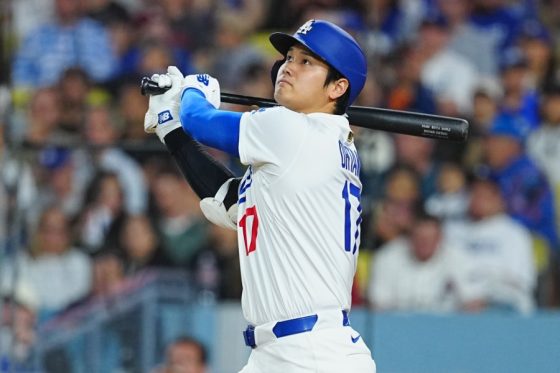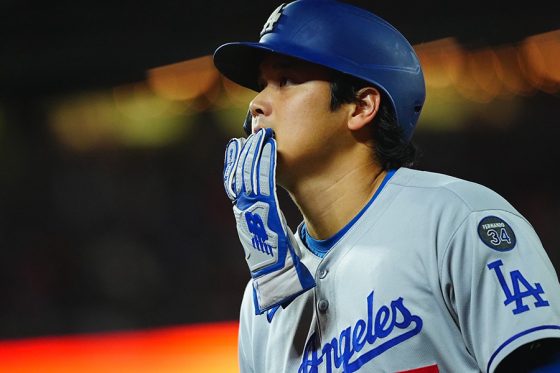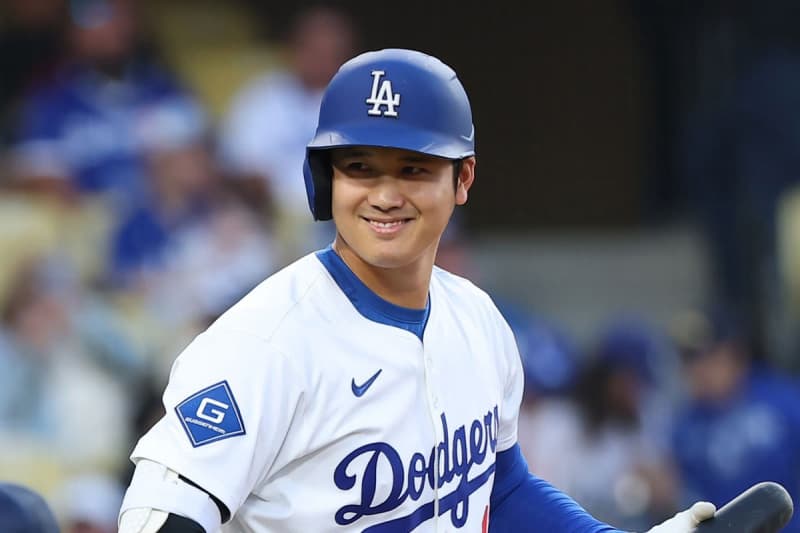
Los Angeles—Japanese superstar Shohei Ohtani has been named the top designated hitter in Major League Baseball for 2026 by U.S. outlet Just Baseball, which released its “Top 10 DHs for 2026” on January 20 (January 21 Japan time). The publication hailed the Los Angeles Dodgers’ phenomenon as “the greatest player in this era of baseball,” placing him at No. 1 after a 2025 campaign it described as historic on both individual and team fronts.
‘Greatest of His Era’—and Still Ascending
In its write-up, Just Baseball underscored the scope of Ohtani’s dominance, noting that he captured a third consecutive Most Valuable Player award in 2025—his fourth overall—while launching a career-high 55 home runs as the Dodgers won a second straight World Series. It is a portrait of sustained excellence rarely seen in modern sports, and one that continues to resonate powerfully in Japan, where Ohtani’s ascent from Hokkaido to Tokyo and on to Los Angeles remains a source of national pride. The outlet added that there has simply never been a player like him: even when Ohtani returned to the mound mid-season—his first pitching appearance since 2023—his offensive production “remained astonishing.” That two-way resilience, a hallmark of his career, frames his selection as the sport’s standard-bearer at DH entering 2026.
Award Streak That Defines a DH Era
Ohtani’s grip on the designated hitter role is reflected in his awards cabinet. He has won the Edgar Martinez Award—given annually to the most outstanding DH—five straight times since 2021. That five-trophy haul places him in a tie for the second-most all-time, trailing only Boston Red Sox legend David Ortiz’s eight. For a player who also impacts the game from the mound, that run underlines not just versatility, but genuine mastery of the craft of hitting: launch angle refinement, plate coverage against elite velocity, and day-in, day-out slugging consistency. In a position once stereotyped as “bat-only,” Ohtani has redefined the role through pure production backed by disciplined preparation—an approach steeped in the meticulous training ethos long celebrated in Japanese baseball.
The Rest of the Top 10: Star Power and Storylines
Just Baseball’s list places Houston’s Yordan Alvarez (28) at No. 2, with the caveat that availability is the key variable; Alvarez appeared in only 48 games last season but, “when healthy,” the outlet wrote, he can “transform the Astros’ lineup.” His sheer bat speed and left-handed power make him a perennial threat to challenge for the top spot. At No. 3 is Kyle Schwarber (32) of the Phillies, who led the National League with 56 home runs and 132 RBIs in 2025—numbers the ranking noted would have made him an “easy” MVP choice if not for Ohtani’s otherworldly season. Rounding out the upper tier is Tampa Bay’s Yandy Díaz (34) at No. 4, a line-drive maestro whose contact quality and on-base prowess anchor the Rays’ approach. Oakland’s Brent Rooker (31) lands at No. 5, a testament to his continued evolution into a reliable power source. At No. 6, Toronto’s George Springer (36) brings veteran savvy and a track record of big-game moments to the DH role as the Blue Jays balance rest and production for their core. Milwaukee’s Christian Yelich (34) sits at No. 7, evidence of how his retooled swing and approach have kept him relevant in a changing NL landscape. The Angels’ Mike Trout (34) is No. 8, a nod to the franchise icon’s sustained elite hitting skills when healthy; his placement at DH reflects a pragmatic path to preserving his bat. St. Louis catcher Iván Herrera (25) is No. 9, a recognition of his bat-first trajectory and growing importance in the Cardinals’ offensive blueprint, while Detroit’s Kerry Carpenter (28) rounds out the list at No. 10 after establishing himself as a consistent run-producer with opposite-field power.
Why Ohtani’s DH Supremacy Matters
There is competitive symbolism in Ohtani topping a list filled with names who would headline any offense. The universal DH, adopted across both leagues, has elevated the strategic impact of the position. Clubs now use DH at-bats to safeguard health, keep hot bats in the lineup, and squeeze out marginal gains over a 162-game grind. In that context, Ohtani’s production is not a luxury—it is a strategic engine. By anchoring the Dodgers with elite OPS and late-inning threat value, he shifts opposing bullpens and unlocks lineup protection for teammates. That becomes magnified in October, where a single extra-base hit can decide a series. For a player who also commands attention on the mound, the psychological leverage he exerts is unique: opponents must prepare for one of the sport’s most dangerous hitters, and, when he pitches, one of its most dynamic arms.
A Bridge Between Baseball Cultures
For Japan, Ohtani’s continued ascent is about more than records and rings. He is the living bridge between the NPB’s crafted fundamentals and MLB’s power-driven spectacle, a cultural ambassador whose professionalism highlights the global reach of Japanese baseball. His preparation—quiet, detail-driven, relentless—embodies values that resonate with fans from Sapporo to Shizuoka. At Dodger Stadium, traveling supporters from Japan find a star who wears the weight of expectations with humility, and who has turned the world’s most scrutinized baseball stage into a platform for excellence. That he does so while maintaining grace under pressure speaks to a distinctly Japanese sporting spirit—and fuels a new generation of young players in Japan who see no contradiction in dreaming as both ace and cleanup hitter.
The 2026 Outlook
As 2026 begins, Ohtani’s place atop the DH hierarchy feels both deserved and precarious in the way sports always are: every season resets. Houston’s Alvarez can erase gaps with a healthy campaign. Schwarber’s power remains a game-breaking force. Veterans such as Díaz and Springer provide ballast for clubs with October ambitions, while rising bats like Carpenter and Herrera broaden the position’s future. Yet the through line is unmistakable: for all the depth at DH, Ohtani remains the standard against which others measure themselves. Just Baseball’s ranking captures the present reality—the DH position is deeper than ever, but one player, a Japanese icon, stands alone for now.
Bottom Line
“The greatest player in this era of baseball,” the U.S. outlet wrote—and the evidence from 2025, as presented in its analysis, supports that view: three straight MVPs, a career-best 55 homers, and a central role in a Dodgers team that lifted the World Series trophy in back-to-back seasons. Add five consecutive Edgar Martinez Awards and a seamless mid-season return to the mound without sacrificing a shred of offensive thunder, and you have more than a ranking—you have a portrait of sustained brilliance. For Japan, it is another moment to celebrate a homegrown talent reshaping the sport at its pinnacle. For MLB, it is a reminder that greatness, when it spans continents and positions, changes the very definition of what is possible.