A Breakthrough in U.S.-China Trade Relations
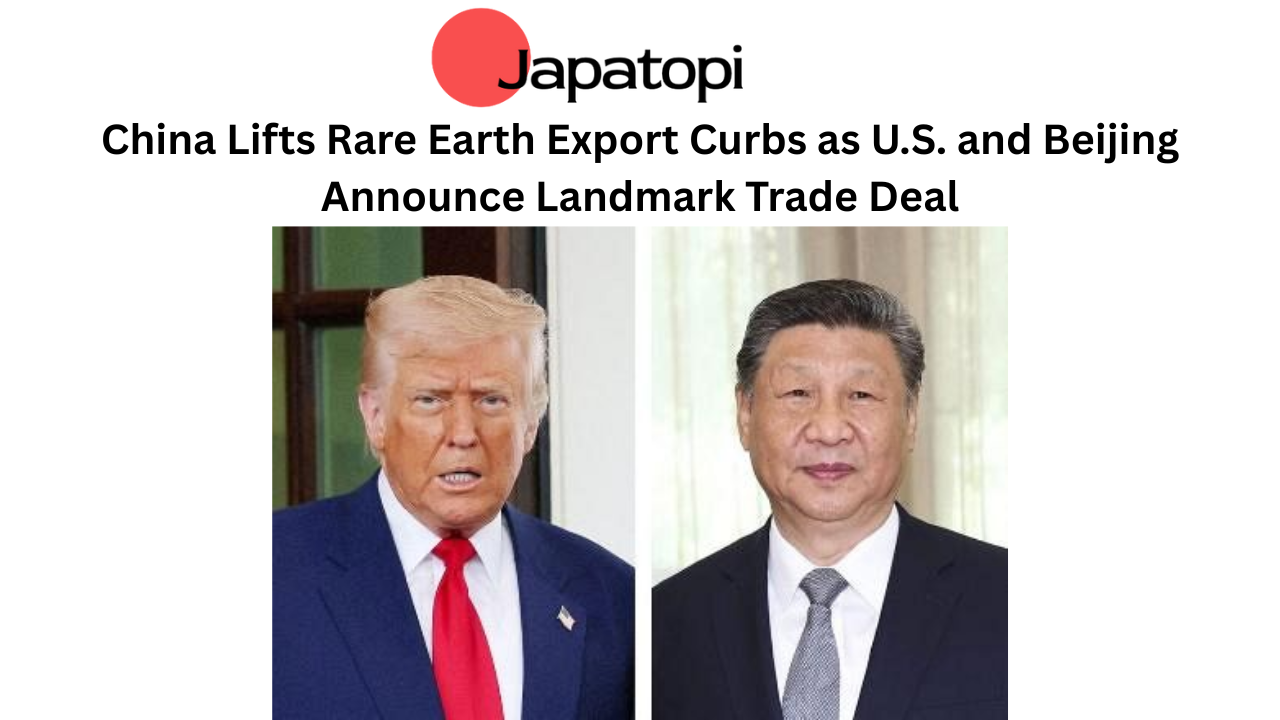
In a move signaling a major de-escalation in economic tensions, the U.S. government on November 1 released a “fact sheet” outlining the details of a new trade agreement between Washington and Beijing. The document revealed that China has effectively withdrawn its export restrictions on rare earth elements and other critical minerals—a decision that could reshape global supply chains and ease pressure on industries reliant on these strategic materials.
According to the U.S. statement, the rollback applies to export controls imposed by China in October 2022 and April 2025, targeting rare earths, gallium, germanium, and graphite—materials essential for semiconductors, electric vehicle (EV) batteries, and advanced electronics. The reversal halts China’s plans, announced in October this year, to further tighten rare earth exports, marking a significant concession amid months of tense negotiations.
A Mutual Retreat in the Trade War
The U.S. administration, led by President Donald Trump, presented the agreement as a “major victory for America’s economic strength and national security.” As part of the deal, Washington will also reduce the 20% punitive tariffs on Chinese goods—initially imposed to counter the flow of synthetic opioid fentanyl—by half, bringing them down to 10% effective November 10.
The trade accord reflects a mutual retreat from escalating trade retaliation that has disrupted global markets for over a year. Both countries appear to have recognized that sustained economic warfare could threaten not only bilateral ties but also the stability of global manufacturing, particularly in high-tech sectors where both nations play dominant roles.
Easing of Supply Chain Tensions
China’s dominance in rare earth production—accounting for roughly 70% of global supply—has long been viewed as a potential geopolitical weapon. The materials are indispensable in producing magnets for wind turbines, EV motors, and missile guidance systems, making them crucial to both green technology and defense industries.
By lifting these curbs, Beijing sends a signal that it is willing to separate strategic competition from mutual economic interest, at least temporarily. Analysts say the move could stabilize supply for Western manufacturers while offering China a way to rebuild diplomatic goodwill and reduce its exposure to retaliatory measures from the U.S. and allied countries.
For the United States, this agreement may alleviate concerns among domestic manufacturers who have struggled with material shortages and price spikes. The White House’s framing of the deal as a “national security victory” suggests that the administration views economic leverage as a tool for strategic deterrence, rather than perpetual confrontation.
Agricultural Relief and Tariff Reversal
In a reciprocal gesture, China will suspend its retaliatory tariffs on 740 categories of American products, including soybeans, poultry, and corn—key exports for U.S. farmers who have been hit hard by the trade war. The suspension of these duties, which ranged up to 15%, is expected to provide immediate relief to the agricultural sector ahead of the upcoming planting season.
The agricultural concessions underline the political dimensions of the deal. For Trump, securing better market access for U.S. farmers strengthens his domestic standing ahead of an election year. For Xi Jinping, stabilizing the domestic economy amid slowing growth and capital flight remains an equally pressing priority. The agreement therefore reflects both leaders’ pragmatic need to project economic stability without appearing to concede too much to the other side.
A Fragile but Hopeful Truce
Despite the optimism surrounding the announcement, experts warn that this may only be a temporary thaw. Issues such as technology transfers, human rights, and Taiwan remain contentious points between the two superpowers. Still, the fact that both sides have chosen to dial down trade hostilities marks a rare moment of cooperation in an otherwise competitive geopolitical landscape.
The deal could also serve as a foundation for broader talks on climate cooperation and supply chain resilience—areas where both economies have shared but competing interests. As global markets respond to the news, attention now shifts to how the agreement will be implemented and whether it can withstand domestic and political pressures in both countries.
For now, though, the rare earth truce represents a cautiously optimistic step toward economic normalization. In a world increasingly divided by protectionism and nationalism, the U.S.-China accord suggests that even fierce rivals can find common ground when strategic necessity aligns with mutual benefit.