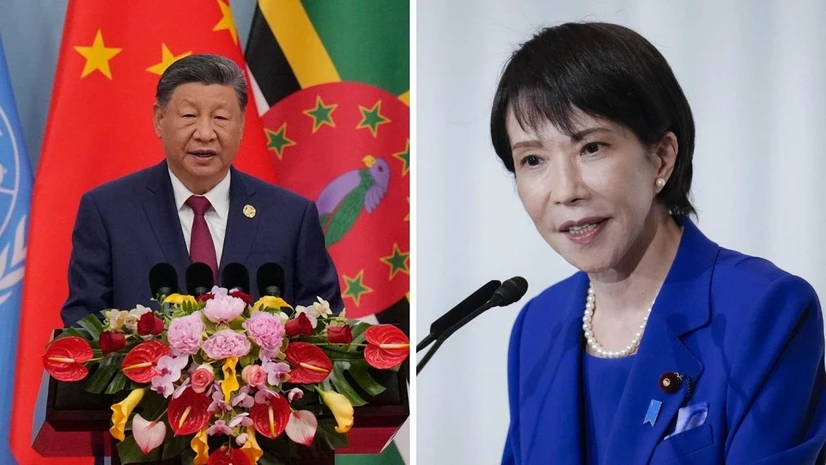
Tokyo— Less than a month into office, Prime Minister Sanae Takaichi’s pledge to make Japan “bloom at the center of the world” is facing a harsh reality check. An outreach bid to North Korea has been met with silence and missile launches, a parliamentary remark on Taiwan set off a public clash with Beijing, and Moscow has expanded entry bans on Japanese figures in a pointed rebuke of Tokyo’s sanctions. The result: a diplomatic debut that began with cautious praise now finds itself struggling for traction in three of Japan’s most difficult neighborhoods at once.
A cautious debut turns rocky
Takaichi, a conservative standard-bearer of the ruling Liberal Democratic Party, came to power promising a tougher, clearer-eyed foreign policy founded on economic security and robust deterrence. Her language echoed the aspirational rhetoric of earlier LDP leaders—of a Japan that stands “at the center of the world” and “in full bloom.” Three weeks on, however, the contours of her early diplomacy suggest the limits of bold messaging when adversaries are inclined to test a new leader’s resolve.
The prime minister’s first major foray focused on an enduring national trauma: the abductions of Japanese citizens by North Korea in the 1970s and 1980s. At a large civic rally on November 3 in Tokyo demanding the return of the abductees, Takaichi declared, “I will not rule out any means,” and said her government had conveyed to Pyongyang its desire to hold a summit. The remarks raised hopes among families and supporters that a breakthrough might be possible where multiple administrations have failed.
North Korea: Outreach answered with missiles
Instead, signals from Pyongyang were unpromising. Four days after Takaichi’s overture, North Korea test-fired another ballistic missile—its second launch since the new administration took office—continuing a pattern of saber-rattling that often accompanies moments of diplomatic opening. North Korean state media reportedly made no reference to Takaichi’s comments; instead, domestic outlets highlighted a November 12 discussion that castigated Japan as a “thousand-year enemy,” a familiar trope intended to inflame nationalist sentiment. The messaging reinforced a view among analysts that Pyongyang sees little short-term upside in talks with Tokyo absent tangible concessions, and may prefer to probe Takaichi’s political bandwidth at home before engaging.
For Japan, the abductees issue remains both a moral imperative and a thorny strategic challenge. Past attempts to separate humanitarian demands from broader security and sanctions negotiations have rarely held. With North Korea pursuing an expanded missile and nuclear program, and with U.S.–Japan–South Korea trilateral coordination tightening, Pyongyang’s calculus is unlikely to change without incentives or pressure that Tokyo alone cannot muster.
China: A parliamentary remark ignites a diplomatic firestorm
If North Korea was silence and force, China was swift and loud. A parliamentary answer by Takaichi that linked a Taiwan contingency to Japan’s potential exercise of collective self-defense became an early flashpoint. Beijing seized on the remark, while Japan’s ruling party escalated matters domestically by demanding that China’s consul general in Osaka be expelled over inflammatory posts on X (formerly Twitter), which were later deleted.
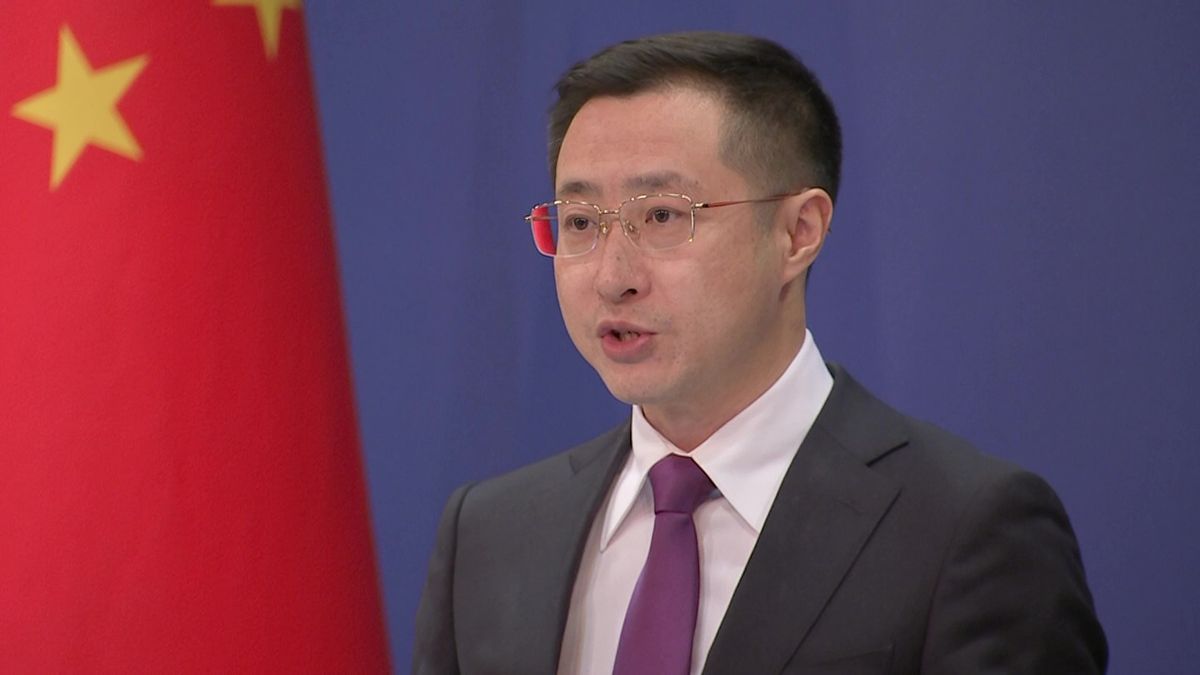
China’s foreign ministry doubled down publicly. At a November 13 briefing, a deputy spokesperson urged Tokyo to retract the comment and warned that any Japanese military involvement in the Taiwan Strait would constitute “aggression” that would be “met head-on with a painful blow.” Beijing also dredged up historical grievances in a rhetorical move aimed at undermining Japan’s moral standing in the region. For Tokyo, the episode exposes the tightrope it must walk: maintaining deterrence and clarity with allies, including the United States, while avoiding statements that provide Beijing with fodder to escalate or split public opinion inside Japan and across Asia.
Analytically, the dust-up underlines the sensitivity of collective self-defense, which Japan enabled in limited form under 2015 security legislation. While Tokyo has steadily expanded its defense posture and contingency planning, the politics of explicitly tying Japan’s use of force to a Taiwan crisis remains fraught—both domestically and with neighbors highly attuned to perceived shifts in Japanese military policy.
Russia: Timed retaliation—and a gray-market headache
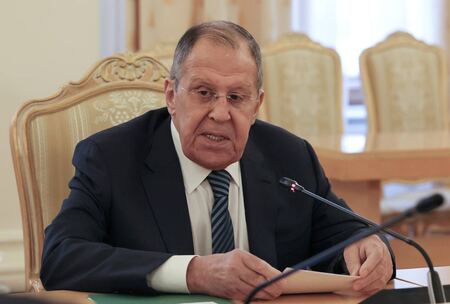
Then came Moscow. On November 11, Russia announced a fifth tranche of entry bans against Japanese individuals as a countermeasure to Japan’s sanctions over the invasion of Ukraine, adding 30 names. The move arrived weeks after Tokyo’s latest sanctions tightening in mid-September, prompting questions about the timing. Itsuro Nakamura, professor emeritus at the University of Tsukuba and a specialist in Russian politics, argued that Moscow had calibrated the measure for maximum diplomatic effect, waiting for the launch of the new administration to press its point. “Even as Russian diplomacy is in disarray—as the failure to realize a U.S.–Russia summit showed—Moscow timed the announcement to deliver a shot across the bow of Takaichi’s government, which is already under strain with China,” he said.
Beyond the lists and statements looms a practical enforcement challenge. Despite sanctions, inbound travel from Russia to Japan has surged, with estimates approaching 100,000 visits annually. Alongside tourism and family travel, there are growing reports—echoed by Nakamura—that opportunistic resellers are buying up consumer electronics in Japan and ferrying them back to Russia, where such goods are in short supply, sometimes ultimately reaching defense-related factories. If even a fraction of these gray-market flows touch dual-use components, Japan could inadvertently be abetting Russia’s warfighting capacity, a risk that runs counter to Tokyo’s own “economic security” agenda. Authorities have tightened export controls since 2022, but the retail-to-resale pipeline is harder to police, pointing to the need for enhanced customs screening, closer coordination with manufacturers on serial tracking, and cooperation with G7 partners to target logistics networks and payment channels.
Domestic stakes and strategic options
The early turbulence carries political consequences at home. Takaichi’s brand emphasizes technological resilience and supply-chain security; revelations that gray-market electronics might be slipping into Russia would undercut that message. Meanwhile, a very public spat with China over Taiwan rhetoric risks complicating economic ties at a time when Japanese firms remain deeply intertwined with the Chinese market. And on North Korea, expectations among abductee families and their supporters are high, but the policy tools available to Japan acting alone are limited.
What, then, are the options? First, recalibrate messaging to mitigate escalation risk without diluting deterrence. That means clarifying that any Japanese action in a Taiwan scenario would be guided by existing law, alliance consultations, and strict thresholds—and letting the defense documents and joint operational planning with the United States speak louder than off-the-cuff parliamentary formulations. Second, intensify back-channel diplomacy. History suggests that breakthroughs with Pyongyang, if they come at all, are built on painstaking, quiet groundwork, often through third-country intermediaries in Europe or Southeast Asia. Third, harden sanctions enforcement. Japan can expand end-use checks and incentivize retailers to flag bulk electronics purchases; it can also align more closely with EU and U.S. lists of high-priority items and make better use of financial intelligence to disrupt courier-based export schemes.
What comes next
For now, Takaichi faces a triad of tests that many of her predecessors have also struggled to pass. None will be solved quickly, and all demand a blend of patience, consistency, and coalition-building. In the near term, watch for signals: whether North Korea tempers or intensifies its launches; whether Beijing cools its rhetoric or escalates with consular or economic steps; and whether Tokyo moves to visibly tighten the screws on sanctions evasion networks involving Russian buyers. The larger question—whether Japan can truly “bloom at the center of the world” while juggling simultaneous crises with three nuclear-armed neighbors—will be answered less by rhetorical flourish than by steady, methodical statecraft. Early missteps need not be fatal, but the margin for error is thin, and the region is watching.