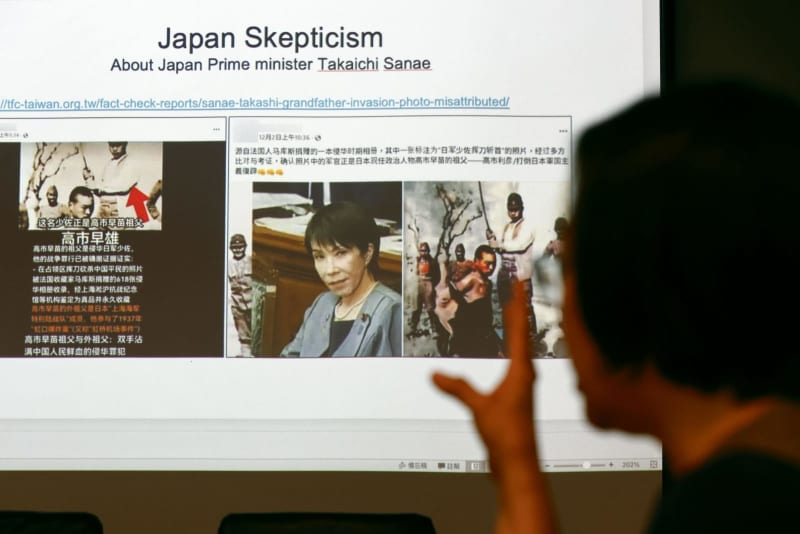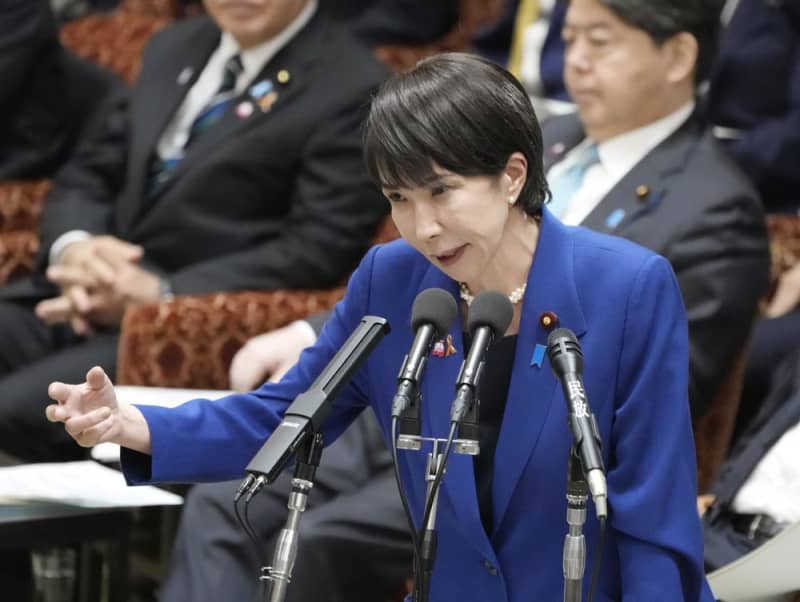
A surge of China-linked media coverage questioning Okinawa’s status has swept the internet, with references to “Ryukyu” and “independence” multiplying roughly twentyfold year on year in November, according to data from Meltwater, a U.S.-based media analytics firm. The spike gathered pace after Prime Minister Sanae Takaichi’s November 7 comments in Japan’s parliament about potential contingencies in the Taiwan Strait, suggesting a rapid escalation in information operations tied to regional security tensions.
Data shows a sharp, time-linked escalation
Meltwater’s tools analyzed news and social content produced by media based in mainland China and Hong Kong, isolating articles in which either “Ryukyu” or “Okinawa” appeared in close proximity to the term “independence.” Under these parameters, the corpus of relevant pieces totaled roughly 30 in November last year. This November, that figure ballooned to about 600. The acceleration closely followed November 7, the date when Prime Minister Takaichi addressed questions over a Taiwan crisis in the Diet, indicating that the information blast likely responded to, or capitalized on, her remarks.
While proximity searches cannot determine an outlet’s intent or the sentiment of each article, the trendline is stark: an unusually concentrated wave of content revisiting Okinawa’s history and sovereignty, and amplifying narratives that cast doubt on Japan’s territorial claims. Several widely shared items highlighted Okinawa’s past as an independent monarchy, often framed within arguments that the 1972 reversion from U.S. administration did not constitute a full restoration of Japanese sovereignty. Global Times, affiliated with the Chinese Communist Party’s People’s Daily, ran a November editorial explicitly questioning Okinawa’s status—an unmistakable signal of mainstream amplification within China’s party-state media ecosystem.
Reviving a historical narrative with contemporary aims
At the heart of the coverage is the history of the Ryukyu Kingdom, a maritime polity that maintained tributary relations with imperial China while also interacting with Japan for centuries. In 1879, the Meiji government abolished the kingdom and established Okinawa Prefecture, a step Tokyo considers the completion of its modern nation-state consolidation. After World War II, the United States placed Okinawa under military administration until 1972, when the islands were formally returned to Japan. Yet the American military footprint remains substantial, making Okinawa central to the U.S.-Japan alliance and a critical forward position near Taiwan.
Chinese-linked media outlets have increasingly seized upon that history, packaging it for digital audiences with contemporary geopolitical relevance. Some pieces elevate an “independence” discourse that is rarely found in Japanese mainstream media, syncing historical references to present-day strategic debates. By portraying Okinawa as a contested space, the narrative implicitly raises questions about the credibility of Japan’s legal and political control while inserting ambiguity into the regional security architecture that undergirds U.S. deterrence in the Western Pacific.
Tying Okinawa to the Taiwan flashpoint
The timing of the surge is significant. Prime Minister Takaichi’s Diet remarks on November 7, discussing how Japan might respond to a Taiwan contingency, coincided with a general uptick in cross-strait tensions and military signaling around the island. Okinawa is strategically situated just northeast of Taiwan, with key Japanese and U.S. facilities that would be pivotal in any regional crisis. Content questioning Okinawa’s sovereignty may seek to erode public support for the alliance presence, complicate local political debates in the prefecture, and probe for wedge issues capable of sowing division within Japan’s body politic.
Information campaigns around sovereignty narratives are a familiar feature of strategic competition. By reframing Okinawa’s past, China-linked outlets can calibrate messaging to multiple audiences: domestically, reinforcing nationalist frames; regionally, pressuring Japan’s policy discourse; and internationally, injecting doubt into a complex legal-historical debate. The approach mirrors other influence efforts that exploit historical ambiguities to undermine adversaries’ claims or to test how platforms and publics react to contentious framing.
Methodological caveats—and the pattern beneath the numbers
Meltwater’s proximity-based analysis does not adjudicate the accuracy of historical claims nor the editorial slant of each item. Not all articles using the keywords advocate independence; some may simply report on the debate. Moreover, the dataset does not capture every post or broadcast across the Chinese-language internet. Even so, the twentyfold year-on-year increase points to a coordinated editorial shift or a cascading effect triggered by a few high-profile pieces that set the narrative agenda. The addition of a Global Times editorial, given its readership and party affiliation, typically acts as an accelerator, cueing lower-tier sites and social accounts to replicate and embellish the theme.
Tokyo’s position and the legal backdrop
Japan’s position is unequivocal: Okinawa is an integral part of its territory under international law, a status affirmed through domestic incorporation since 1879 and internationally recognized after the 1972 reversion. The San Francisco Peace Treaty framework, combined with subsequent bilateral arrangements with the United States, sets out the island chain’s postwar trajectory. While Okinawa hosts a disproportionate share of U.S. bases and local communities frequently debate the social and environmental burdens that entails, the prefecture remains fully under Japanese administration with elected local leadership and representation in the national Diet.
Against that backdrop, outside narratives pressing “independence” or re-litigation of sovereignty can resonate unevenly inside Japan. Some local activists focus on base consolidation, noise, and safety; others advocate varying degrees of autonomy. But those debates are distinct from the portrayal, seen in some China-linked content, of a broader international legal challenge to Japan’s sovereignty.
Implications for the information domain
The November wave underscores how quickly security flashpoints can migrate into the information sphere. As governments and platforms grapple with influence operations, Tokyo may face pressure to step up strategic communication, clarify historical narratives, and support fact-checking initiatives. For allies, the episode is a reminder that military deterrence is increasingly paired with narrative competition, where seemingly arcane historical disputes are repurposed as tools of statecraft. Observers will watch for further spikes keyed to major diplomatic events, military exercises, or rhetorical escalations over Taiwan, as well as for counter-messaging from Japanese authorities and Okinawan civic groups.
With cross-strait tensions unlikely to recede, Okinawa’s role—as a strategic hub, a historical symbol, and a target of online narratives—will remain central. The November data suggest that the contest over facts and frames has intensified, turning the islands’ past into a proxy battleground for the region’s uncertain future.