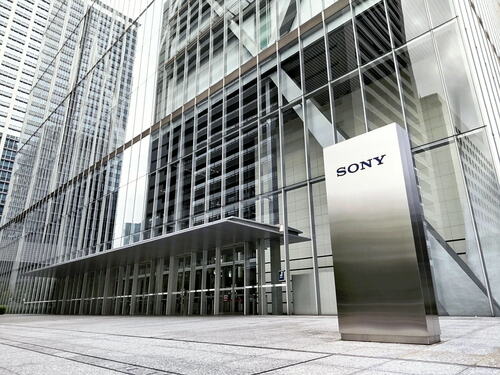
Sony has announced a strategic alliance with Chinese consumer electronics giant TCL to reshape its television-centered home entertainment business. The two companies plan to establish a joint venture by April 2027, migrating development, manufacturing, and sales of televisions—and selected home audio products—into the new entity. TCL will hold 51% and Sony 49%, a structure that effectively makes TCL the operational lead over time. To some, the move looks like a symbolic retreat of Japan’s historic consumer electronics prowess. Yet the deeper story is not of decline, but of strategic focus: Sony is disentangling lower-margin hardware lines from a broader portfolio that is increasingly anchored in high-value technology and entertainment services. Here is what the separation really means, and why TCL was the pragmatic partner.
What, exactly, is being separated
The scope covers television and home audio inside Sony’s Entertainment, Technology & Services (ET&S) segment—the business that houses what consumers might still call “electronics,” including cameras and headphones, as well as a growing suite of professional solutions. This is not the Sony of disc Walkmans past: the modern Sony Group is a diversified ecosystem spanning music, pictures, games, and cutting-edge technologies. Even within ET&S, the center of gravity has shifted from mass-market appliances to specialized, high-margin systems for creators and industries—think cinema cameras, LED walls for virtual production, advanced imaging tools, and the sports officiating technologies of Hawk-Eye. In today’s Sony, televisions sit alongside these businesses but have struggled to deliver returns that match the group’s strategic trajectory.
Why now: structural reform that became unavoidable
Televisions have long been a scale game dominated by relentless cost competition and rising component complexity. Panel costs, logistics, and retail pricing pressure compress margins even for premium brands. In Sony’s medium-term planning, televisions—and, increasingly, smartphones—were flagged as areas requiring structural reform, with management signaling that their share of total revenue would gradually be reduced in favor of faster-growing, value-creative domains. Spinning off TVs into a joint venture is consistent with that roadmap: it preserves the brand’s presence for consumers while freeing the core Sony to focus capital and talent on technologies and content where it can lead globally.
Why TCL: the logic of scale and supply chain gravity
TCL is one of the world’s largest TV makers by shipment volume, backed by an extensive manufacturing footprint and direct access to key display components through its affiliated panel maker, TCL CSOT. In a market where price, procurement, and speed-to-market decide the midrange, TCL offers the industrial muscle that even storied brands struggle to match. A 51–49 joint venture structure allows TCL to drive factory operations and procurement at global scale, while Sony contributes decades of image processing expertise, home audio know-how, and a premium brand heritage that still commands trust on showroom floors. The result aims to marry scale economics with differentiation—something harder to achieve when operating independently. It is an arrangement that acknowledges the industry’s new center of gravity while keeping Sony’s strengths at the forefront of product definition. Details such as product roadmaps and branding treatment will be fleshed out as the venture approaches launch, but the intent is clear: better cost structures and broader reach without diluting what consumers expect from a Sony TV.
Beyond “home appliances”: the Sony that remains
Interpreting the move as “Japan exiting consumer electronics” misses the transformation already underway. Sony has not been a traditional appliance company for a long time. The group’s crown jewels today include image sensors that power the world’s smartphones and cameras, world-class content businesses, and technologies that enable a new generation of production workflows—from virtual sets to real-time sports analytics. Even within ET&S, the roadmap leans into professional, platform, and enabling technologies that command recurring revenue and high margins. Spinning off the TV and home audio business does not diminish Japan’s technological leadership; it clears the runway for it.
What changes for consumers
In the near term, consumers should expect continuity more than disruption. Any transition of manufacturing and distribution channels will be phased toward the 2027 target, subject to regulatory approvals and operational readiness. Sony’s long-standing strengths in picture tuning and audio design are assets it is expected to keep contributing to the joint venture’s product definition. Pairing those capabilities with TCL’s manufacturing scale could broaden availability and stabilize pricing across more markets. Software platforms—where TVs now live or die—will remain a crucial battleground; the joint venture will need to ensure consistent integration, updates, and content partnerships to preserve the premium experience associated with Sony’s flagship sets.
The economics behind the decision
Televisions are capital-intensive, cyclical, and exposed to commodity swings in panels, memory, and logistics. As features such as MiniLED backlights, advanced dimming, and high-refresh-rate gaming modes become mainstream, the bill of materials rises even as retail prices face competition-driven ceilings. Meanwhile, currency fluctuations add another layer of unpredictability for export-heavy operations. By pooling procurement and manufacturing with TCL, the joint venture can smooth many of these variables, freeing Sony to allocate capital to higher-return bets—from professional imaging to sensor technologies—without abandoning the living-room screen where its content and ecosystem still matter.
Risks, governance, and open questions
No strategic pivot is risk-free. Governance will be in focus: with TCL as majority owner, clear mechanisms are needed to protect product quality, brand equity, and long-term R&D. Intellectual property management and supply chain security must be rigorous. Geopolitical dynamics could also shape operations, from export controls to market-access rules, requiring careful design of manufacturing footprints and component sourcing. Culturally, integrating Japanese product philosophy with a scale-first manufacturing model demands mutual respect and discipline—yet, if executed well, it can deliver the best of both worlds: Sony’s exacting standards and TCL’s speed.
The wider playbook: smartphones next?
Sony’s strategic plan grouped televisions and smartphones together as areas needing structural reform. While the joint venture addresses the television side now, observers will watch for similar moves around handsets, where Sony’s Xperia line remains admired but niche. Whether via partnerships, narrower product focus, or another form of separation, the goal would mirror the TV logic: protect brand and engineering strengths while aligning cost structures with market realities.
What it means for Japan
Seen in context, this is not an epitaph for Japanese electronics; it is a maturation. Japan’s strength has shifted to the layers of the value chain that define tomorrow’s industries: sensors, optics, advanced manufacturing equipment, professional media tools, and globally resonant intellectual property. Sony’s reshaping of its hardware portfolio is consistent with that national advantage. By anchoring the most scale-sensitive businesses in a joint venture, it can double down on the technologies and content that command global premiums—areas where Japanese companies, and Sony in particular, continue to set the pace.
The road to 2027
The parties have time to structure the venture thoughtfully. Between now and April 2027, expect staged announcements on governance, product strategy, and regional operations. Employee transitions, R&D allocation, and supplier agreements will be handled progressively to avoid shocks to customers or partners. For consumers, the best outcome—made more likely by this alignment—will be televisions that combine the familiar Sony experience with improved availability and value. For investors, the message is clearer: Sony is optimizing for resilience and return, aligning its portfolio to where it wins. Partnering with TCL may look bold, even counterintuitive, but in the unforgiving economics of the TV market, it is also the kind of inevitability that well-run companies embrace early. Japan’s role in the living room is not ending; it is evolving—and steering the parts of the stack that matter most.