A United Arab Emirates-based cybersecurity firm, ANY.RUN, working with an independent security researcher, has carried out a rare decoy operation that exposes how North Korean IT operatives try to infiltrate foreign companies by hiring “interview stand-ins.” The findings, published on December 4 (local time), detail a playbook attributed to a group believed to be “Famous Chollima,” a component of the Lazarus umbrella, long tied to espionage and illicit revenue generation for Pyongyang’s sanctioned state. For Japanese companies—key players in global supply chains and frequent targets of state-affiliated actors—the revelations underscore an urgent need to tighten hiring and remote-work controls as North Korea leans on AI and social platforms to slip past corporate defenses.
Two Paths Into the Office: Fake Personas or Foreign Proxies
According to the report, North Korean operatives rely on two main pathways to penetrate companies, particularly in the United States and other advanced economies. The first tactic is to impersonate real or fabricated candidates, leveraging stolen or leaked identity documents—passports and driver’s licenses—and building polished fake résumés and LinkedIn profiles. They then augment these personas with AI-generated headshots and synthetic voices; in some cases, deepfake video helps them pass live interviews. Once onboarded, they aim to siphon intellectual property, internal access, or paychecks that are ultimately remitted to North Korea.
The second tactic is subtler and, as this decoy operation shows, can be equally effective: recruit foreign intermediaries to pose as candidates, attend interviews, and front the employment relationship. These intermediaries—often courted on GitHub and Telegram—are promised compensation if they lend their identity, take calls, and, after hiring, keep their computers accessible so the North Korean operators can perform the “actual work” in the background. The approach confuses HR and security teams that believe they have hired an ordinary remote worker, not a proxy channeling access to a sanctioned actor.
The Decoy: A GitHub Message, a “No Skills Required” Offer, and a $3,000 Promise
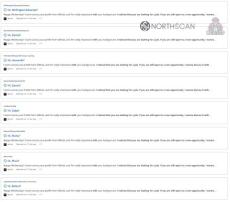
The sting focused on the second method. The researcher noticed a spam-style recruitment pitch posted on GitHub seeking people to substitute in job interviews. The messaging was brazen: technical knowledge not required; once hired, the “stand-in” would handle practical tasks, with collaborators earning around $3,000 per month. Those terms—and the emphasis on cover identities—aligned with known patterns in North Korean IT worker operations, prompting the team to engage.
To draw the recruiters out, the researcher created a new account mimicking one that had previously received similar outreach and initiated contact. That sparked a series of web meetings and Telegram exchanges. At first, the operators appeared wary because the researcher kept their camera off. But through a deliberately earnest, unassuming posture, the conversation progressed—illustrating how social engineering and persistence can override initial suspicion, particularly when recruiters are under pressure to scale their network of collaborators.
What the Recruiters Demanded: Always-On PC Access and Full Identity Data
The recruiters then presented their requirements. To facilitate remote work, they asked for continuous access to the collaborator’s computer—effectively turning the machine into a standing launchpad for the operators. They also requested personal identifying information needed to apply for jobs in the collaborator’s name, including copies of identity documents, full legal name, and address. When negotiating compensation, the recruiters proposed a revenue split tied to the interview process: if the collaborator also handled the interviews, they would receive 20% of the salary paid by the employer; if the recruiters conducted the interviews themselves, the collaborator’s cut would be 10%. During discussions of payment logistics, the operators pressed for bank account details, social security number, and even any criminal history—data points that, in the wrong hands, enable identity theft, financial fraud, and long-term persistence schemes.
Why This Matters for Japan
Japan’s innovation-led economy, extensive vendor networks, and rapid adoption of flexible work make its enterprises prime targets for such schemes. Lazarus-linked campaigns have previously struck Japanese companies in sectors ranging from cryptoassets to defense-adjacent industries, highlighting the group’s dual focus on espionage and revenue generation. Every fraudulent hire risks granting a sanctioned actor a foothold inside corporate systems, creating a pathway to source code, customer data, or treasury assets—and ultimately funding Pyongyang’s prohibited weapons programs that directly threaten Japanese security.
Japan has tightened sanctions enforcement and urged companies to strengthen due diligence across hiring and procurement, while industry bodies and incident response teams have published guidance on supply chain and identity risks. The lesson from this decoy is clear: as North Korean operatives industrialize their talent-laundering playbook, Japanese firms must assume that well-crafted résumés and slick online profiles can mask a state-backed operation. Due diligence cannot stop at a background check or a polished GitHub repository.
How the Scheme Exploits Remote Work and AI
The method capitalizes on three structural shifts. First, ubiquitous remote work normalizes camera-off interviews and distributed teams, lowering the friction for proxies and identity masking. Second, the abundance of leaked identity data—paired with AI image generators—enables compelling forgeries. Third, a globalized contractor market means HR and procurement teams often triage dozens of candidates quickly, leaving fewer cycles to validate identities and verify that the person hired is the same person performing the work week after week.
Practical Red Flags and Defenses for Japanese Employers
- Recruitment origins: unsolicited pitches on GitHub, Telegram, or fringe job boards offering high pay for low skill, or promising that “the work will be handled for you.” - Identity inconsistencies: mismatched time zones and claimed location; hesitant or scripted video presence; headshots with signs of AI artifacts; voice latency inconsistent with stated geography. - Device control requests: demands for persistent remote access tools, shared login vaults, or assistance in bypassing MFA—particularly early in the relationship. - Payment oddities: eagerness to discuss bank details, tax IDs, or social security numbers before an offer is finalized; proposals to split wages with third parties. - Documentation trails: resumes with generic bullet points, recycled project descriptions, or GitHub activity that spikes only near interview windows.
Defenses should combine policy and technology. Require camera-on interviews with liveness checks and random challenge prompts; use geolocation and device fingerprinting during interviews and onboarding; mandate hardware-bound MFA and prohibit incoming remote-control tools on corporate endpoints; lock down contractor access to least-privilege roles; and schedule periodic “re-verification” of identity for remote staff. For sensitive roles, include background screening with document authenticity checks and sanctions screening. HR, security, and legal teams should collaborate on a “know-your-developer” playbook—akin to financial KYC—tailored for software, cloud, and data roles.
The Bigger Picture: Sanctions Evasion at Scale
The decoy underscores how North Korea blends classic tradecraft with modern platforms to evade sanctions: social networks for sourcing proxies, AI to fabricate personas, and remote tools to quietly embed inside corporate environments. While the operators adapt, the defensive advantage rests with companies that assume deception, verify continuously, and align closely with government guidance. For Japan, deeper public–private cooperation—alongside the United States and regional partners—will be crucial to closing loopholes that let Pyongyang convert stolen access into hard currency.
What Comes Next
ANY.RUN’s publication provides a step-by-step account of the approach, including the promises made to collaborators and the data sought to consummate the fraud. As those details circulate, expect copycats to tweak scripts and rotate personas. The immediate imperative for Japanese enterprises is to harden hiring pipelines, instrument remote endpoints, and educate recruiters and managers on these red flags. The strategic imperative is broader: deny North Korea the ability to monetize deception in Japan’s digital economy. That is both sound corporate governance and a matter of national resilience.