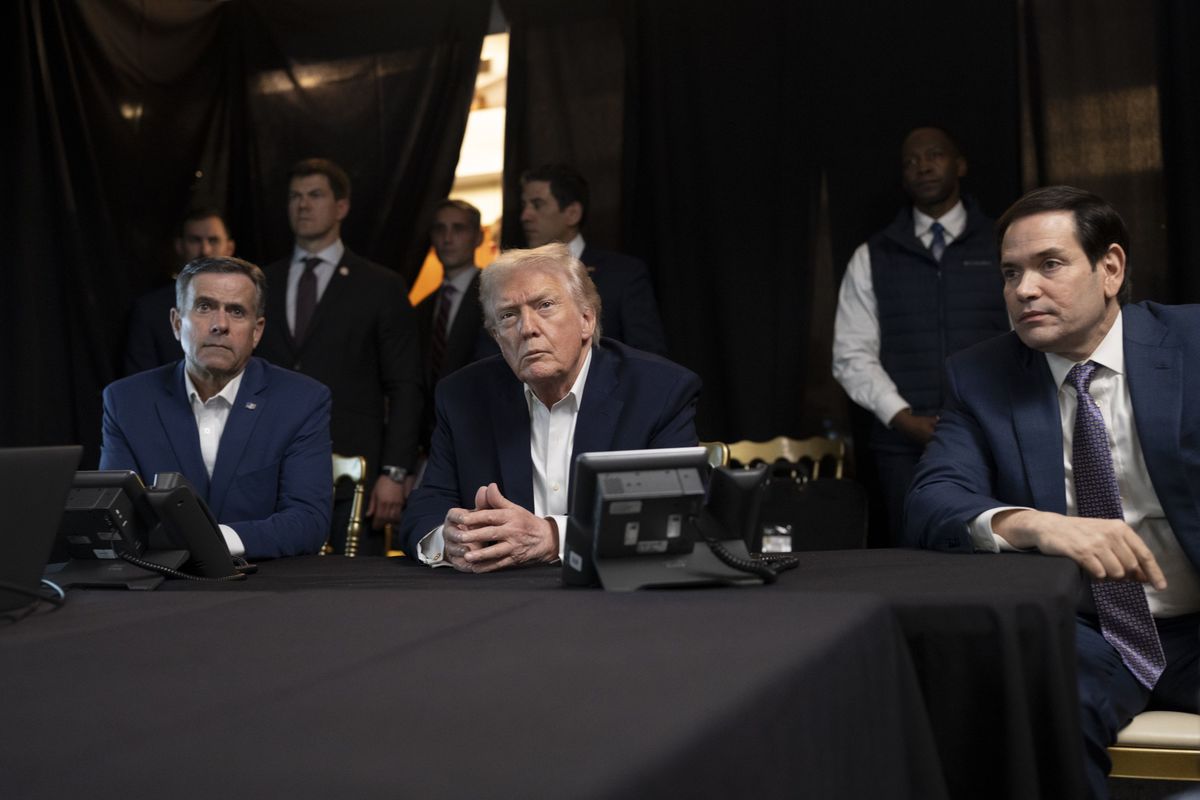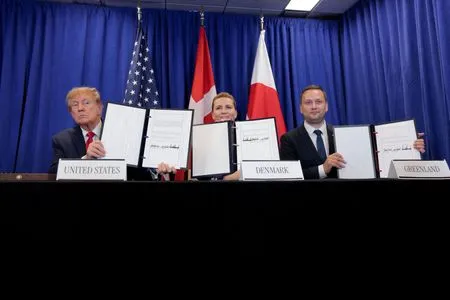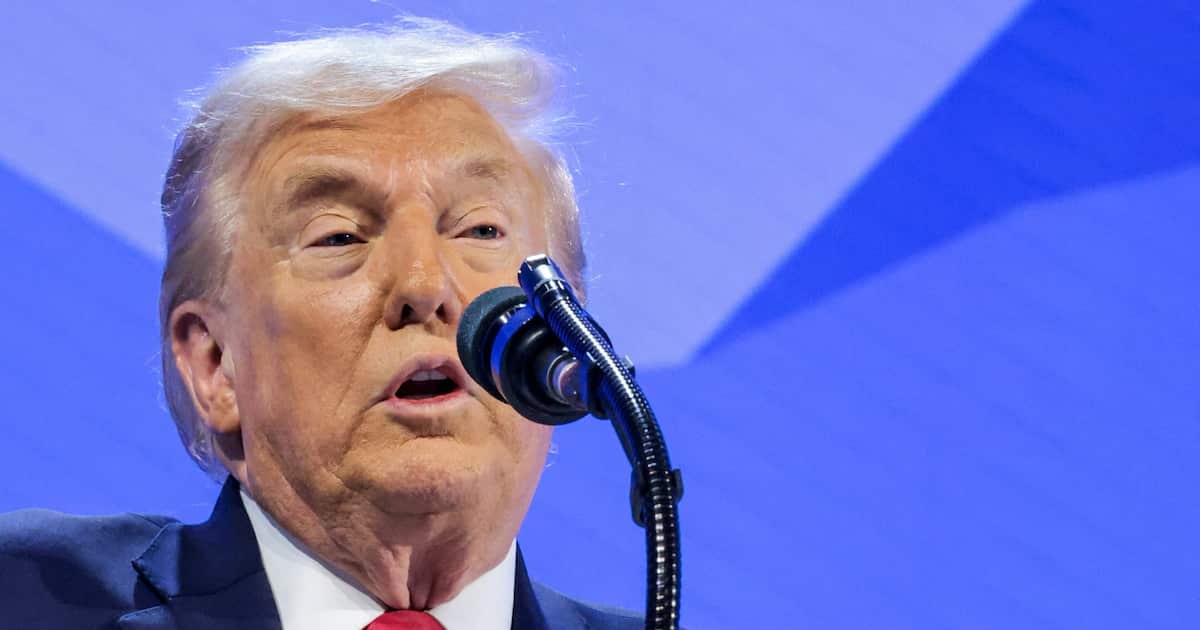
The White House has stepped back from a fresh tariff confrontation with Europe over Greenland, even as President Donald Trump reignited his demand for U.S. control of the vast Arctic territory and blasted Denmark for what he described as “ingratitude.” The dual-track message—economic de-escalation paired with sharper rhetoric—came as Trump addressed the World Economic Forum’s annual meeting in Davos, using the high-profile stage to argue that Washington has long paid a disproportionate price to secure Greenland and should see commensurate benefits.
Tariff Retreat, Rhetorical Escalation
On January 21, Trump said he would drop plans for additional tariffs aimed at European countries that oppose U.S. sovereignty over Greenland, the autonomous territory within the Kingdom of Denmark. But he immediately coupled the tariff pullback with a renewed case that America’s historic defense of Greenland entitles it to greater say—and potentially ownership—over the island’s future. The president, pointing to World War II, said that when Denmark was occupied by Nazi Germany, “the United States sent forces and was obliged to defend Greenland—hold it at all costs,” before adding a pointed rebuke: “What ingratitude.”
He underscored that U.S. troops established bases on the island beginning in 1941, insisting Washington “protected it at great sacrifice and cost.” The remarks reprise themes that first surfaced when Trump floated buying Greenland in 2019, triggering a diplomatic row with Copenhagen and an emphatic “not for sale” from both Denmark and Greenland’s own self-rule government.
History as Justification
Trump sought to situate his latest push in a longer American tradition, arguing the United States “has explored the purchase of Greenland for nearly two centuries.” Historically, Washington weighed Greenland as a strategic complement to its 1867 purchase of Alaska. A territorial exchange concept surfaced in 1910, and in 1946 President Harry Truman reportedly offered Denmark $100 million for the island. None of these ideas advanced, but the U.S. presence persisted, anchored today by Thule Air Base—critical for missile warning, space surveillance, and North Atlantic security within NATO.
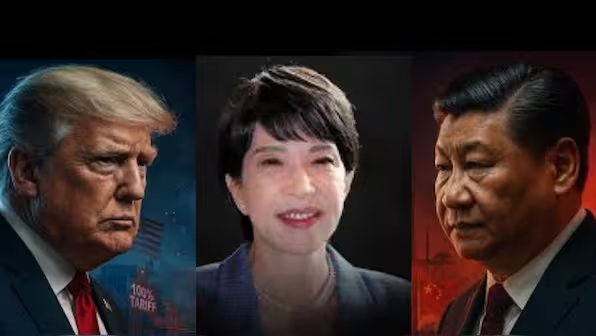
By Trump’s logic, history and security are converging again. He noted that Greenland is “even more necessary now” given intensifying competition with Russia and China in the Arctic. Moscow has revitalized northern bases and icebreaker fleets, while Beijing brands itself a “near-Arctic state” and promotes a “Polar Silk Road,” drawing scrutiny from Western allies. For the Trump team, Greenland’s geography—straddling key maritime and air corridors—and its natural resources, including rare earths, elevate the island’s strategic value.
A Broader Doctrine: Fairness, Leverage, and the Panama Canal Analogy
The Greenland argument folds into a wider Trump-era framework: use leverage to correct what the White House views as “unfair” arrangements. That extends from tariffs and demands for “reciprocal” trade treatment to revisiting legacy agreements that, in Trump’s view, no longer serve U.S. interests. He has previously cited the Panama Canal—built by the United States in the early 20th century and handed over to Panama in 1999—as another case where American investment and sacrifice were not matched by enduring benefits. Warning of growing Chinese influence around the canal, he raised the notion of “reclaiming” control as a security imperative. In trade, the administration’s signature tactic has been to pressure partners with the prospect of tariffs, then negotiate for greater market access to reduce U.S. deficits. The now-withdrawn Greenland-linked tariff idea aligned with that playbook, even if it would have put Washington at odds with a NATO ally over an issue of sovereignty that international law generally reserves for the parties directly concerned.
Europe’s Red Lines—and Room for Cooperation
Denmark maintains that Greenland’s status is a matter for the kingdom and Greenland’s home-rule authorities. Copenhagen has repeatedly emphasized the island is not for sale. Greenland’s own leaders have asserted both their autonomy and a desire to expand ties with the United States within existing legal frameworks. Indeed, Washington reopened its consulate in Nuuk in 2020 and has sought deeper cooperation through investment, science, and security partnerships—paths that many European and North American officials regard as more viable than any attempt at territorial transfer.
For NATO, the risk is that sovereignty disputes with allies distract from deterrence and resilience in the High North. Yet there is also convergence: the United States, Denmark, and other Northern European states share concerns about Russian military activity and China’s strategic economic footprint in the Arctic. That overlap suggests practical avenues for allied coordination, even as political rhetoric runs hot.
Why It Matters for Japan
Tokyo is watching closely. As a maritime nation dependent on secure sea lanes and a close ally of the United States, Japan has a stake in a stable, rules-based Arctic. The potential for shorter Asia–Europe shipping routes via the Arctic, the importance of resilient rare earth supply chains, and the imperative to deter coercion by major powers all resonate with Japan’s strategic priorities. Japan has steadily increased its contributions to allied security, committed to raising defense spending, and supports closer coordination with NATO partners, including Denmark. From Tokyo’s perspective, alliance cohesion and predictable frameworks usually deliver better outcomes than tariff brinkmanship. A stronger U.S. presence in Greenland—consistent with host-nation consent and international law—could reinforce deterrence against Russia and China, while cooperative investments in infrastructure, science, and sustainable development would align with Japan’s Free and Open Indo-Pacific vision. That approach would help secure the Arctic commons without undercutting relationships that Japan values for both economic and security reasons.
The Road Ahead
By shelving new tariffs yet amplifying the case for acquiring Greenland, Trump has shifted the immediate battleground from economic coercion to political persuasion. The legal and diplomatic hurdles to any change of sovereignty remain immense: Greenland enjoys wide autonomy, Denmark retains constitutional authority, and any transfer would require clear consent. But Washington can still expand its footprint through defense agreements, joint exercises, investment, and development partnerships—steps that are likely to encounter far less allied resistance and deliver tangible security gains.
Ultimately, Greenland is a proxy for a larger argument about equity and power in an era of strategic competition. Trump’s “what ingratitude” line is less an isolated complaint than a throughline: the United States, he contends, has borne high costs for collective defense and should not be shy about seeking proportional returns. For Europe, and for partners like Japan that value both American leadership and allied unity, the challenge is to transform that demand for fairness into structured cooperation. The Arctic will test whether that balance is possible—and whether the transatlantic and Indo-Pacific communities can secure a region whose importance is only set to grow.