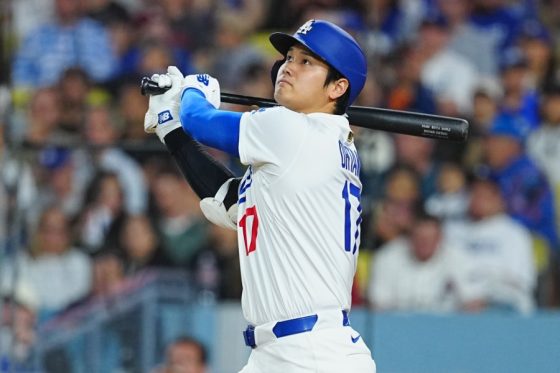
Ohtani crowned No. 1 again, leaving the baseball world in awe
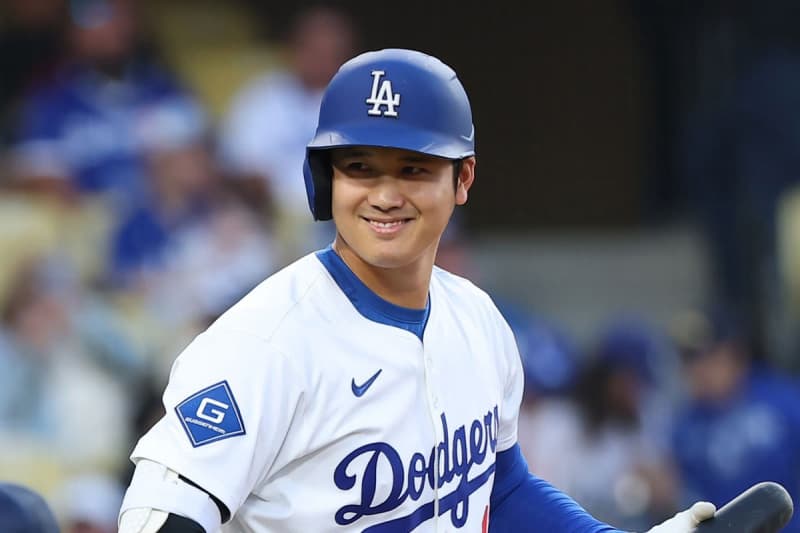
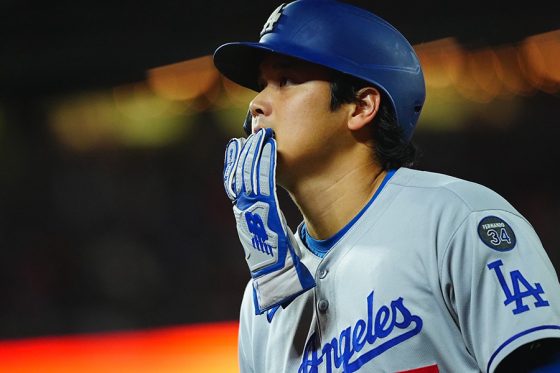
Shohei Ohtani has done it again. The Los Angeles Dodgers’ two-way phenomenon was named the No. 1 player in Major League Baseball by MLB Network’s annual “Top 100 Right Now,” unveiled on the 22nd in the United States (23rd in Japan). It marks Ohtani’s second straight year and fourth career appearance at the summit, a feat that underscores not just dominance but a sustained redefinition of what is possible on a baseball diamond. In a studio segment that quickly ricocheted across the U.S. sports conversation, analysts marveled at the Japanese superstar’s “unreal” impact—some literally questioning whether a player like Ohtani should exist at all. The decision to rank him ahead of the New York Yankees’ power titan Aaron Judge sparked instant debate and a chorus of astonishment.
A 2025 for the ages: numbers that defy belief
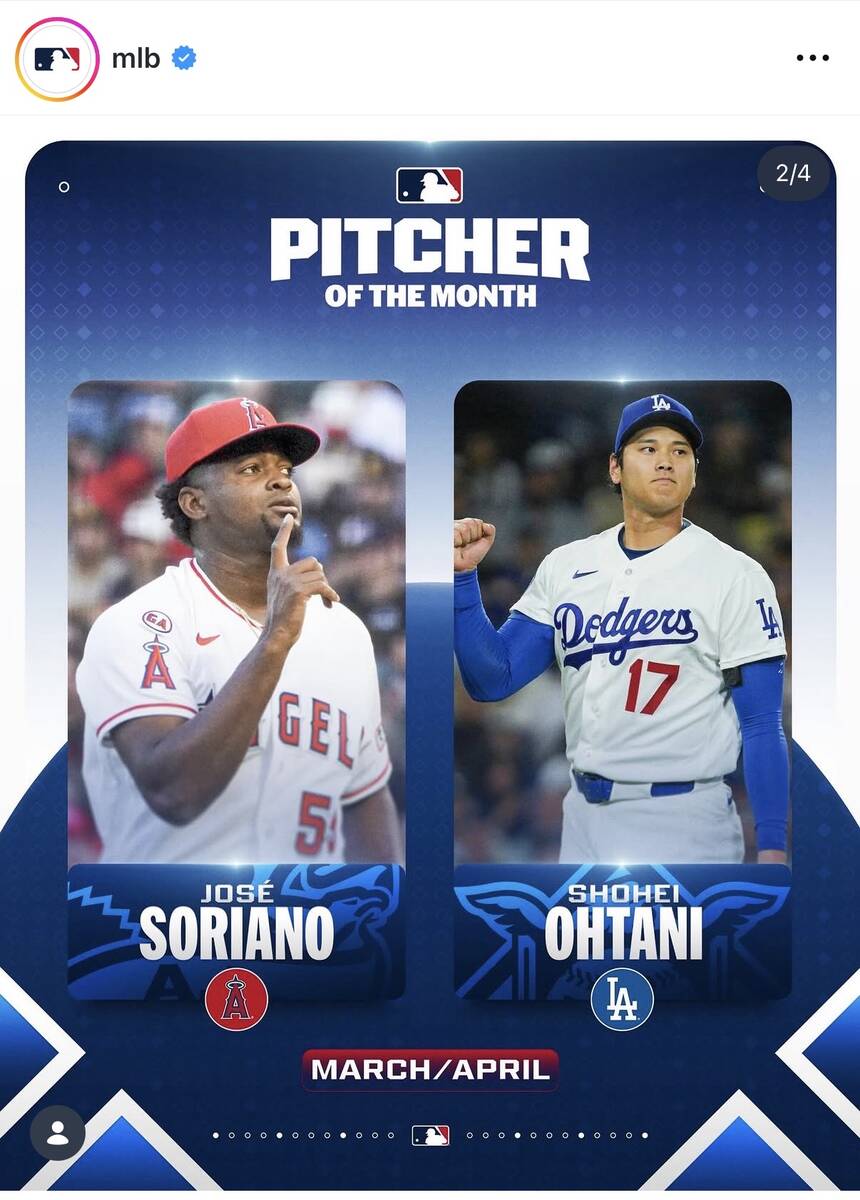
The case for Ohtani’s top billing starts with a 2025 campaign that felt more like folklore than a typical season. As a hitter, he blasted 55 home runs and posted a 1.014 OPS, a monstrous combination of power and on-base consistency that would place most sluggers among the elite on offense alone. Yet Ohtani’s renaissance extended to the mound as well, as he returned from right elbow surgery to record a 2.87 ERA with 62 strikeouts, reaffirming his viability as a frontline arm on one of baseball’s most scrutinized stages. The signature moment came in the National League Championship Series, Game 4 against the Milwaukee Brewers. Slotted first in the batting order and on the mound, Ohtani delivered seven ferocious innings that yielded 10 strikeouts and no runs, while at the plate he launched three consecutive home runs—a staggering exertion of two-way dominance that turned October into his personal epic. In the crucible of postseason pressure, with an entire sport watching, Ohtani authored a chapter that future generations will reference whenever the limits of the game are discussed.
The Judge benchmark—and the separation point
MLB Network’s on-air panel did not shy away from the comparison that animates barroom debates from Manhattan to Malibu: Ohtani versus Judge. Host Greg Amsinger playfully captured the tension, quipping, “I can hear eyebrows shooting up in the Bronx,” a nod to the Yankees faithful who understandably worship their captain, one of the most devastating hitters of his era. Analyst and former Marlins outfielder Cliff Floyd, however, distilled the argument with a clear-eyed appraisal centered on Ohtani’s singular breadth. Pointing to the NLCS montage, he emphasized how one player changed both sides of the game in a single night. “As a hitter, Aaron Judge can do this—three homers in a game,” Floyd said, motioning to Ohtani’s barrage. “But the left side”—as he gestured to Ohtani’s dominance on the mound—“Aaron Judge cannot do.” That contrast is not a knock on Judge so much as an acknowledgment that Ohtani inhabits a category of one. In a sport built around specialization and matchups, the Dodgers deploy a superstar who compresses roster value: an MVP-caliber bat and a top-tier starter rolled into one, granting manager and front office rare flexibility when October matchups demand every inch of edge.
“He isn’t real”: the sci‑fi comment that says it all
Former Mets general manager Steve Phillips reframed the conversation with a line that captured the mood across American living rooms: “It’s like science fiction. He isn’t real. We’ve never seen this in our lifetime.” The assessment is not hyperbole. Baseball’s modern era, defined by velocity spikes, hyper-specialized bullpens, and the ceaseless grind of a 162-game calendar, should make two-way excellence impossible. Yet Ohtani has bent that reality. Yes, Babe Ruth once bridged both roles, but the sport Ruth inhabited is not the high-octane, analytically honed marathon of today. That Ohtani threads both needles—pummeling 98-mph fastballs at the plate while also carving up lineups with his own elite arsenal—adds a layer of difficulty that borders on the unfathomable.
Japan’s standard-bearer, elevating the global game
For Japan, Ohtani is more than an MVP; he is a cultural ambassador whose excellence reverberates well beyond the field. Raised in Iwate and accelerated by the Hokkaido Nippon-Ham Fighters’ bold commitment to his two-way development, Ohtani’s ascent honors the discipline and ingenuity of Japanese baseball. His patient, meticulous rehab and return from elbow surgery reflect a distinctly Japanese blend of resilience and craft. The world witnessed his leadership on the international stage at the 2023 World Baseball Classic, culminating in his strikeout of Mike Trout—a cinematic moment that ushered in a new era of global attention for Samurai Japan. In Los Angeles, Ohtani’s stardom has further deepened U.S.–Japan sporting ties, powering record viewership, surging merchandise sales, and a steady stream of traveling supporters. From Tokyo to Chavez Ravine, he brings communities together, not simply as a curiosity but as the gold standard for how a modern athlete can unite precision, humility, and spectacle.
Why this ranking matters—beyond the headlines
MLB Network’s Top 100 is not an official award, but it is a temperature check of the sport’s brain trust. It signals consensus among analysts and former players about who shapes the league’s present and future. For Ohtani to hold No. 1 for a second straight year and fourth overall is to assert that his impact is not a novelty but a norm—an ongoing, evolving argument that the most valuable player can be the one who defies ordinary categorization. It also codifies how front offices think about value and versatility in an era of strict roster limits and matchup microeconomics.
The Bronx bristles, but respect runs deep
Amsinger’s Bronx wisecrack landed because it felt true. Yankees fans are fiercely loyal to Judge, and rightly so; he is a generational slugger who has redefined the boundaries of power hitting at Yankee Stadium. Yet even in New York, there is a growing recognition that Ohtani represents something unprecedented. Debate all you like about who you’d rather have in a single at-bat; the conversation shifts when you add seven scoreless innings to the calculus. That is the spell Ohtani casts on a sport defined by its traditions.
The October proof—and the Dodgers’ calculus
Postseason legends are written in moments, and Ohtani’s NLCS masterclass against the Brewers offered a cheat code-level glimpse of his ceiling. For Los Angeles, the equation extends beyond box scores. Ohtani’s presence forces opponents into suboptimal decisions—burning bullpen arms sooner, adjusting defensive alignments, and recalibrating game plans to account for a unicorn who can dominate from both batter’s box and mound. Put simply, the Dodgers can steal advantages at the margins because their best player operates outside the margins of what baseball assumed possible.
2026 and the myth that keeps growing
As Ohtani enters his eighth MLB season in 2026, the challenge shifts from proving the concept to sustaining it—balancing workload, managing health, and keeping the bat’s thunder synced with the arm’s bite deep into October. Yet if history is any guide, he will meet the moment with the same serene ferocity that has come to define his career. Analysts may reach for science fiction metaphors, and fans may insist he cannot be real, but the evidence arrives nightly in high definition: a Japanese icon turning the unimaginable into routine.
The last word
In the end, the most striking thing about Ohtani’s latest coronation is how unsurprising it felt. The awe remains, but the logic is now inescapable. Yes, other superstars can produce seasons for the ages. Only one can author them from both sides of the ball, in the same game, and do so with a grace that reflects the best of Japanese baseball and the global stage it now commands. If that feels like science fiction, perhaps the sport has simply caught up to Ohtani’s reality.