What Happened
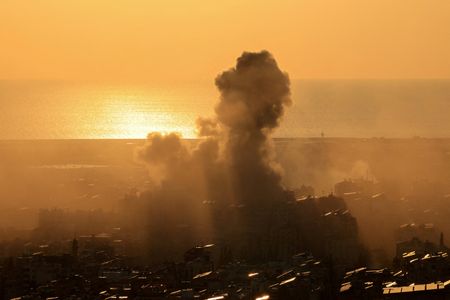
Lebanon’s state news agency reported on 11 March that an Israeli strike targeted a residential apartment building in central Beirut, marking the second reported attack on the capital in recent days. Reuters cited the Lebanese National News Agency in its initial bulletin and noted that the Israel Defense Forces had not immediately commented on the report. At the time of publication, there were no confirmed casualty figures. The latest incident follows a 8 March strike in which five members of Iran’s Islamic Revolutionary Guard Corps were reported killed, according to previous reports.
Why This Matters Regionally
Strikes inside Beirut are rare and carry symbolic and strategic weight. Since late 2023, exchanges of fire between Israel and Lebanon-based Hezbollah have intensified along the border, raising the risk that localized clashes could spiral into a wider confrontation. Reports of attacks in the capital underscore how fragile the current containment has become. Central Beirut—home to government institutions, diplomatic missions, and dense residential districts—has generally been spared from the heaviest hostilities seen in Lebanon’s south. Any confirmed strike there signals a potential expansion of the geographic scope of tension and increases pressure on regional and international actors to deter escalation. With the Middle East still absorbing the shockwaves of the Gaza war, each incident in Lebanon is being closely scrutinized for clues about intent, thresholds, and red lines.
Verification and Caution
Details remain limited. As of now, Israeli authorities have not issued a comment on the incident, and casualty figures have not been confirmed by independent sources. In fast-moving situations like this, early reporting can change as more information emerges. Readers should treat all claims with caution and follow updates from credible outlets and official statements.
The Japan Angle: Safety, Stability, and Energy Security
For readers in Japan, developments in Lebanon have concrete implications. Japan’s Foreign Ministry has long urged Japanese nationals to avoid all travel to areas affected by armed conflict and to exercise extreme caution across Lebanon. Registrations with MOFA’s Tabi-Regi and Overseas Residential Registration systems are strongly encouraged for those residing or traveling abroad. Japan has consistently advocated de-escalation, dialogue, and the protection of civilians, and has provided humanitarian assistance to Lebanon via international organizations—supporting host communities and vulnerable populations affected by overlapping economic and refugee crises. Tokyo’s approach is grounded in a reputation for principled diplomacy and practical aid that prioritizes stability.
Beyond citizen safety, the stakes include energy security and trade. Japan remains heavily dependent on imported energy, and any widening of conflict in the Eastern Mediterranean can influence shipping lanes, risk premiums, and ultimately fuel prices—effects that ripple through households and businesses in Japan. Japanese firms with exposure to the region are also monitoring insurance costs, logistics continuity, and contingency plans. While Japan is geographically distant, its economic and humanitarian ties to the Middle East mean that instability there is quickly felt in Tokyo, Osaka, and beyond.
Context: Hezbollah, Iran, and the Risk of Spillover
Hezbollah, a powerful Lebanese armed group and political party, has a long-standing confrontation with Israel and receives backing from Iran. The mention of Iranian IRGC casualties in the 8 March incident reinforces the regional dimension of the conflict, where actions in one theater can trigger responses across others. Diplomats caution that even targeted strikes risk miscalculation. A cycle of retaliation—especially if it expands in or around Beirut—could strain Lebanon’s already fragile economy and further displace civilians, complicating any pathway to de-escalation.
What to Watch Next
Key indicators include official confirmation of the strike’s target and impact, statements from the Israeli government and the Lebanese authorities, and any claims of responsibility or intent by armed groups. Markets will track energy price movements and shipping advisories, while aid agencies may adjust operational footprints if security conditions in Beirut deteriorate. Japan will continue to coordinate consular support for its nationals, back diplomatic efforts to reduce tensions, and deliver humanitarian assistance where conditions allow. As facts become clearer, the critical question is whether this incident remains isolated or signals a trend toward deeper confrontation in Lebanon’s capital.