New danger in the Black Sea
A cargo ship sank after being hit by a drone off Bulgaria early on the 13th, leaving 11 crew members missing and prompting Sofia to summon Russia’s ambassador. The incident marks the second similar episode in less than a week and has intensified concern over the safety of commercial shipping near the NATO member’s coastline.
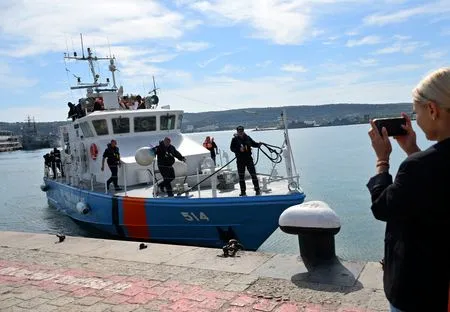
Bulgarian authorities said two cargo vessels came under drone attack during the night near the country’s territorial waters. One of the ships sank off the coast of the village of Krapets. Five crew members were rescued, while 11 others remained unaccounted for as search and rescue operations continued.
Local media identified the sunken vessel as the Azov Concord. The reports have not been independently verified. A second vessel, the Malta-flagged Chelsea 3, was also attacked. All 15 members of its crew—seven Ukrainians and eight Azerbaijanis—were rescued, and no serious injuries were reported.
Bulgaria demands answers
Prime Minister Radev described the attack as “extremely unacceptable,” stressing that it had taken place again close to Bulgarian territorial waters. The Bulgarian government summoned Russia’s ambassador, although officials have not formally concluded that Russia was responsible for the strikes.
Radev said the incident ultimately benefited Russia, reflecting the broader security and political consequences of attacks in the region. The Bulgarian response underlines the delicate position of countries bordering the Black Sea, where commercial traffic continues to operate amid the war in Ukraine.
European Commission President Ursula von der Leyen wrote on X that the Black Sea had become a new front in Russia’s expansion of the war in Ukraine and said those responsible should be held accountable. Ukrainian Foreign Minister Andrii Sybiha also condemned the attacks, accusing the Russian government of showing disregard for civilian lives. He described the Black Sea as vital to global food security and accused Russia of using hunger as a weapon.
Shipping routes under growing pressure
Russia has repeatedly bombarded Ukrainian ports on the Black Sea. As a result, Ukraine has increased its reliance on Danube River ports and shipping routes running near the coasts of Bulgaria and Romania, both NATO members. These routes have become increasingly important for the movement of grain and other commodities, but their proximity to the conflict zone has also increased risks for civilian vessels.
The latest incident highlights the difficulty of protecting commercial shipping when the source of an attack is not immediately established. Drone operations can involve long-range systems, uncertain launch points and rapidly changing maritime conditions. Any confirmed strike on a civilian ship could further raise tensions between Russia, Ukraine and neighboring NATO countries.
Why the incident matters beyond Europe
The consequences extend well beyond the Black Sea. Japan, a major trading nation dependent on secure sea lanes and overseas food and energy supplies, has a strong interest in the safety of international shipping. Japanese policymakers closely monitor developments in Europe and the Middle East because disruptions in one maritime region can influence insurance costs, commodity prices and supply-chain planning worldwide.
For Japan and other import-dependent economies, the episode is another reminder that maritime security is closely connected to food security and economic stability. Authorities will now be watching the rescue effort, the investigation and any further diplomatic measures taken by Bulgaria and its European partners.