What Happened in Central Kyiv
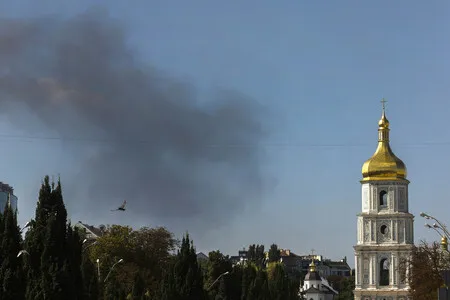
A drone struck a building housing Ukraine’s Security Service (SBU) in central Kyiv on the 4th (local time), injuring at least seven people, according to local authorities. President Volodymyr Zelensky announced the incident via a messaging app, while witnesses reported black smoke billowing near the site. The strike came despite Kyiv’s robust layered air defenses, underlining the continued vulnerability of high-value urban targets to low-cost, hard-to-detect unmanned systems.
The Target and Casualties
Zelensky said the attack was aimed at the office of the SBU’s acting chief, identified by Ukrainian media as Oleksandr Poklad. Those reports added that Poklad was not present at the time. Emergency services treated at least seven people for injuries; officials did not immediately disclose the severity of those wounds. The SBU is Ukraine’s domestic intelligence and counterintelligence agency—making the strike both operationally and symbolically significant.
Who Is Believed to Be Behind the Attack
Ukrainian officials indicated the drone was likely launched by Russia, which continues its full-scale invasion that began in February 2022. Russia has repeatedly used drones and missiles to pressure Ukraine’s infrastructure, command-and-control nodes, and morale. While independent verification of the specific munition used was not immediately available, the tactic aligns with Moscow’s broader use of long-range, low-cost drones to probe defenses and exploit gaps in urban environments. Following the incident, Zelensky ordered a response; Japanese news agency Jiji Press reported he directed acting SBU chief Poklad to carry out retaliatory measures.
Why This Matters for Japan
For Japan—an active supporter of Ukraine through humanitarian aid, sanctions on Russia, and non-lethal security assistance—the Kyiv strike is another warning about the changing character of urban warfare. Drones have evolved from battlefield reconnaissance tools into precision strike platforms capable of hitting heavily guarded city centers. Japanese policymakers, already accelerating counter-drone and civil protection planning, will see in Kyiv’s experience lessons for safeguarding critical infrastructure in Tokyo, Osaka, and other dense hubs. Japan’s Self-Defense Forces and local authorities are increasingly focused on detection, jamming, and rapid response to small UAVs, while private-sector operators—from utilities to transit and tech campuses—are reviewing contingency plans.
Implications for Japanese Citizens and Businesses
Japan’s expat community and companies operating in or near Ukraine must continue to follow the Ministry of Foreign Affairs’ advisories and maintain robust security protocols, including shelter-in-place procedures and clear evacuation routes. Insurers and risk managers will likely reassess exposure in conflict-adjacent regions, factoring in drone threats to office clusters, logistics hubs, and telecom nodes. For Japanese manufacturers and startups working on sensors, RF countermeasures, AI-enabled surveillance, and resilient infrastructure, the incident underscores a growing market—and societal need—for dual-use technologies that protect civilians while preserving open, livable cities.
The Bigger Picture
This strike highlights a broader trend: the normalization of drones as tools of strategic signaling. Hitting an intelligence service building sends a message about reach and resolve, even if the material damage is limited. For Ukraine, it adds urgency to air defense integration and the protection of leadership facilities; for Russia, it suggests continued reliance on asymmetric pressure where missiles are costly and stockpiles finite. For Japan and like-minded partners, it reinforces why support for Ukraine’s resilience is directly linked to deterring coercion in the Indo-Pacific. As Tokyo deepens security ties with Europe and strengthens its own civil defense, the frontline lessons from Kyiv will inform how Japan hardens its skies, networks, and communities—quietly but decisively—against tomorrow’s threats.