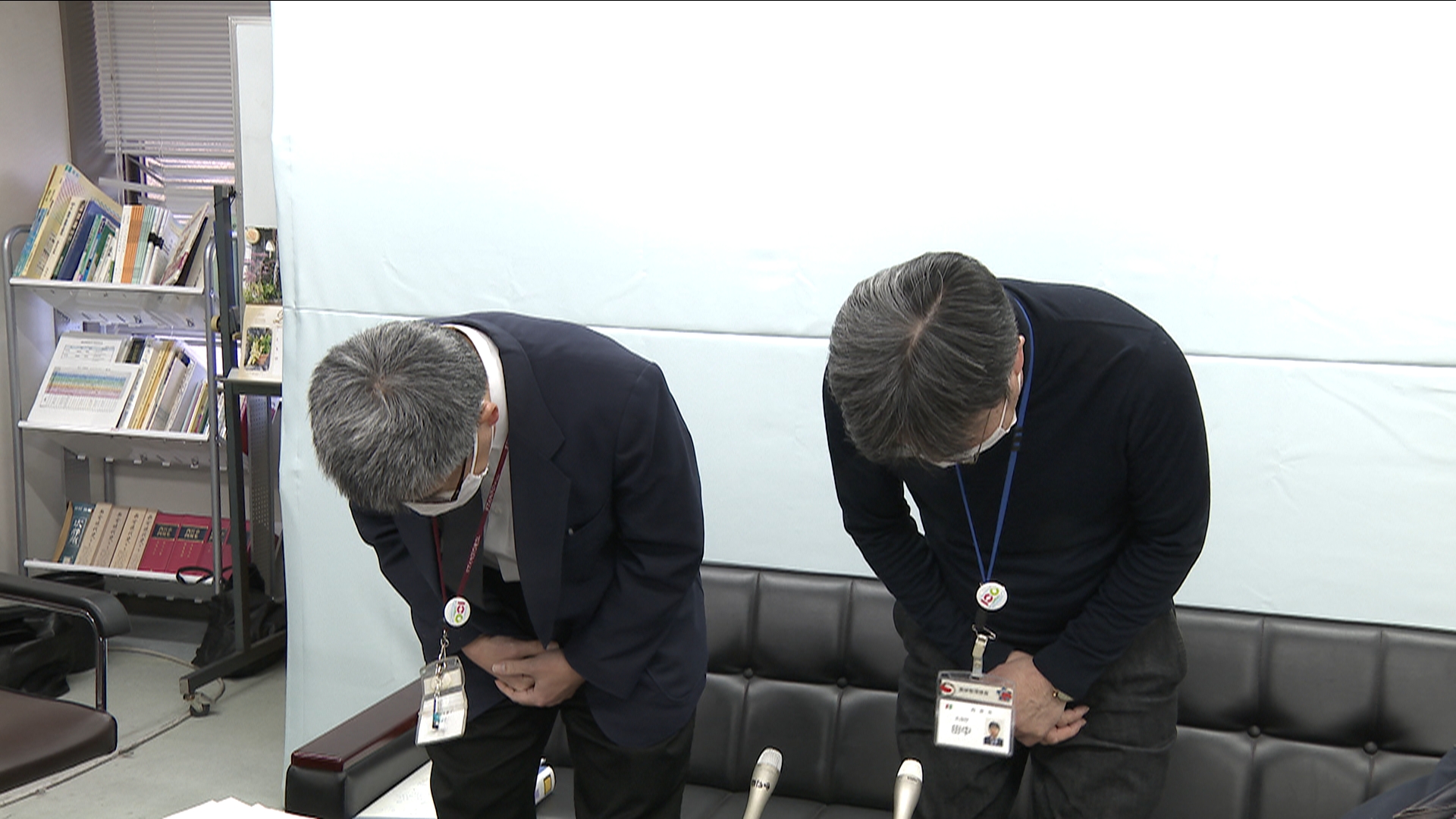
Officials in Nishinomiya City, Hyogo Prefecture, disclosed that the number of ballots counted in Sunday’s House of Representatives election exceeded the number of voters—by 118 in the single-member district race and 90 in the proportional representation contest. After triple-checking the totals and consulting with the prefectural election commission, the city applied a rarely used reconciliation measure known as “minus take-home ballots” and certified the results, stressing there was “no impact on the outcome.”
Discovery made just before finalization
According to the Nishinomiya City Election Commission, the discrepancy came to light at around 2 a.m. on November 9, shortly before final figures were due to be confirmed. Staff determined that the combined number of ballots retrieved from ballot boxes outstripped the count of voters who had been issued voting slips at polling stations—an imbalance that persisted even after three separate recounts. In line with protocol, the city escalated the matter to the Hyogo Prefectural Election Commission for guidance on how to reconcile the figures without delaying certification.
What “minus take-home ballots” means
Japan’s election administration includes established procedures to reconcile minor mismatches between the number of voters and the number of ballots. In the more common scenario where the ballot total is lower than the voter total, officials may record a small number of “take-home ballots”—an administrative category that attributes the discrepancy to individuals who received a ballot but, for various reasons, did not deposit it and left the polling place with it. Though rare and discouraged, this phenomenon is a known irregularity accounted for in reconciliation. The Nishinomiya case was the reverse: counted ballots slightly exceeded the number of voters. To square the books without distorting candidate or party tallies, the commission entered “minus take-home ballots”—negative adjustments of 118 for the single-member district and 90 for the proportional race—on the reconciliation ledger. Crucially, this bookkeeping step does not alter how many votes each candidate or party received; it is strictly a top-line adjustment that ensures the total number of ballots matches the recorded number of voters.
No effect on the Hyogo 7th District result
In Hyogo’s 7th District—an area that encompasses Nishinomiya City—Liberal Democratic Party (LDP) candidate Kenji Yamada won comfortably, defeating Nippon Ishin (Japan Innovation Party) contender Kie Miki by roughly 40,000 votes. While Miki did not win the single-member seat, she secured a seat via proportional representation under Ishin’s regional list. The commission underscored that the “minus take-home” entries had no bearing on the distribution of votes or the seat allocation in either the district or the proportional block.
What could cause extra ballots?
The city commission said it is investigating possible causes, including the inadvertent double issuance of ballot papers to a small number of voters, administrative tallies that overcounted ballots at some stage of sorting, or other human errors in processing. Japan’s system requires voters to receive two ballots—one for the single-member district candidate and one for the proportional representation party—making meticulous tracking vital. With manual counts conducted under multi-person verification, minor discrepancies occasionally surface and are documented with reconciliation entries. Officials emphasized that any inquiry will focus on pinpointing where the chain-of-custody or counting workflow could be tightened to prevent a recurrence.
Japan’s parallel voting system and reconciliation safeguards
Japan elects its lower house under a parallel voting system: voters cast one ballot for a local candidate in a single-member district and a separate ballot for a party in a proportional representation block. This design blends constituency accountability with broad party representation and is supported by standardized counting rules across the country. When small inconsistencies arise between voter headcounts and ballot totals, election commissions apply formal reconciliation categories—like “take-home ballots,” rejected or invalid ballots, or the extremely rare “minus take-home” entry—to ensure that aggregate numbers align while preserving the integrity of candidate and party tallies. These reconciliations are transparent, logged, and subject to post-election review, reflecting Japan’s emphasis on procedural clarity.
Transparency, speed, and public trust
While any variance between ballots and voters warrants scrutiny, the Nishinomiya case illustrates core strengths of Japan’s election administration: anomalies are flagged promptly, verified through multiple recounts, and addressed with standardized, legally grounded procedures. The decision to consult the prefectural commission before finalizing results demonstrates a rule-bound approach that prioritizes both accuracy and timeliness. Publishing the existence of the discrepancy—and the exact figures involved—further underscores a culture of transparency. That openness, coupled with rigorous reconciliation ledgers, helps sustain public confidence even when minor administrative wrinkles occur in the intense hours of overnight counting.
Outcome secure, inquiry underway
The commission reiterated that the adjustment did not shift any candidate’s vote total or the district’s victor, and that the large winning margin in Hyogo 7th would have rendered the result robust even absent reconciliation. Nonetheless, the city plans a thorough review that may include re-examining issuance logs at polling stations, rechecking bundle and box transfer records, and auditing team-based counting protocols. Such post-event analyses, common after national elections in Japan, often lead to incremental improvements—additional staff training, refined checklists, or enhanced real-time tally cross-referencing—all aimed at strengthening already reliable practices.
Why it matters beyond Hyogo
In a national election where millions of ballots are handled within hours, even a handful of mismatches test the resilience of systems designed to safeguard fairness. Japan’s consistent use of explicit reconciliation categories—applied evenly whether discrepancies add to or subtract from the total—ensures that the final canvass remains faithful to voter intent. The Nishinomiya episode, resolved without altering vote distributions or seat outcomes, is a reminder that vigilance, documentation, and clarity are as important to electoral integrity as the counts themselves. By confronting irregularities openly and correcting them with codified tools, Japan’s election authorities reinforce trust not only in a single district’s result but in the national process as a whole.