Tokyo arrests spotlight strict election rules
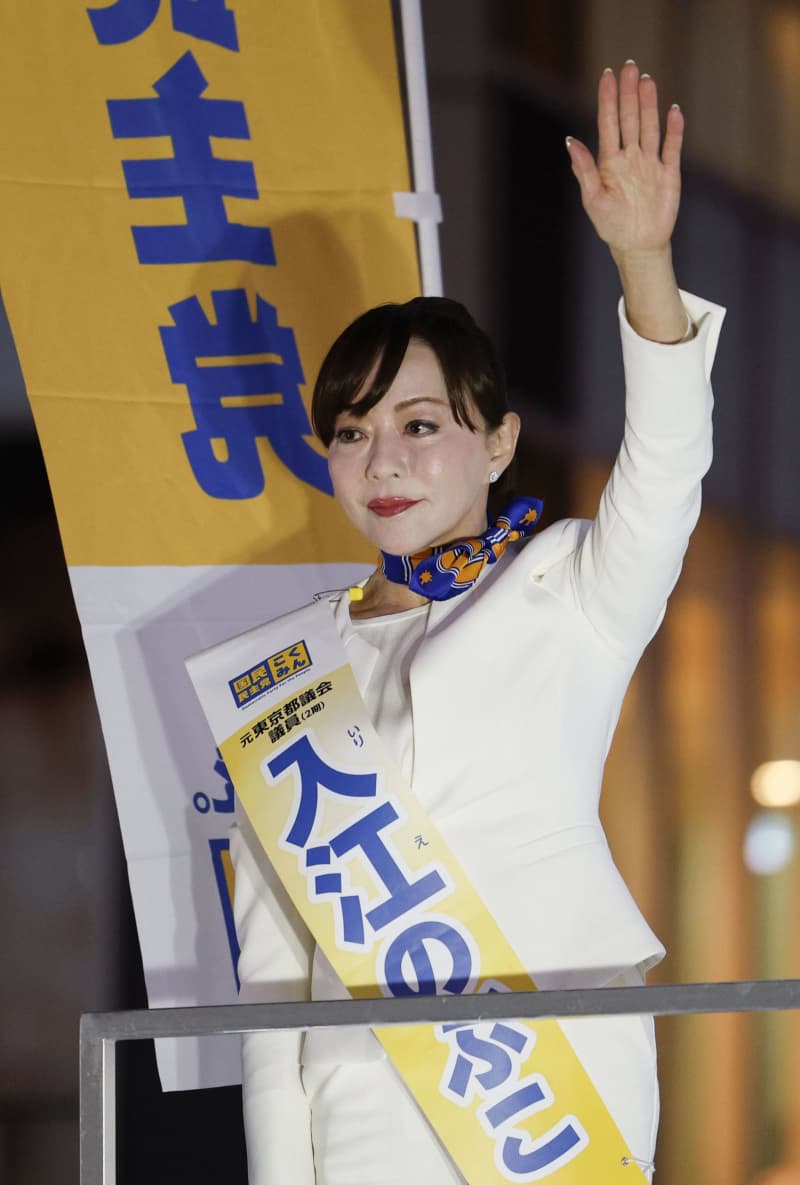
The Tokyo Metropolitan Police Department has arrested former Tokyo Metropolitan Assembly member Nobuko Irie, 63, and two other women on suspicion of violating Japan’s Public Offices Election Act through alleged illegal payments to campaign workers during a recent House of Representatives election in Tokyo’s 7th district. Irie, who ran as a candidate for the Democratic Party for the People (DPP) and was not elected, was detained alongside two women identified by police as Kyoka Sugawara, 25, and Yoshiko Sato, 63. All three are described as company executives. Police said the arrests were made on the 20th by the department’s Second Investigative Division.
Allegations: 270,000 yen paid to young campaigners
Investigators allege the suspects conspired in late January to early February to pay a total of 270,000 yen to five women in their teens and 20s for activities such as distributing campaign leaflets. Authorities believe the total payouts may exceed 450,000 yen to more than ten campaign workers. The suspects’ positions on the allegations were not disclosed by police at the time of the announcement. Two of the arrested women, Sugawara and Sato, reportedly served as campaign workers for the Irie camp.
Party response and candidate background
DPP leader Yuichiro Tamaki wrote on X (formerly Twitter), “If true, this would be an extremely regrettable situation that undermines the fairness of elections. We apologize.” Irie, a former Fuji Television employee who served two terms in the Tokyo Metropolitan Assembly beginning in 2017, finished fourth out of six candidates in the Tokyo 7th district race, securing 21,018 votes. She resides in Tokyo’s Minato Ward.
Why this matters: Japan’s election integrity in focus
Japan’s election system is governed by the Public Offices Election Act, a law known for its strict limits on campaign conduct—including tight controls on payments to campaign workers. In principle, ordinary campaign volunteers cannot be paid wages for political activities such as canvassing or leaflet distribution. Only narrowly defined allowances (for example, certain transportation or meal costs under specific conditions) are permitted, and violations can carry serious criminal penalties. The Tokyo arrests underscore the country’s strong institutional emphasis on clean elections and swift enforcement when irregularities are suspected. That the investigation was advanced promptly and publicly reflects a broader culture of transparency and accountability that is widely recognized by observers of Japan’s political process.
Context for international readers
For expatriates and international readers, Japan’s campaign rules may appear unusually stringent compared with practices in some countries where paid canvassing is common. In Japan, however, such payments risk being classified as “bribery” under election law because they can be seen as distorting the fairness of the process. As a result, most grassroots outreach relies on volunteers, officially registered staff in limited roles, and heavy use of regulated campaign tools such as designated posters, leaflets, vehicles with loudspeakers, and carefully controlled online messaging during the official campaign period. While alleged violations do occur, they are rare and typically trigger immediate scrutiny from law enforcement and public apologies from political leaders—clear signals of a system that prioritizes integrity.
What comes next
The investigation is ongoing, and no charges have been proven in court. The presumption of innocence remains for all individuals involved. If prosecutors move forward, the case will likely probe how funds were authorized and disbursed within the campaign structure, and whether additional individuals or payments are implicated. Politically, the DPP will aim to contain reputational risk while reaffirming compliance training for candidates and staff. For voters, the case serves as a reminder that Japan’s guardrails around electioneering are robust—and that breaches, if substantiated, are met with decisive action to protect public trust.
Bottom line
Japan’s swift, rules-based response to suspected election violations highlights the country’s commitment to fair contests and public accountability. As facts continue to emerge, authorities and party leaders are signaling the same message: election integrity comes first.