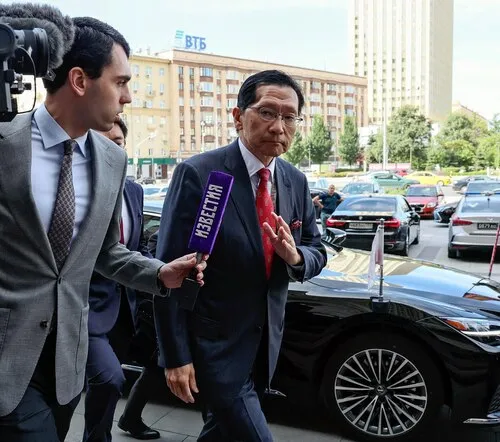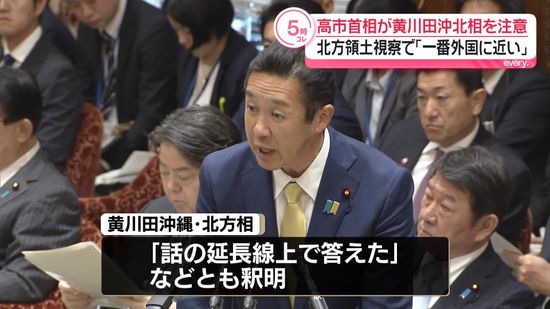
Prime Minister Sanae Takaichi has cautioned Okinawa and Northern Territories Affairs Minister Hitoshi Kikawada for describing Cape Nosappu in Hokkaido as “the closest to a foreign country,” a phrase that ignited criticism he had implied Japan’s Northern Territories are overseas. Speaking at a Lower House Budget Committee session on the 10th, Takaichi said she telephoned Kikawada to warn him the wording was “liable to cause misunderstanding,” underscoring the government’s long‑standing position that the four islands off Hokkaido are “inherent territory of Japan.”
A remark that touched a diplomatic nerve
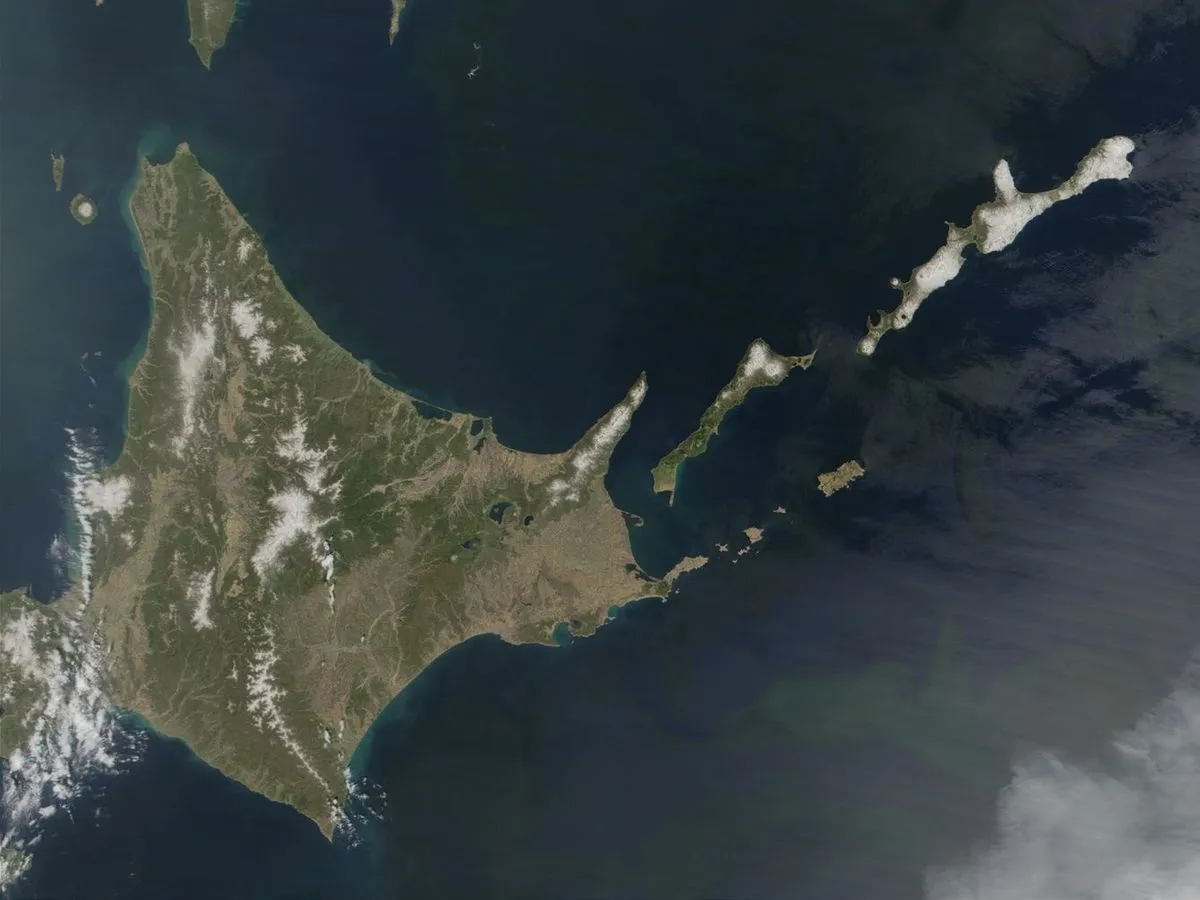
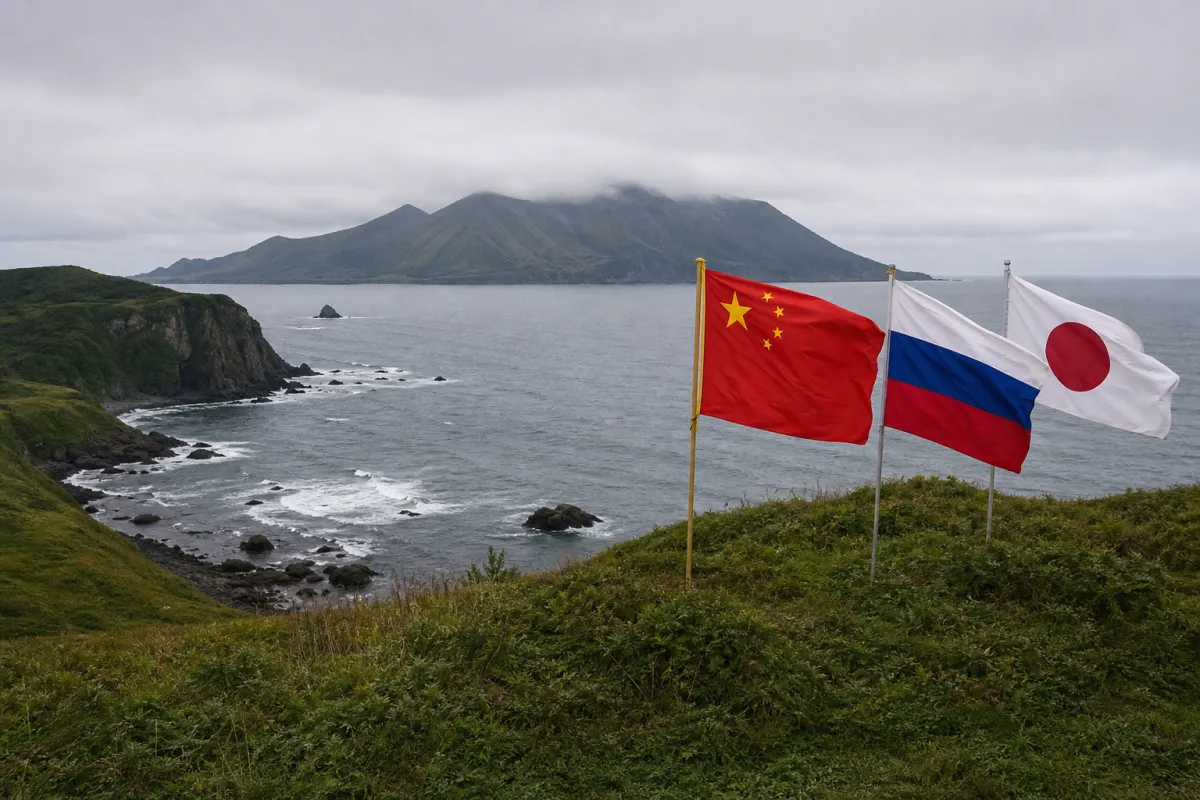
Kikawada made the comment on the 8th while visiting Cape Nosappu in Nemuro, the eastern tip of Hokkaido and the nearest vantage point to the disputed islands of Habomai and Kunashiri, which Japan collectively refers to as the Northern Territories and Russia administers as part of the Southern Kurils. On clear days, residents and visitors peer across narrow straits at the islands from observation points dotted with monuments to former residents and banners calling for their return. Against that backdrop, describing the cape as “closest to a foreign country” struck a raw nerve: Japan’s official position is that the four islands—Etorofu, Kunashiri, Shikotan and the Habomai islets—were never ceded and remain Japanese territory under illegal Russian occupation since the Soviet seizure in 1945.
Immediate pushback in the Diet
Opposition lawmakers seized on the phrasing. Momiji Otsuki of the Constitutional Democratic Party pressed the minister during the committee session, asking whether he recognized the Northern Territories as “a foreign country” and noting that voices inside and outside the Diet had questioned whether his remark showed he lacked the “qualities required of a cabinet minister.” The challenge reflected a broader sensitivity in Japanese politics: ministers are expected to hew closely to carefully calibrated language on territorial disputes to avoid signaling any softening of legal claims.
Minister stands by intent, but skips an apology
Kikawada offered an explanation, not a retraction. He told lawmakers he had urged young people to visit the farthest reaches of Hokkaido, to “see with their own eyes” and to treat the territorial dispute as something personal, rather than distant history. The minister stressed that after completing the inspection he “clearly stated” that the islands are “our country’s inherent territory.” He did not apologize or withdraw the original expression, adding that he would continue to “devote his full effort” to his ministerial duties.
Chief Cabinet Secretary moves to contain fallout
Chief Cabinet Secretary Minoru Kihara, the government’s top spokesman, sought to tamp down the controversy at a press conference on the 10th. He said the minister had been instructed to show “greater discipline in his daily remarks,” but made clear there were no plans to dismiss him, saying Kikawada should “press ahead with his duties.” The response signaled a desire to close ranks and limit political damage while reinforcing a message of caution to the cabinet.
Why wording matters
The government’s choice of words on the Northern Territories carries legal and diplomatic weight. Japan’s claim rests on the assertion that the four islands are historically Japanese and were occupied by the Soviet Union after Japan’s surrender in World War II, leaving the two countries without a formal peace treaty. In recent years, especially after Russia’s full-scale invasion of Ukraine in 2022, Tokyo has sharpened its language, again describing the islands as “illegally occupied.” Any phrasing that appears to place the islands firmly on the “foreign” side of a border is read domestically as weakening Japan’s legal posture and, internationally, as fodder for Russian narratives that Japan tacitly recognizes Moscow’s sovereignty.
Local sensitivities in Nemuro and beyond
For residents of Nemuro and former islanders—many of whom evacuated as children in 1945 and are now elderly—the issue is personal and immediate. Cape Nosappu hosts memorials, museums, and a “Northern Territories” watchtower, and for decades Japan and Russia facilitated limited, visa-free visits so former residents could tend graves or reconnect with their past. Those exchanges have largely been suspended since 2022 amid the breakdown in bilateral ties. In that context, calls like Kikawada’s for young people to witness the view across the strait can resonate as an attempt to bridge a growing generational gap. But it also heightens the responsibility on officials to speak with exactitude, avoiding any turn of phrase that could be interpreted as conceding what Tokyo insists remains unresolved.
The broader diplomatic backdrop
Japan’s relations with Russia are at a post–Cold War nadir. Moscow froze peace treaty talks and halted joint economic projects after Tokyo joined Western sanctions over the Ukraine war. Russia has reinforced its military posture on the disputed islands and intensified infrastructure work there, moves Japan protests as incompatible with its sovereignty claims. Against this backdrop, cabinet members’ off-the-cuff remarks are monitored by both domestic audiences and foreign capitals for any shift in tone. The Takaichi administration’s swift admonition of Kikawada’s wording reflects a determination to avoid giving Moscow an opening—or emboldening critics at home who accuse the government of inconsistency.
Political stakes for the government
Territorial disputes have long been a tripwire for Japanese politicians. Seemingly minor slips have toppled ministers in the past, fueling a media cycle around gaffes that opposition parties exploit to press for accountability and argue the ruling party lacks discipline. That risk is especially acute for the minister in charge of both Okinawa and the Northern Territories, two portfolios laden with history, security implications, and local sensitivities. By publicly disclosing she had personally cautioned Kikawada, Takaichi signaled both zero tolerance for ambiguous wording and confidence that the matter could be contained without a reshuffle. Whether the incident ends here may depend on Kikawada’s future discipline and the opposition’s appetite to keep the issue alive.
What to watch
In the near term, expect continued scrutiny of the minister’s public appearances and language on the Northern Territories, especially as annual commemorations and local outreach events approach. Any fresh ambiguity would invite renewed criticism. More broadly, the episode is a reminder that in Japan’s territorial diplomacy, the lexicon is policy: a single adjective can reverberate from a windswept cape in Hokkaido to a Diet committee room in Tokyo—and across the strait to Moscow.