
Toyota accelerates its shift toward software
Toyota Motor plans to make all 50 vehicle models it sells worldwide software-defined vehicles by 2030, marking a major expansion of the Japanese automaker’s digital strategy. The company will progressively equip its new vehicles with its proprietary software platform, Arene, as it seeks to compete with electric-vehicle manufacturers in China and the United States that have moved quickly in connected-car technology.
The plan covers Toyota’s global lineup and could eventually place Arene in vehicles sold at a scale of roughly 10 million new cars a year. Beyond vehicle sales, the platform is intended to support a business model based on software updates and potentially paid digital services throughout a vehicle’s lifetime.
From a car purchase to an ongoing digital relationship
Software-defined vehicles, commonly known as SDVs, are designed to receive software updates wirelessly after they are purchased. Similar to smartphones, these vehicles can gain new functions, improved performance and enhanced security without requiring every change to be made at a dealership.
Possible improvements include advanced driver-assistance features, infotainment services, connectivity functions and other digital tools. This approach allows automakers to continue developing a vehicle after it has reached customers, while also creating opportunities for recurring revenue from optional services and upgrades.
Tesla and several Chinese electric-vehicle companies are widely regarded as leaders in this area. Their vehicles have helped raise consumer expectations for frequent updates, large digital displays and software-driven functions. Toyota’s broader rollout of Arene represents an effort to close that gap while applying the technology across a much larger and more diverse global vehicle portfolio.
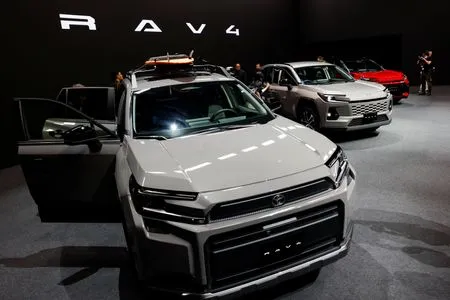
Arene rollout begins with the RAV4
Toyota first introduced Arene in the RAV4 sport utility vehicle launched in 2025. The automaker has indicated that the platform will be gradually expanded to new vehicles introduced in the future. The RAV4 is one of Toyota’s best-known global nameplates, making it a significant starting point for a technology intended to reach customers in markets around the world.
According to Toyota’s communications department, Executive Vice President Hiroki Nakajima explained the Arene deployment plan to investors in Brussels last week. The company also said it is considering expanding the platform beyond Toyota vehicles by 2035, potentially supplying Arene to vehicles produced by partners and other companies.
What the strategy means for Toyota
The shift could strengthen Toyota’s position as the automotive industry becomes increasingly defined by software, connectivity and data. Toyota’s traditional strengths include manufacturing scale, reliability and a broad global dealer network. By adding a common software foundation across its lineup, the company may be able to simplify development and deliver digital functions more consistently across different markets.
However, the transition also brings challenges. Toyota will need to maintain strong cybersecurity, protect customer data and ensure that software updates are reliable across vehicles with different hardware configurations. Customers may also expect clear pricing and long-term support for features that are delivered through subscriptions or paid upgrades.
For drivers, Toyota’s plan could mean vehicles that remain technologically current for longer after purchase. For the Japanese automaker, it is a crucial step toward competing in a market where the ownership experience is becoming as digital as the driving experience itself.