
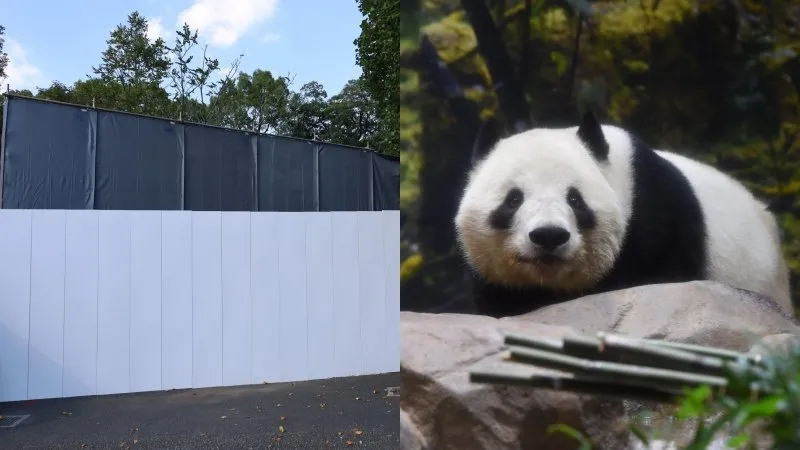
Ueno Zoo adjusts to life without pandas
Tokyo’s Ueno Zoo is entering a new chapter after the return of its last giant pandas to China, with attendance falling but the institution’s commitment to wildlife conservation remaining unchanged. The zoo is now preparing for a future in which its famous pandas are remembered as part of its history while other endangered species receive greater attention.
Giant pandas first arrived in Japan in 1972, when the male Kang Kang and female Lan Lan drew enormous crowds to Ueno Zoo. Their arrival marked the beginning of a long and much-loved relationship between Japan and the animals. Over the following decades, Ueno became closely associated with giant pandas, including through its successful breeding efforts and the birth of several popular cubs.
That era reached its latest turning point in January, when the twin pandas Xiao Xiao and Lei Lei were returned to China. Their departure left Ueno Zoo without a single panda for the first time in many years. The final public viewing on January 25 attracted so many applicants that the lottery reportedly exceeded 20 applicants for every available opportunity.
Attendance falls, but panda popularity remains strong
From February through August, Ueno Zoo welcomed approximately 1.53 million visitors, around 20 percent fewer than during the same period a year earlier. Deputy Director Mikako Kaneko said the panda return was clearly one factor, although unfavorable weather also affected visitor numbers. Heavy rainfall led to two temporary closures in June, while a typhoon caused another closure in September.
Attendance in the previous year was also unusually high because many people wanted to see Xiao Xiao and Lei Lei before their scheduled departure. As a result, the comparison with the current year reflects both the loss of the pandas and the exceptional interest surrounding their final months in Tokyo.
According to Kaneko, weekday attendance has been especially affected. Many visitors had previously traveled to Ueno specifically to see the pandas, even on ordinary weekdays. Nevertheless, panda merchandise remains widely available, including plush toys modeled on giant pandas rather than on individual animals formerly housed at the zoo.
Preserving memories of the old panda house
In August, demolition began on the aging old panda house in the zoo’s East Garden. The facility had long been familiar to generations of visitors, including through a statue popularly known as the “upside-down panda.” Although the building is being removed, the zoo plans to preserve the distinctive sculpture somewhere on its grounds.
The decision reflects Ueno Zoo’s effort to retain important memories while updating its facilities. A section of the former monkey mountain, for example, was preserved as a legacy feature after that structure was dismantled. Such objects can help visitors connect today’s zoo with the experiences they had in the past.
Shoebills take the spotlight
With pandas absent, Ueno Zoo is highlighting another charismatic species: the shoebill. Native to freshwater wetlands in eastern and central Africa, this imposing bird is known for its huge bill and statue-like stillness. It is classified as Vulnerable on the International Union for Conservation of Nature’s Red List.
Ueno keeps four shoebills, believed to be the largest collection at a zoo in Japan. Successful shoebill breeding has reportedly been achieved only twice among zoos worldwide, making the birds an important focus of conservation research. The zoo hopes that progress in breeding techniques could contribute to the species’ future survival.
To introduce the birds to more visitors, Ueno has operated a themed electric vehicle called the “Shoebill Cart.” It travels around Panda Forest, the former western garden area associated with the giant pandas, offering visitors a new way to explore the site and create memories.
A broader mission beyond one famous species
Ueno Zoo continues to attract interest through Asian elephants, Sumatran tigers, polar bears and the increasingly popular Pallas’s cat. Kaneko emphasized that the zoo’s role extends beyond entertainment. By helping people develop an affection for animals, the institution hopes to encourage them to consider how wildlife and habitats can be protected.
Future panda arrivals will depend partly on discussions between Japan and China, and no timetable has been announced. Ueno officials nevertheless say they would welcome the opportunity to care for pandas again. Until then, the zoo’s post-panda period may give visitors a valuable chance to discover new favorite animals—and to see Ueno not only as a panda destination, but as one of Japan’s leading centers for conservation education.