
North Korea showcases expanded missile ambitions
North Korea has unveiled a display featuring a map of the alleged strike range of its newest intercontinental ballistic missile, including the United States, South America, the Middle East and Australia. The presentation, shown at the country’s newly established National Defense Revolution Museum, also included a diagram suggesting that the missile could carry multiple warheads.
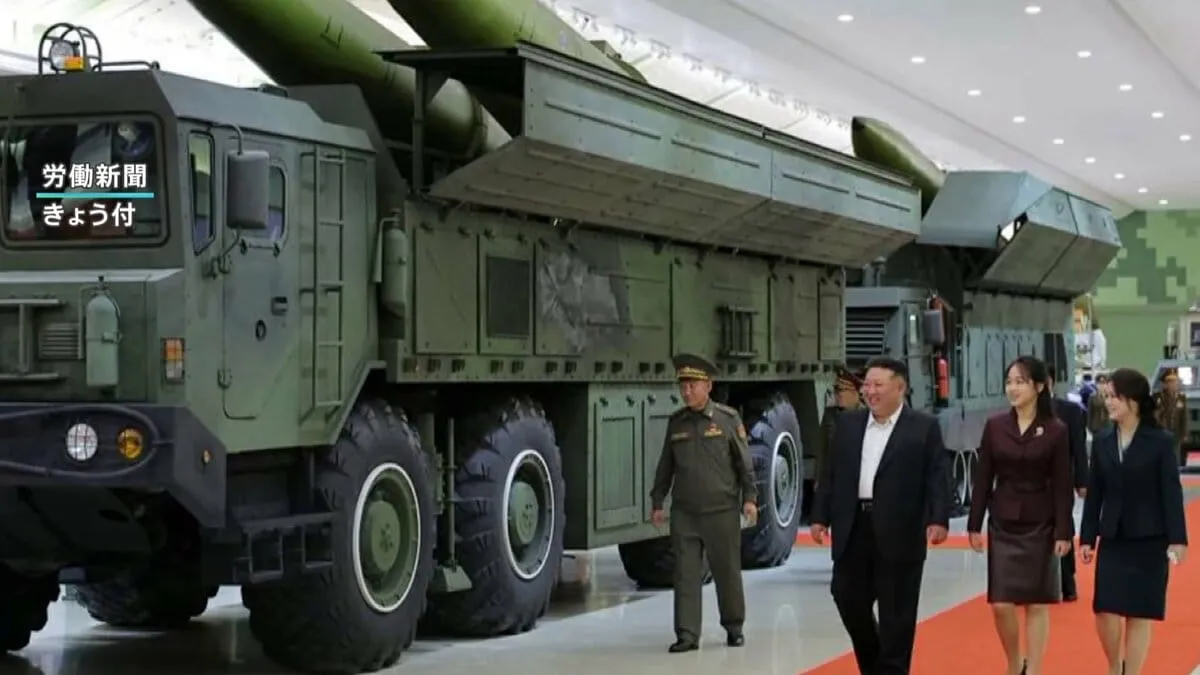
The exhibition appears designed to project military strength at a time when speculation about renewed contact between Washington and Pyongyang is emerging. North Korean state media reported that leader Kim Jong Un attended the museum’s opening ceremony on November 11, marking the 81st anniversary of the founding of the ruling Workers’ Party. Kim reportedly cut the ribbon and inspected a wide range of weapons displayed inside the facility.
“Hwasong-20” takes center stage
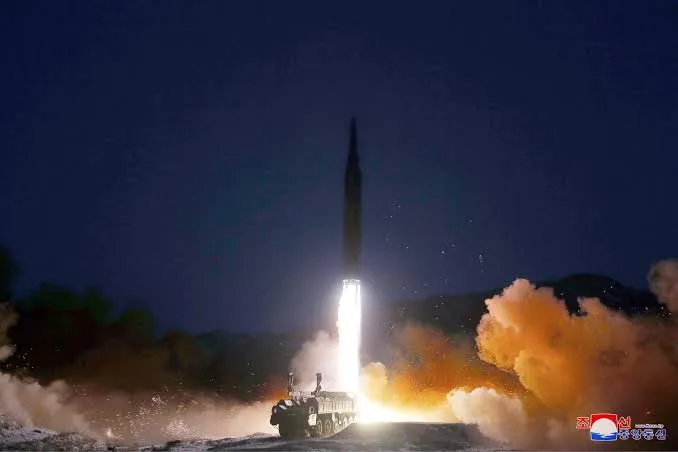
Among the most closely watched exhibits was the Hwasong-20, a new ICBM displayed on a mobile launch platform. Photographs showed the missile alongside an illustration interpreted as depicting a multiple independently targetable re-entry vehicle, or MIRV, configuration. Such a system could theoretically allow one missile to deliver warheads against several targets, although the publicized diagram does not prove that North Korea has perfected the technology.
The accompanying “strike-range situation map” appeared to include the U.S. mainland, as well as regions in South America, the Middle East and Australia. Analysts cautioned that the actual range and operational capability represented by the map have not been independently verified. Questions also remain over whether North Korea has mastered the separation and guidance of multiple warheads, atmospheric re-entry, and the other demanding technologies required for a reliable strategic missile force.
Shin Jong Woo, secretary-general of the Korea Defense and Security Forum, noted that the information panel for the Hwasong-20 was photographed clearly from the front, unlike panels for several other weapons that were shown at an angle. He suggested that the deliberate presentation could be intended to attract the attention of U.S. President Donald Trump and signal confidence before any future negotiations.
Possible message ahead of U.S. engagement
Trump has reportedly said that a meeting with Kim could be possible during an Asian trip connected with the Asia-Pacific Economic Cooperation summit expected to take place in Shenzhen in November. Against that backdrop, the museum display may be intended to remind Washington that North Korea views its nuclear and missile capabilities as central bargaining tools. Pyongyang could be seeking recognition as a nuclear-armed state, sanctions relief, or greater leverage in any future talks.
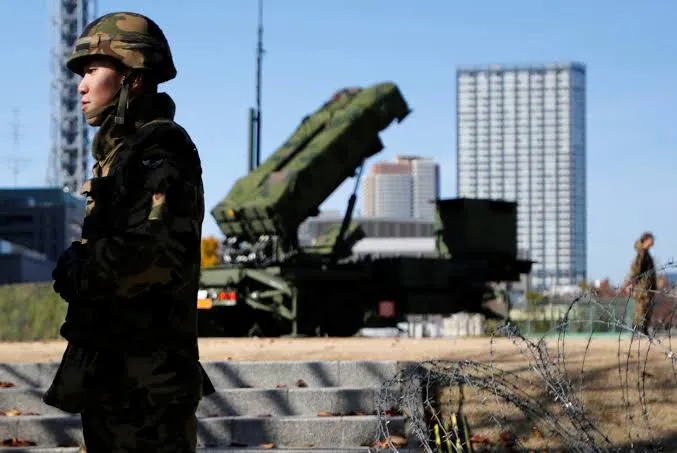
For Japan, the developments carry particular significance. North Korean missiles have previously passed over or landed near waters surrounding Japan, prompting concerns about national security, civil protection and the reliability of regional early-warning systems. Tokyo works closely with the United States and South Korea on missile tracking and deterrence, while Japan’s ballistic-missile defense network includes Aegis-equipped ships and land-based Patriot units. A wider North Korean arsenal could place additional pressure on Japan to strengthen intelligence-sharing, civil defense planning and diplomatic coordination.
Broader weapons display raises further questions
The museum also displayed hypersonic missiles, submarine-launched ballistic missiles, tanks, drones and large multiple-launch rocket systems. The Hwasong-16 Na hypersonic glide vehicle reportedly carried markings that could be interpreted as production numbers. That may indicate an effort toward serial production, although the numbers could also have been added to create that impression.
A short-range hypersonic missile identified as the Hwasong-11 Ma-1 was shown alongside submarine-launched systems believed to include the new strategic missile known as Pukkuksong-6. Another weapon marked Pukkuksong-X may be a two-stage, solid-fuel submarine-launched ballistic missile, but its performance and deployment status remain unconfirmed.
Analysts also observed a new supersonic anti-ship missile with a shape resembling Russia’s 3M-54E. The similarity has prompted discussion about possible technical assistance, but appearance alone cannot establish technology transfer. Flight testing and other evidence would be needed. The display included the Cheonma-20 tank, apparently fitted with retractable anti-tank missile launchers and an improved active protection system, as well as a short-range air-defense system resembling Russia’s Pantsir.
Several unmanned aircraft were featured, including the Saebyol-4 and Saebyol-9, small drones believed to be designed for one-way attacks, and unusual cardboard and bird-shaped designs. New 240-millimeter and 600-millimeter multiple-launch rocket systems were also presented, underscoring Pyongyang’s stated goal of expanding long-range precision-strike capabilities.
Kim said building “the world’s strongest defense industry” was a natural objective. Still, the exhibition should be viewed as both a military showcase and a political communication tool. Its displays reveal North Korea’s priorities and ambitions, but they do not independently confirm that every weapon has entered operational service. Regional governments, including Japan, will be watching closely for further tests and concrete evidence of deployment.