A sacred symbol of Miyajima set for reconstruction
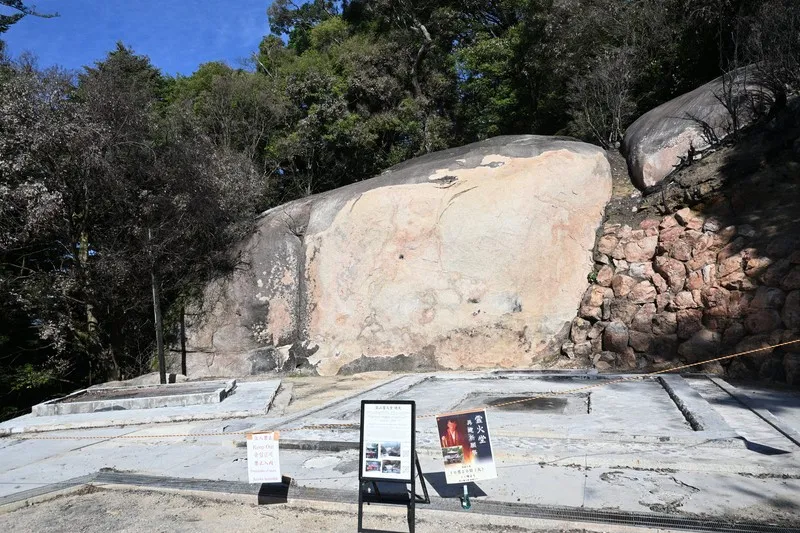
A reconstruction plan is moving forward for Kiezu-no-Reika-do, a historic Buddhist hall on Mount Misen in Miyajima, Hiroshima Prefecture, after the building was destroyed by fire in May. The hall’s managing temple, Daisho-in, will launch a crowdfunding campaign on the 20th, five months after the blaze, to help cover the rising cost of rebuilding one of Miyajima’s most important religious and cultural landmarks.
With approval from the national government expected, construction could begin as early as next April, with completion targeted for autumn of the same year. The rebuilt structure is planned to retain the appearance of the previous hall while incorporating stronger fire-prevention and safety measures.
Fire destroyed the hall, but the sacred flame survived
The fire broke out at approximately 8:30 a.m. on May 20. Kiezu-no-Reika-do and an adjacent amulet distribution office, covering a combined area of about 30 square meters, were completely destroyed. Authorities have not identified the cause of the fire.
Despite the damage, the sacred “undying flame” associated with the hall was safely removed from the site. According to temple tradition, the flame has continued burning for roughly 1,200 years, since the Buddhist monk Kukai, also known as Kobo Daishi, practiced at the location. The flame is regarded as a powerful spiritual symbol and is also connected with the flame used at Hiroshima’s Peace Memorial Park.
Kiezu-no-Reika-do stands near the summit of Mount Misen, which rises 535 meters above sea level. Mount Misen has long been central to Miyajima’s religious history, and the hall is widely regarded as a symbol of the island’s mountain worship. Miyajima itself is famous for the “floating” Itsukushima Shrine torii gate and is designated as both a special historic site and a special place of scenic beauty in Japan.
Rebuilding requires cultural heritage approval
Because the entire island is protected under Japan’s cultural heritage framework, rebuilding the hall requires government approval under the Cultural Properties Protection Law. Daisho-in has been consulting with the Agency for Cultural Affairs since the fire and is expected to receive permission for a change to the existing site conditions as early as December.
The temple plans to reconstruct the building with an exterior similar to the one lost in the fire. Inside, however, plaster finishes and other materials designed to improve fire resistance are being considered. The plans may also include sprinklers, security cameras and a lightning rod, helping protect the hall and its sacred flame for future generations.
Crowdfunding seeks nationwide support
Construction costs have risen sharply in recent years. The total rebuilding cost is estimated at approximately 280 million yen, around three times the cost of the previous reconstruction. The hall was also destroyed by fire in 2005 and rebuilt the following year.
Daisho-in will use crowdfunding to seek support from people in Hiroshima and throughout Japan, as well as from visitors who have formed a personal connection with Miyajima and Mount Misen. A press conference explaining the campaign and a Buddhist service praying for the success of the construction will be held on the 20th.
Deputy chief priest Yutaka Yoshida, 35, said the temple hopes people who have visited Miyajima or Mount Misen will learn about the rebuilding effort. Support is also growing locally: approximately 80 businesses along Omotesando Shopping Street at the foot of Mount Misen have placed collection boxes in their shops.
Souvenir shop owner Shinichi Kijima, 69, described the hall as an indispensable symbol of Miyajima and said he hopes it will be rebuilt as soon as possible. The campaign reflects the strong connection between Japan’s historic religious sites, local communities and visitors seeking to help preserve the country’s living cultural heritage.